

If you were a kid in the 80s and asked your mom for a tissue, chances are she would pull one out of her purse with ninja-like speed. When it came time to find the car keys, however, you could be standing there…awhile. Her purse often seemed like a black hole, yet it contained everything we needed to feel better (kleenex), be entertained (crayons or gum), and feel like her favorite kid.
Purses were different from mom to mom, but generally speaking they were stuffed with things to keep her organized and prepared for anything: things to pay with, things to keep kids from screaming themselves hoarse in the back seat, things to freshen up with in a restroom mirror, things for keeping track of everyone else, and things in case of an emergency (a missing button qualified as an emergency to most moms).
At the Checkout
The part of the purse that got the most use came out at the grocery store, and in the 1980s that usually meant paper. According to the Federal Reserve, 32.8 billion checks were written in America in 1979, making up some 86 percent of all non-cash retail payments. By 1995 that number had increased to 49.5 billion checks. And plenty of those checks were probably penned by moms standing at a register with a line of carts waiting, trying to keep tabs on kids sneaking extra candy bars into the cart.
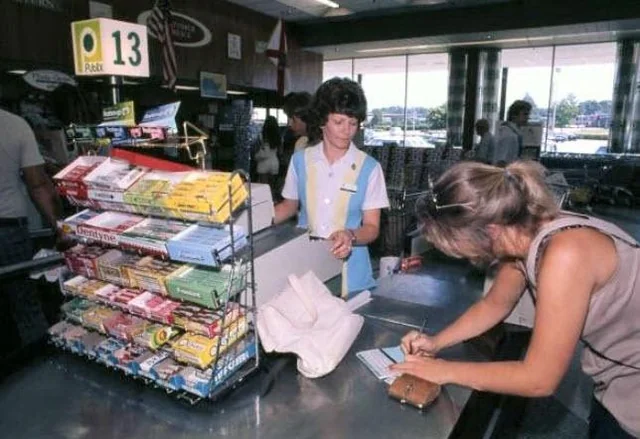
At the grocery store, Mom could pull out her checkbook and fill out a check on the little writing ledge. She knew the drill. Date, name of store, amount written in numbers and words, and to be safe, a line drawn from where the amount stopped to the end of the white space, so no one could try to change the amount. She might even have had the check register in her purse. Maybe it was tucked right behind the checks, or perhaps she needed to find the pen or the receipt that she hadn’t entered yet. The grocery bill needed subtracting and Friday’s deposit needed adding. Whether the electric bill had cleared was another question. She might not get the chance to record the new balance until there was no one waiting behind her.
Coupons had a place in Mom’s purse, too. The coupons came from the Sunday paper, clipped at home before the shopping. They might be in an accordion file or kept in a paper envelope that softened with age. A good coupon might fall behind a dry-cleaning ticket and stay there until it’d expired.
Sunday’s newspaper and scissors supplied the contents: cereal, laundry detergent, coffee, perhaps something nobody particularly wanted at a price too good to pass up. A coupon for the family-size box was of no use if someone brought home the wrong size. Mom had said family size. Having to go back was what annoyed her.
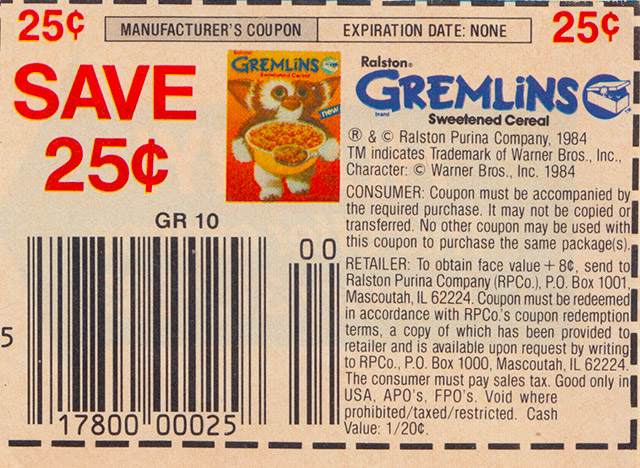
Mom had plenty of coupons to clip. Supermarket News published a history of couponing in 1995. According to the article, in 1965 about 350 manufacturers issued 10 billion coupons; in 1975, 1,000 manufacturers issued 35.7 billion coupons; and in 1985, 3,000 manufacturers issued 200 billion coupons. That’s more than 800 a year for every person in the country. No wonder a few of them expired at the bottom of Mom’s purse. The coupon above, issued in 1984, was good for a quarter off a box of Gremlins cereal.
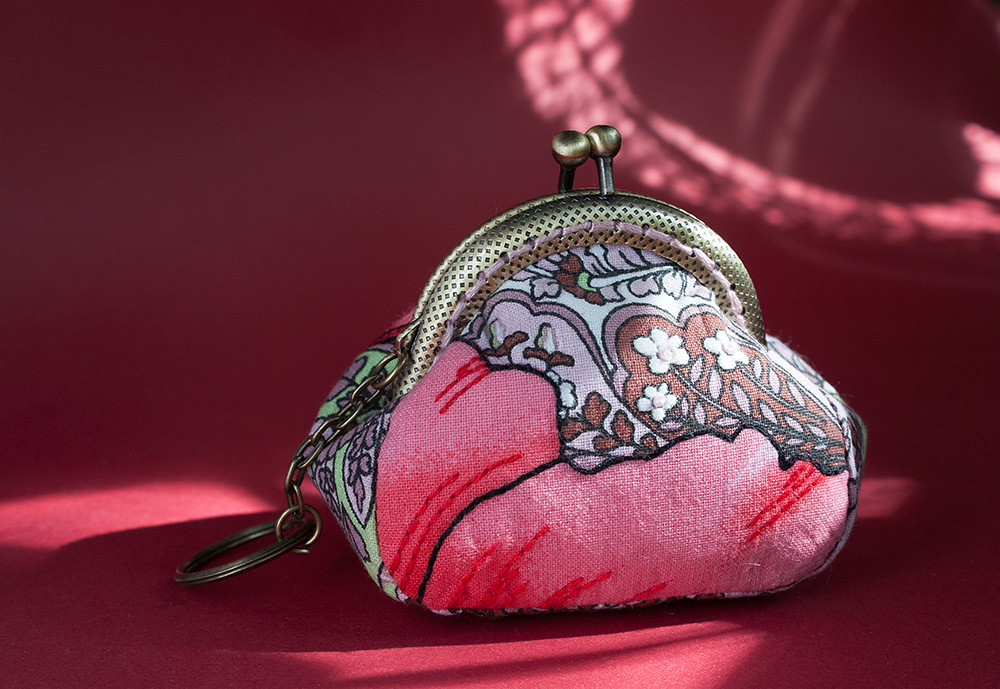
Some moms kept a clasp change purse inside a larger purse. Pennies, nickels, dimes, quarters: there might be money for the gumball machine, though Mom might point out that she already had gum. Some of the change was for a pay phone. Finding the little purse inside the larger one could take a while.
In June 1984, a New York Times editorial noted that a local call from a pay phone already cost a quarter in 19 states, while in 13 others it cost 20 cents. In New York, most calls still went for a dime, and the paper added that regulators there had rejected an increase seven times in 14 years. Either way, Mom knew which coins not to spend. She saved them in her clasp change purse for just such a call.
For Whoever Was in the Back Seat
Mom’s purse always seemed to have something in it for somebody else: a tissue for the kid in the back seat with a runny nose, a stick of gum for whoever was sitting next to her in church. Somehow Mom could find these things in her purse without looking, and more often than not she’d pull out what you wanted before you’d even finished asking nicely for it (after being burned once or twice, you learned to ask nicely and to accept “no” for an answer the second time you asked for gum).
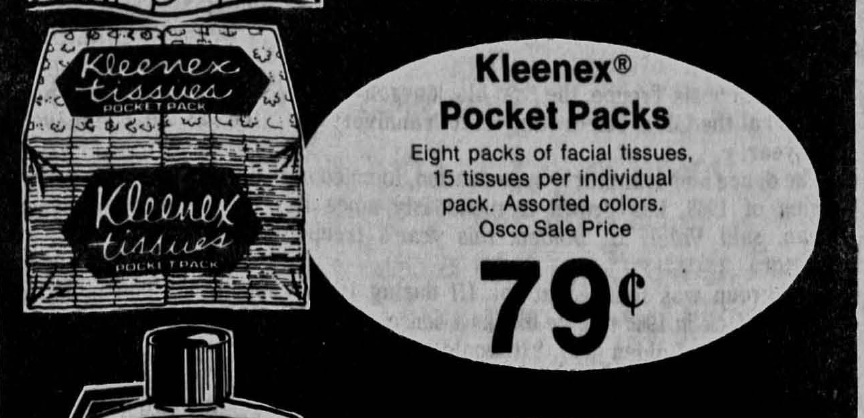
The tissue packet’s corners had softened from being carried around in her purse. Mom could hand you a tissue that she knew was still clean. If it was the last one, a receipt and a candy wrapper might come out with it.
Eight Kleenex pocket packs cost 79¢ at Osco Drug, according to an ad in an Iowa City newspaper in November 1980. Kleenex says its pocket packs were introduced way back in 1932. Fifteen tissues for about a dime wasn’t bad.

Gum was the other thing you could count on her having. Peppermint, spearmint, or cinnamon: the flavor depended on what your mother liked to buy. The green Doublemint pack was one familiar choice; the brand has been around since 1914. Extra was the new and exciting one. Wrigley introduced it in 1984 as its first sugar-free gum in the U.S., while the Doublemint Twins had debuted in ads back in 1939.
If you wanted a piece of gum, there was a good chance your sibling did too. With one stick left, Mom could divide it between the two of you, though you might want to compare the pieces before agreeing that they were even.
For one family, handing out gum became something to remember their mother by:
“We actually handed out double mint gum at my Mom’s funeral as a nod to all the double mint she gave us in church over the years.” (via Reddit)
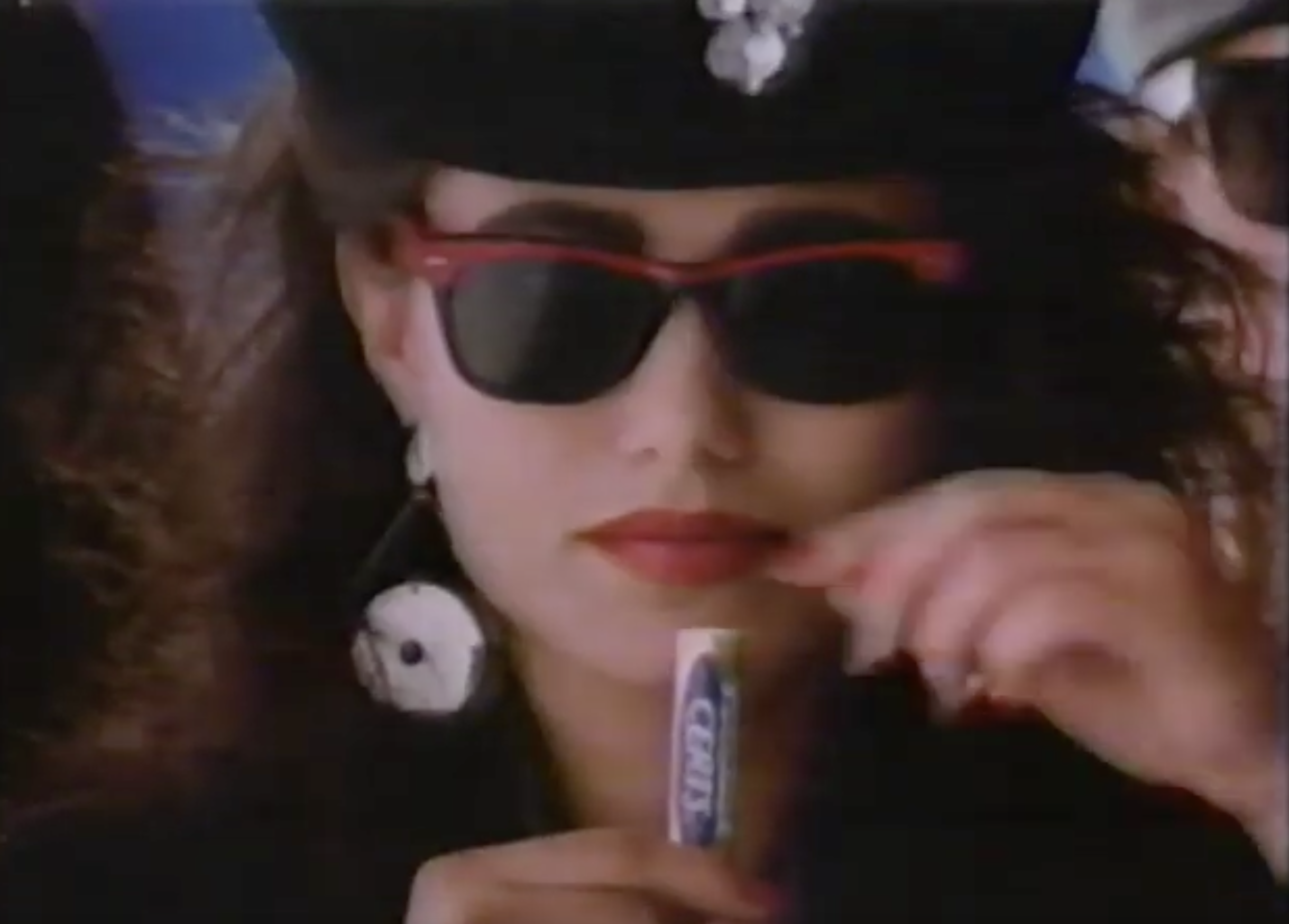
The purse candy was seldom your first (or even second) choice, but it was better than nothing when there were still twenty minutes left in the sermon. A Certs or wrapped strawberry, peppermint or butterscotch candy might’ve acquired the scent of the purse. Sometimes the wrapper stuck to the candy and had to be peeled away in little pieces. It might taste faintly of lipstick, leather or hand lotion.
For the Mirror
In one corner of the purse, Mom’s own things lived: a small comb or folding hairbrush, a compact of face powder, lipstick. It was enough to tidy up in the rearview mirror or a restaurant bathroom or the church parking lot, getting ready for whatever came next. She could put on lipstick in the driver’s seat at a stoplight without ever looking down, and she’d swivel around and tell you your hair needed fixing. The comb and brush and powder dutifully followed the lipstick around, and most of it stayed in that corner of the purse long past the day she’d meant to replace it.
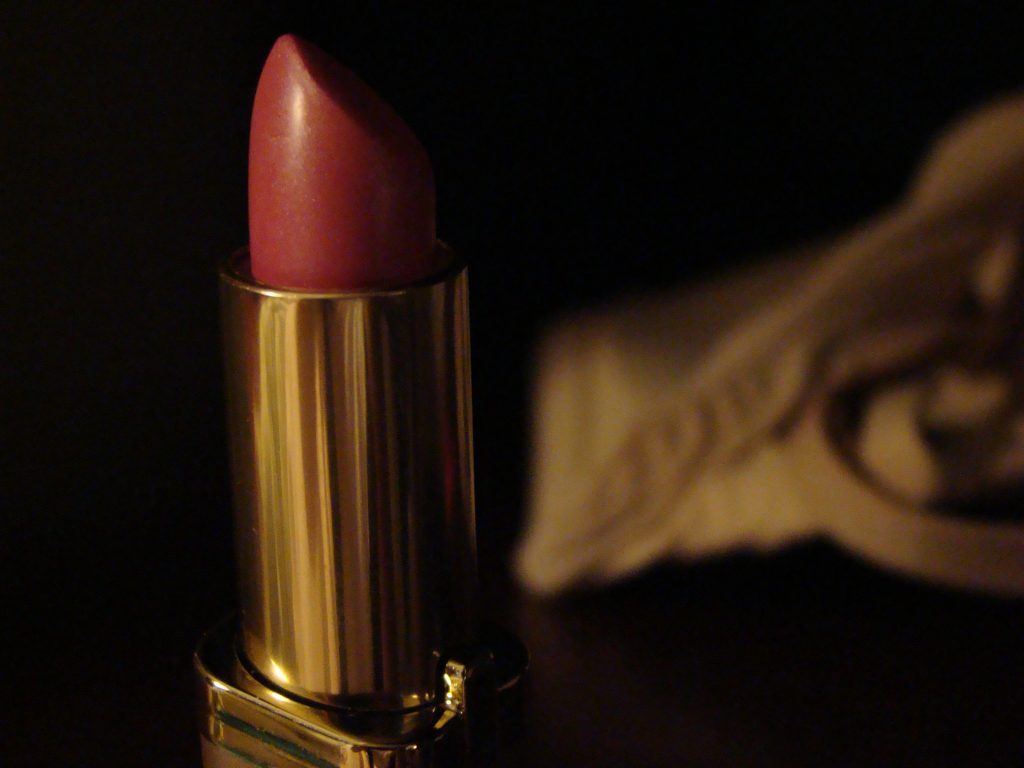
A favorite lipstick could be worn nearly flat before Mom bought another one. She turned it up as far as it would go and used what she could reach. Buying another one stayed on the list for next time.
One Reddit reader remembered the smell of their mother’s purse:
“My Mom always had a stash of Doublemint in her purse. Her purse had the distinct smell of Doublemint, lipstick and the lack of cash.” (via Reddit)
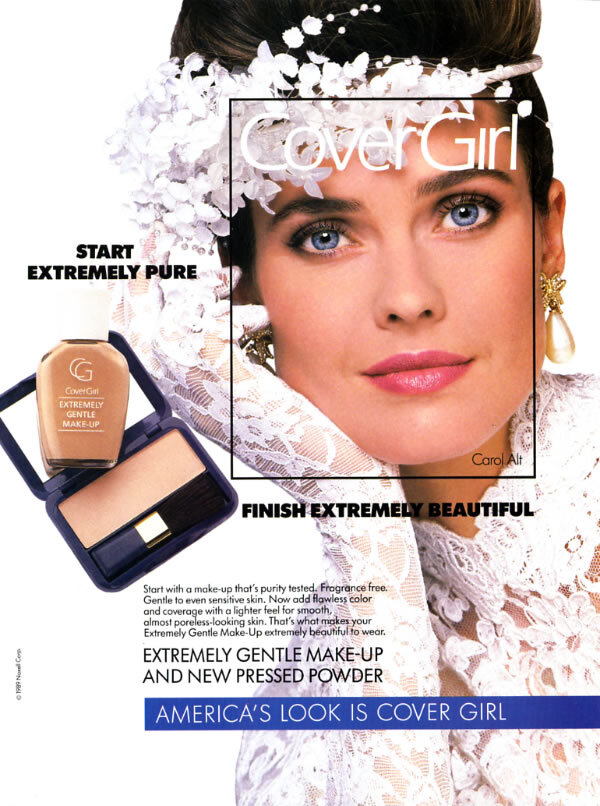
The powder wore down in the middle until a ring remained around the edge of the compact. The puff had a little ribbon across the back for two fingers. If the powder broke, the loose pieces rattled inside and dusted the puff. The mirror could get cloudy with powder, which made it harder to check her lipstick.
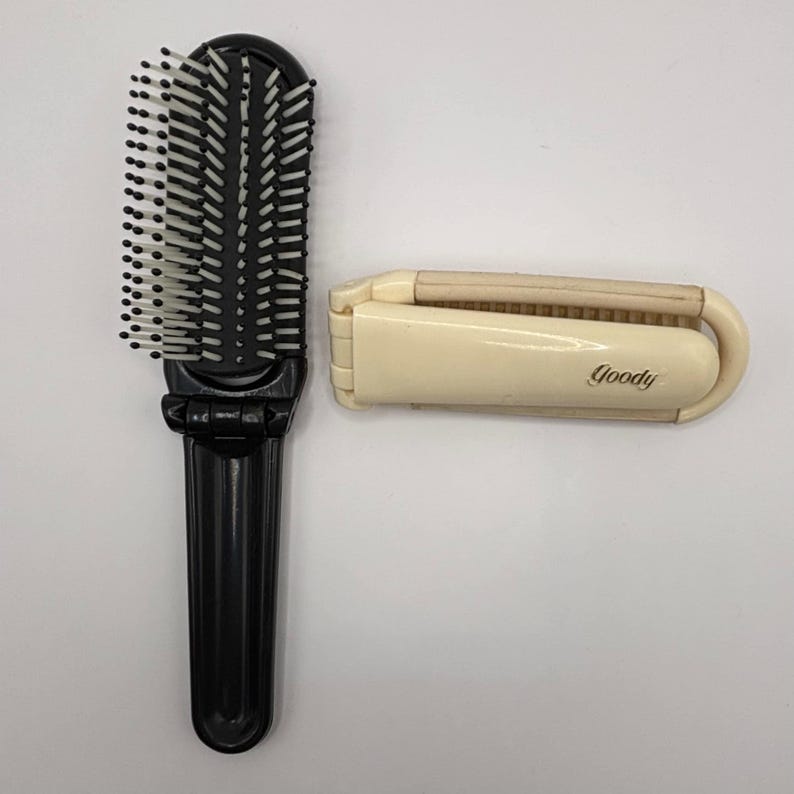
Mom might wet a small comb under a restroom faucet to press down the hair that sprang up in the car. She could use a folding brush, too. Its covered bristles kept it tidy in the purse; some versions had a mirror in the handle. Maybe you were going to a wedding or a restaurant and Mom wanted your hair brushed first. When the photograph came back, you might see her point.
For Keeping Track of Everybody
Long before a phone could remember anything for you, the family’s records rode around in Mom’s purse. The zippered pocket usually held her little address book (along with anything else she couldn’t afford to lose). It held the phone number for the pediatrician and the new address of that cousin you hadn’t seen since last summer, and somewhere behind a sheet of plastic there was proof of what you looked like in the third grade. If somebody called asking for a number, chances are she had it.
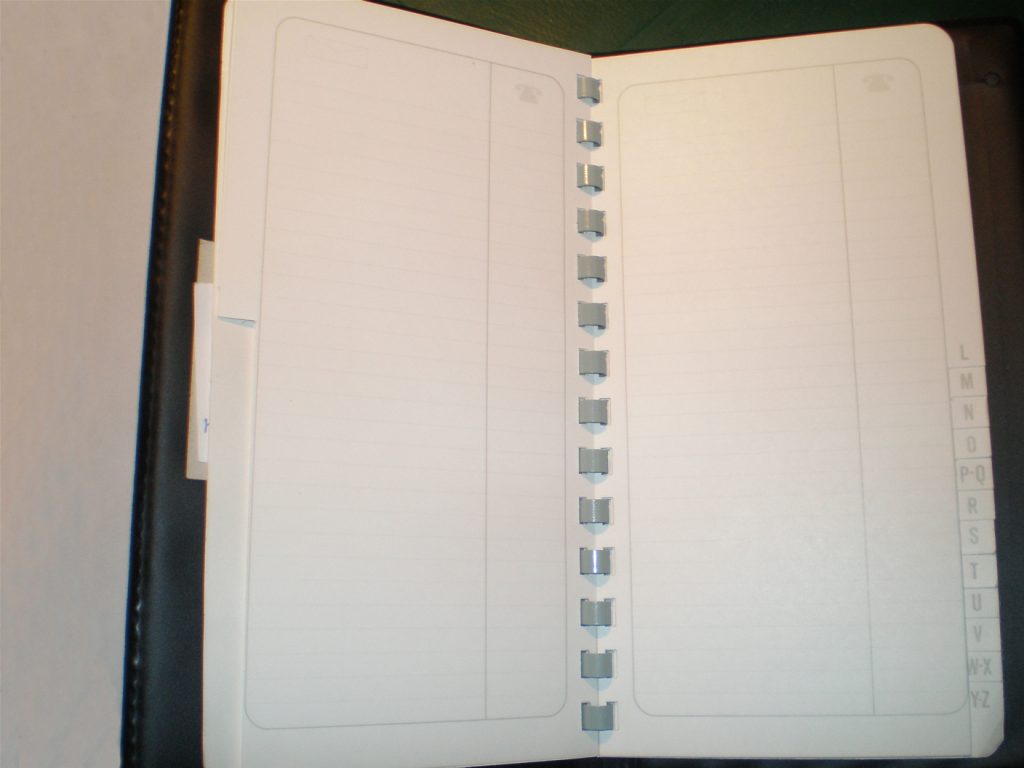
The dentist, the school, the hairdresser and the relatives had a place in Mom’s little address book. When someone moved, she crossed out the old address and wrote in the new one, and there might be a scrap of paper with that friend or family member’s phone number on it tucked in behind the page.
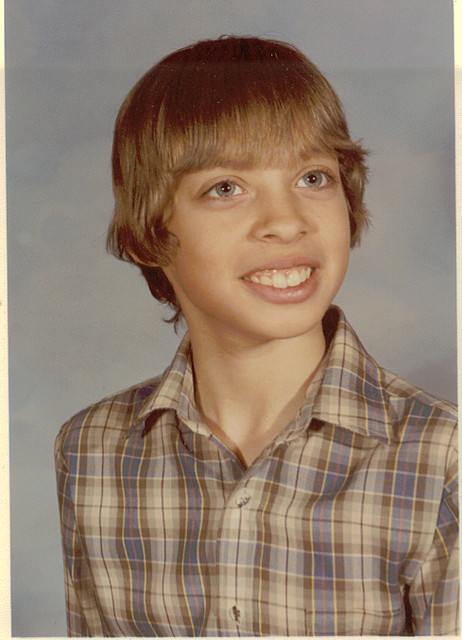
Picture packages that came home from school in the fall included a sheet of wallet-size pictures of you. They were supposed to be cut apart and handed out to family and friends, and Mom saw to it that they were. Her wallet might’ve held a plastic sleeve filled with her kids’ school pictures. Photos of cousins or new babies could be tucked in there, too. Mom kept copies handy in case she met a relative who hadn’t received one yet. The plastic sleeves could turn cloudy where they folded, but that school haircut was still easy to recognize.
Just in Case
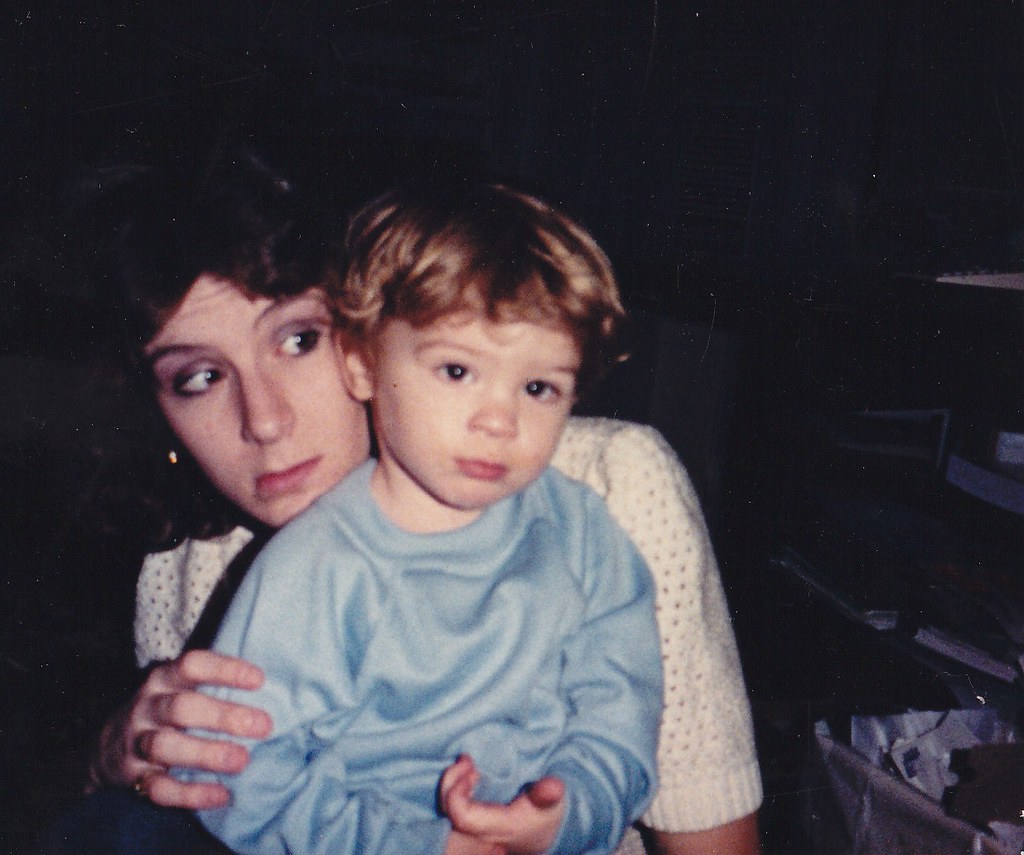
Anything else that made it into her purse got there for good reason. Maybe she’d needed something once and never again wanted to be caught without it. An emery board or some aspirin could be tucked away in her purse. She might’ve packed hand lotion, a sanitary pad and a safety pin, too.
The extras varied with the family. One reader recalled: “…my mom also kept a hot-wheels firetruck in her purse for me to play with at restaurants.” (via Reddit) (For the uninitiated, Hot Wheels were introduced by Mattel in 1968.) Another mom might carry crayons or a church bulletin folded into a fan. There could even be a loose button waiting to be sewn back on a coat.
What Was in Your Mom’s Purse?
What else was in mom’s purse during the 1980s? Share your memories in the comments below!
Featured photo: A mother and daughter talking at home in 1980. Photo: Linda Bartlett.



Leave a Reply