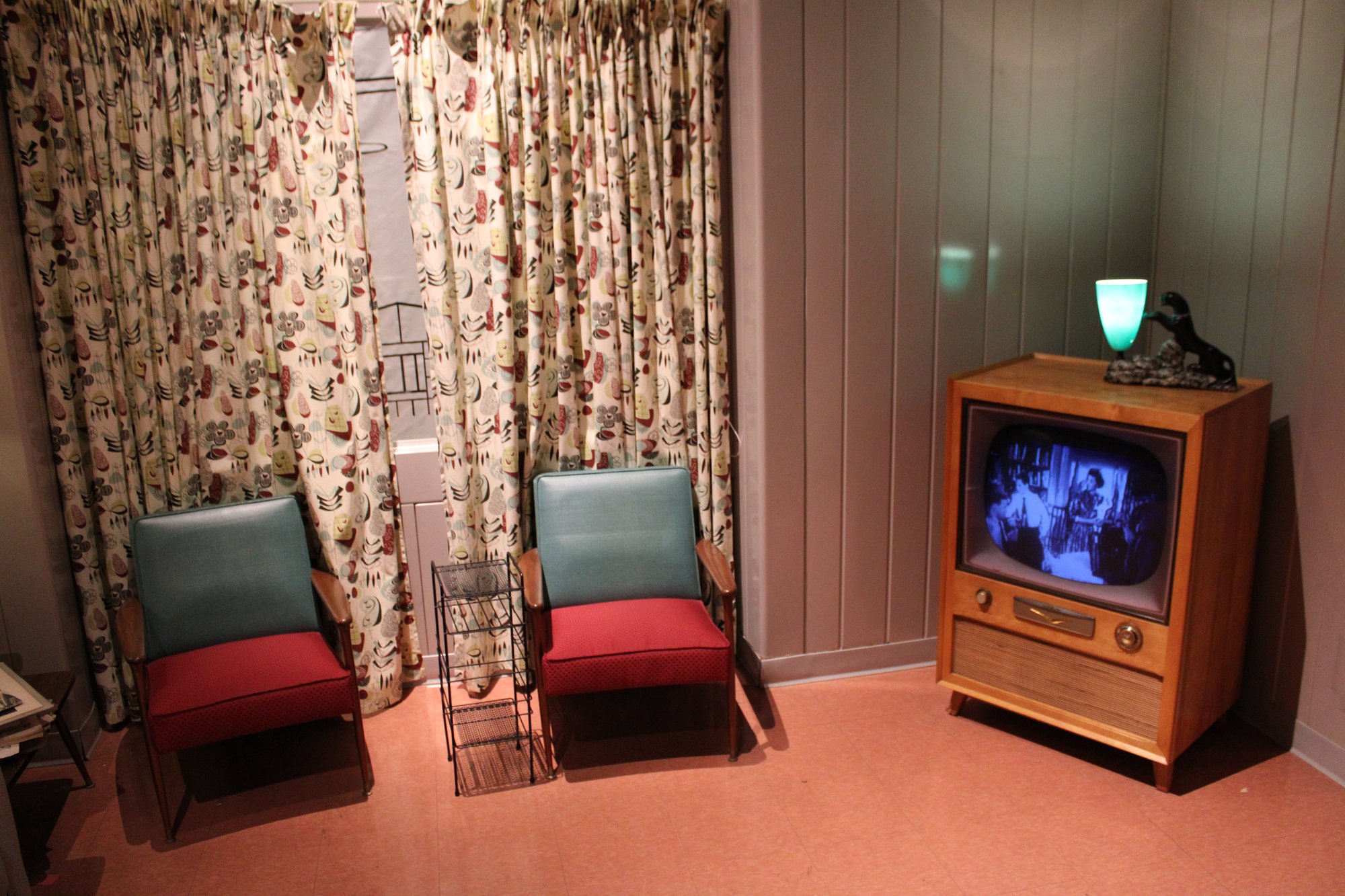
The tube was glowing and humming, the house was quiet, and there was nowhere else in the whole wide world to be except in front of the set. When I was a boy I listened to The Shadow and The Lone Ranger on the radio before my family had a TV, so I came to television by way of the radio dial.
So, settle into your favorite chair and join me as we take a look back at cartoons and children’s TV shows from the 1950s and 1960s. We’ll go through them in order of when they first aired. A lot of them didn’t start out on Saturday morning at all. They came from prime time and weekday afternoons and from all sorts of curious places, and reruns brought most of them to Saturday. Sit back and think about all the theme songs you can remember as we go through the list and see if you remember some of these shows and their odd broadcast history.
1. Crusader Rabbit (1950)
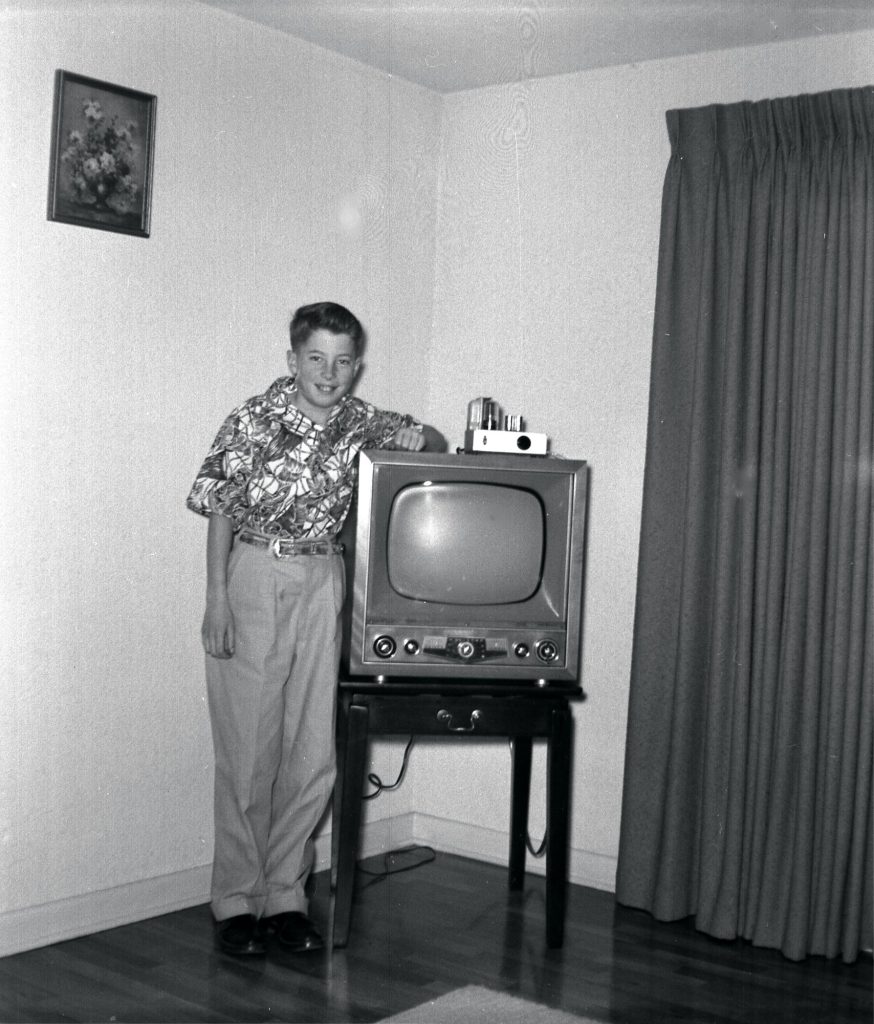
Crusader Rabbit is an American cartoon that was the first animated series made for TV. Crusader Rabbit first aired on KNBH (NBC-owned, located in Los Angeles), on August 1, 1950, and aired on various NBC-owned stations during the 1950-51 season. The series was the work of cartoonist Alex Anderson and Jay Ward (of Rocky and Bullwinkle fame). Crusader (voiced by Lucille Bliss) was a wee, Don Quixote-esque bunny who was brave beyond compare. He was often joined by Ragland T. Tiger, aka Rags.
The show was low-budget and wasn’t broadcast on the network on Saturdays; instead, local stations chose when they wished to air it. It was divided into short segments that would end with a cliffhanger, much like old-time movie serials, so audiences would be sure to catch the next installment.
2. Mighty Mouse Playhouse (1955)
Do you remember Mighty Mouse Playhouse? Animator and studio owner Paul Terry sold his studio, Terrytoons, along with its collection of cartoons, to CBS for $3.5 million in the beginning of 1955. Mighty Mouse Playhouse started on CBS on Saturday, December 10, 1955. CBS aired the old shorts with some new wraparound animation, and the cartoons, although previously seen in theaters, seemed new and exciting when viewed from your living room. Mighty Mouse Playhouse was the first Saturday morning cartoon series on network television. It ran for 12 seasons on CBS.
The character of Mighty Mouse first appeared in 1942, originally named Super Mouse, in a Terrytoons theatrical cartoon called The Mouse of Tomorrow, when Superman was a character of great popularity. By 1944, Super Mouse became Mighty Mouse.
3. Heckle and Jeckle (1956)
Chances are if you watched Saturday morning television you’ve seen Heckle and Jeckle at some point. These look-alike birds (most people took them for crows, although they’re really magpies) are easy to confuse, heck, even cartoon historians can’t always tell which bird has which voice. One talks with a New York accent, the other with a British accent. Their origins stem back to the Terrytoons cartoon The Talking Magpies from January 1946. Their antics were so entertaining they were given their own television show. The Heckle and Jeckle Cartoon Show began airing on CBS in 1956 after Mighty Mouse Playhouse did well, continuing on and off until 1971.
4. Tom Terrific (1957)
Tom Terrific was a Terrytoons cartoon created by Gene Deitch. It started out in 1957 as a segment of Captain Kangaroo (which had started in 1955 as a weekday morning children’s show on CBS, starring Bob Keeshan as the Captain). Tom wore a funnel for a thinking cap and was able to turn into anything he wanted to be. His faithful helper was Mighty Manfred the Wonder Dog (mostly a sleeper), to whom Tom gave credit for things Manfred did not do, and his grouchy nemesis was Crabby Appleton (“I’m rotten to the core!”). It was a simple, charming, funny, and inventive cartoon filmed in black and white. There were two seasons in 1957 and 1958 consisting of 26 stories (in which Tom turned into other things 129 times!) which were rerun into the mid-1960s.
5. Ruff and Reddy (1957)
When MGM shut down its cartoon division in 1957, former Tom and Jerry creators William Hanna and Joseph Barbera formed their own studio. Hanna-Barbera’s first show was Ruff and Reddy which debuted on NBC on Saturday morning, December 14, 1957. Ruff (the cat) and Reddy (the dog) were friends, unlike Tom and Jerry. The stories were presented in a serial fashion with cliffhangers. Television animation was different than theatrical cartoons because the budgets were much less so they had to make do with fewer drawings, using close-ups more frequently. NBC surrounded it with puppets and a live TV personality named Jimmy Blaine to make up a half-hour TV program. Hanna-Barbera went on to make lots of cartoons. Anyone else remember this show?
6. Rocky and His Friends (1959)
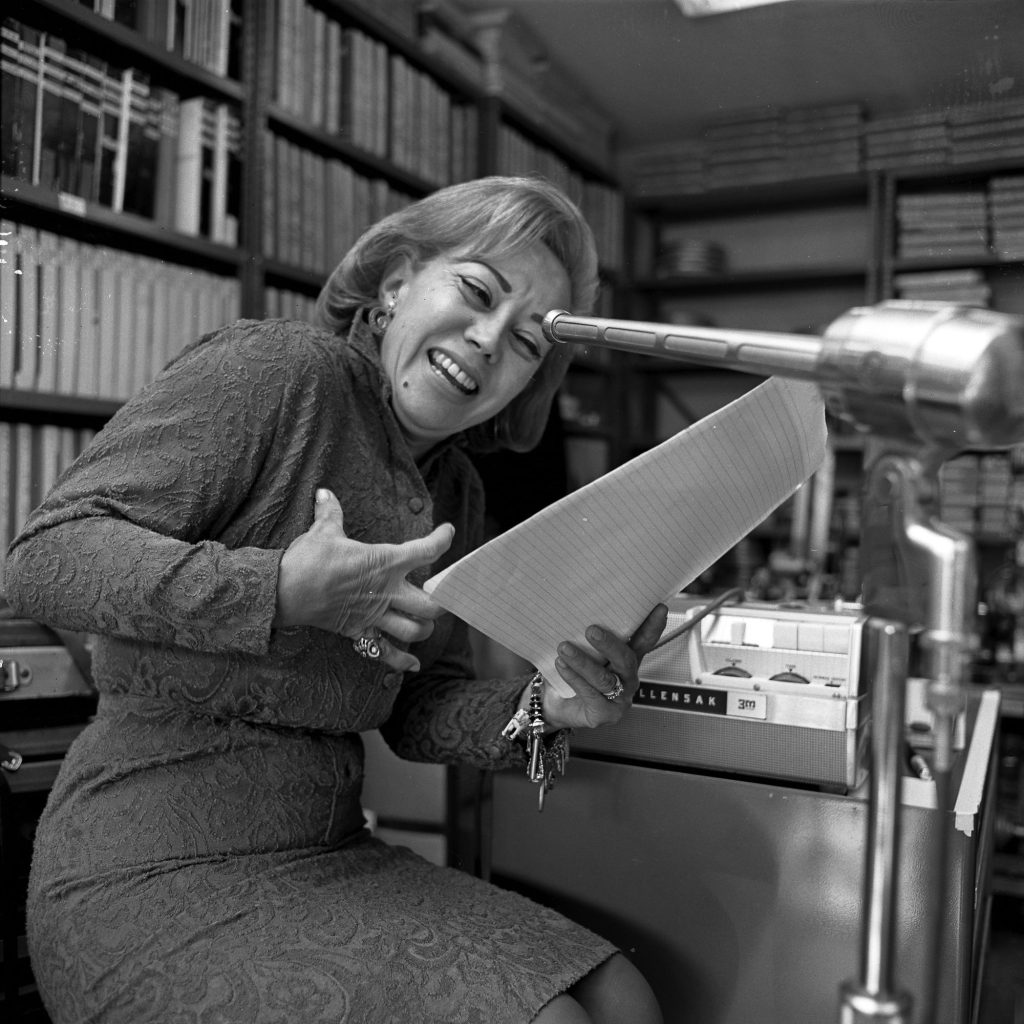
Rocky and His Friends was a Jay Ward cartoon featuring Rocky the Flying Squirrel and Bullwinkle the Moose. Rocky and Natasha Fatale were both voiced by June Foray. It first aired on November 19, 1959 on ABC. It was a late weekday afternoon show sponsored by General Mills, so it wasn’t a Saturday show when it started. In 1961 it switched networks and titles, becoming The Bullwinkle Show on NBC. Its original run was from 1959 to 1964 but it was in weekend programming for years after that.
Rocky & Bullwinkle is one of those shows that appeals to multiple generations. Many kids watched it because of the funny little animals, but the show was written to appeal to adults with references to current events and clever puns. It was during the height of the Cold War and Boris and Natasha were Russian spies.
7. The Bugs Bunny Show (1960)
Can you remember sitting down in front of your TV on Saturday morning waiting to hear those famous notes? The Bugs Bunny Show premiered on ABC on October 11, 1960. It was a half-hour prime-time series that ran at 7:30 on Tuesday nights sponsored by General Foods.
It consisted of three Warner Bros. theatrical cartoons joined by new linking scenes done by the Warner Bros. cartoon staff. The show’s theme, ‘This Is It,’ was written by Mack David and Jerry Livingston and sung on-stage by Bugs and Daffy (both of course voiced by Mel Blanc). After two seasons in prime time, ABC moved Bugs Bunny to Saturday mornings in 1962, where it remained for decades, eventually moving to CBS.
8. The Alvin Show (1961)
You may be surprised to learn that Alvin and the Chipmunks began as a musical recording. The chipmunk trio was the brainchild of Ross Bagdasarian, better known by his stage name, David Seville. To achieve their squeaky voices, Bagdasarian sang his songs into a tape recorder that had been slowed down to half-speed. When it was played at regular speed, it had an effect not unlike a chipmunk’s high-pitched squeal. ‘The Chipmunk Song’ (Alvin, Simon and Theodore were named after executives at Liberty Records) stayed at No. 1 for four weeks around Christmas in 1958 and was nominated for Record of the Year in the first Grammy Awards.
On October 4, 1961, The Alvin Show hit the airwaves during prime time on Wednesday nights on CBS. The show stayed on CBS in prime time for just one season. It’s possible you saw the character of Clyde Crashcup, who claimed to have invented everyday things (the tub, the telephone, etc.). After The Alvin Show ended its prime-time run in 1962, CBS reran it on Saturday mornings.
9. The Jetsons (1962)
Many people probably think The Jetsons went on for many seasons. The futuristic tales about a family actually only lasted for one season (24 episodes). The series, which premiered on ABC on Sunday night, September 23, 1962 with ‘Rosey the Robot,’ presented flying cars, push-button technology and other futuristic concepts in bite-size half-hour family sitcom form. But many of these futuristic ideas weren’t all that futuristic for the era. After its stint during prime time, The Jetsons lived on during the 1960s, ’70s and ’80s in Saturday morning reruns. That means that during that time, viewers were watching the same 24 episodes over and over. It wasn’t until the mid-1980s that Jetsons episodes were made again.
Did You Know?
The Jetsons was the first show ABC ever broadcast in color, but very few people saw it that way. In 1962 fewer than 3 percent of American homes had a color set, and only viewers of ABC’s own stations in New York, Chicago, Detroit, San Francisco and Los Angeles were guaranteed a color picture. Color TV didn’t reach half of American households until 1972.
10. Jonny Quest (1964)
Chances are, you sat down in front of the TV and watched Jonny Quest, his scientist father Dr. Benton Quest, secret agent bodyguard Race Bannon and his best friend Hadji, an orphan from Calcutta, go around the world and experience a new adventure every week.
Originally broadcast at 7:30 on Friday night, September 18, 1964 on ABC, this Hanna-Barbera production lasted until March of 1965 and saw only one season (26 episodes) before the show was rerun on Saturday mornings for years on ABC, CBS and NBC. The show had a realistic look (the characters were drawn by comic book artist Doug Wildey) that was unlike other cartoons on TV at the time, and the adventures were inspired by James Bond and old-timey cliffhanger radio shows.
11. Underdog (1964)
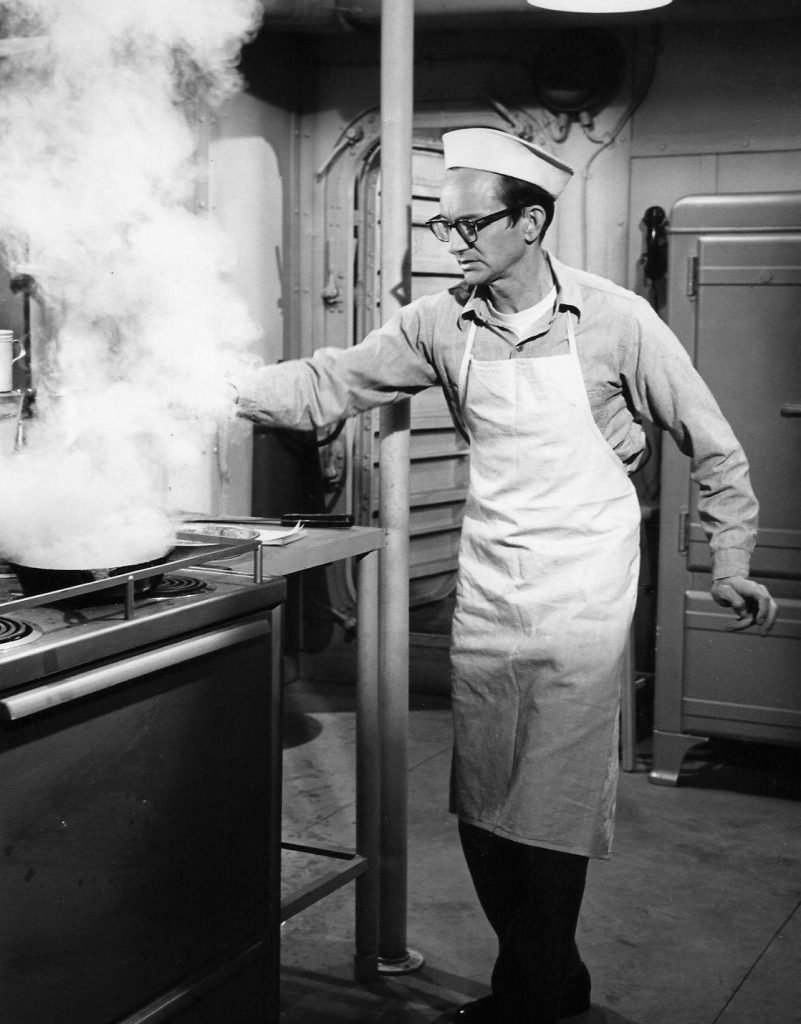
‘There’s no need to fear! Underdog is here!’ That rhyming hero brought a sense of wonderment into your home, starting with his October 3, 1964 premiere on NBC. Underdog, a mild-mannered shoe shiner by day, ran into phone booths when trouble struck. At Dancer Fitzgerald Sample, an ad agency based in New York, W. Watts Biggers and his partners created the character as part of an effort to promote General Mills cereals with animated characters. Biggers and his partners had a production company, Total Television, which also produced Tennessee Tuxedo.
Wally Cox (of Mister Peepers fame) brought Underdog to life. Cox’s gentle charm gave this unlikely superhero some pizzazz. Sweet Polly Purebred the TV reporter frequently required Underdog’s aid, and villains like Simon Bar Sinister and Riff Raff were always a step behind justice. Underdog’s Macy’s balloon first appeared in 1965. It was a fixture at Macy’s for almost 20 years.
12. The Beatles (1965)
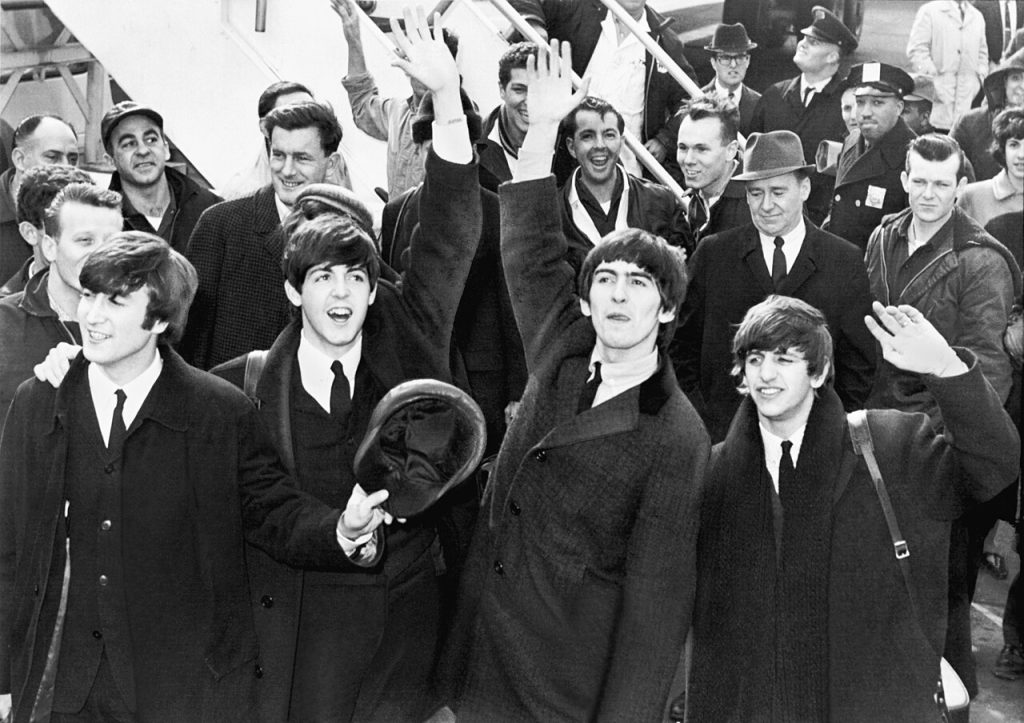
‘They were so bad or silly that they were good, if you know what I mean,’ George Harrison recalled about The Beatles cartoon in 1999.
Debuting on ABC on Saturday morning, September 25, 1965, the Beatles’ adventures were nothing like what you’d expect. Each episode featured Beatles tunes and made-up adventures for John, Paul, George, and Ringo. The band didn’t take part in the series or lend their voices. Producer Al Brodax of King Features, who went on to produce Yellow Submarine (1968), pitched the idea to their manager, Brian Epstein. Paul Frees (the voice of Boris Badenov) took the parts of John and George, and Lance Percival provided the voices of Paul and Ringo. The band was none too keen about the show’s exaggerated Liverpudlian accents. The show ran on ABC from 1965 to 1969.
13. Space Ghost (1966)
Space Ghost first aired on CBS on the Saturday morning of September 10, 1966. The show’s premise was the result of then-head of CBS’ daytime programming Fred Silverman wanting to emulate the success of the superhero genre. Silverman wanted a Saturday morning lineup of superheroes and action-packed adventures on CBS. While the series was produced by Hanna-Barbera, the show’s character design was done by comic artist Alex Toth. The title character was voiced by radio announcer (and later the announcer on Laugh-In) Gary Owens with his trademark deep voice.
However, the superhero lineup didn’t last. Following the assassinations of Martin Luther King, Jr. and Robert F. Kennedy, action-packed cartoons like The Herculoids and Space Ghost’s fellow Saturday morning cartoon Birdman and the Galaxy Trio received scrutiny from advocacy groups worried about violence. President Johnson even established the National Commission on the Causes and Prevention of Violence in June of 1968, and the networks took the investigation seriously. By 1969 cartoonists and networks had replaced superhero cartoons with more comedy cartoons in their Saturday morning lineups.
14. George of the Jungle (1967)
If you were a kid in the ’60s you likely remember George of the Jungle. Debuting on ABC on Saturday morning, September 9, 1967, the show was the brainchild of Jay Ward and Bill Scott (of Rocky and Bullwinkle fame). Each half-hour cartoon also featured Tom Slick and Super Chicken. George was a send-up of Tarzan and in the theme song the singers try to warn George ‘watch out for that tree!’ just as he swings into it face-first. Jay Ward liked it well enough to allow it to go over budget, meaning there were only 17 episodes of the big-hearted but dim-witted ape man’s adventures.
Your turn: which of these did you hurry to the set for, and which theme song is still stuck in your head? Did a station in your town run cartoons with a local host in between? Tell us in the comments.
More trips down memory lane: the Saturday-morning ritual itself, from the test pattern to the cereal bowl, in Saturday Morning Cartoons: When One Morning of TV Was Worth the Whole Week’s Wait, and the room where the set stood in things you’d notice in a ’50s home.
Top photo: A 1950s living room, television and all, re-created at the Ohio History Center in Columbus. Photo: DogsRNice / Wikimedia Commons, CC BY-SA 4.0.
Photographs are in the public domain or used under Creative Commons licenses, as credited in each caption.


Leave a Reply