
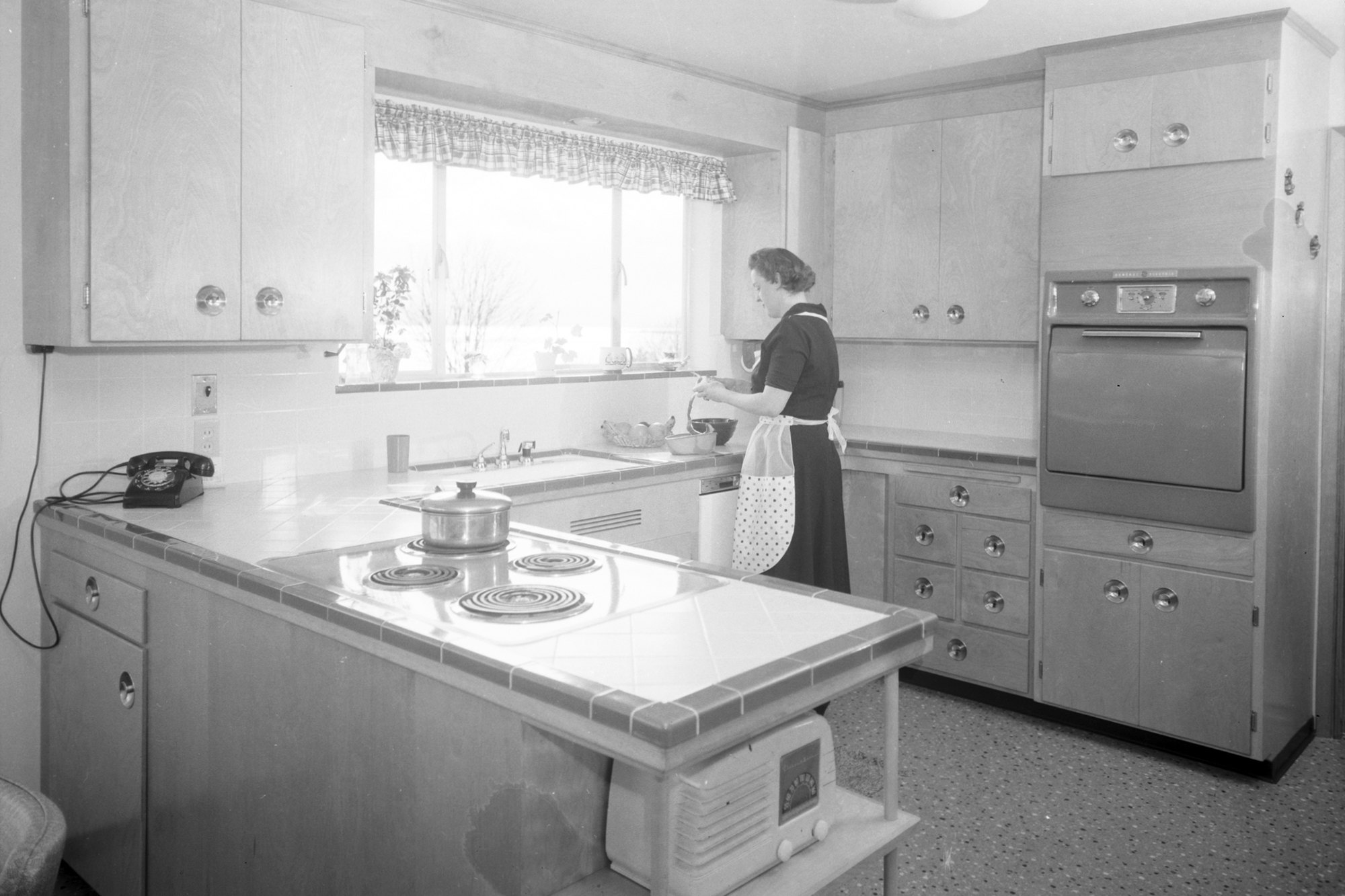
The first thing you would notice is the smell. If you walked into an average home in the 1950s, you would immediately be struck by the whiff of cigarettes, which was a natural part of socializing at the time. Just beneath it would be a smell like a mix of candles and kerosene, which came from the paste wax commonly used on floors at the time. Indeed, homes had many more odors, which gave every house more presence and personality. The next thing that would hit you was the sound, whether it was the overbearing ticking of a heavy wooden clock, or the ridiculously loud hum of the refrigerator in the kitchen, especially if they still had a GE Monitor Top kicking around, because those were built to last. If you started to interact with anything, like a lamp, an ashtray, or a piece of furniture, the first thing you would notice is how darn heavy it was. You are in the 1950s, my friend. Have a seat, but turn on the TV first because there is no remote.
1. Returnable Glass Milk Bottles
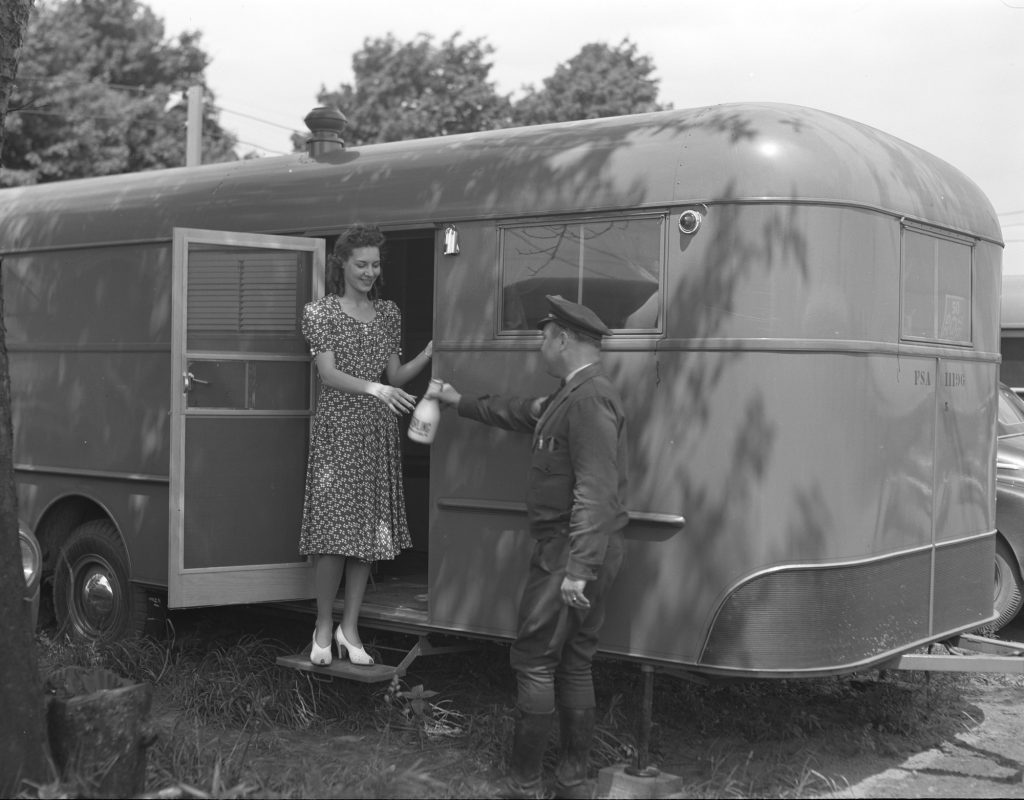
Back in the day, milkmen made deliveries to your home two or three times a week. Empty glass milk bottles with a note tucked inside would be placed on the porch, and he followed the notes. Some homes even had a special milk bottle door into the wall, accessible from the porch as well as the kitchen. You stayed on the milkman’s good side, since a skipped delivery could result in sour milk.
Glass bottles were returnable for a deposit. Your local dairy’s name and address (as well as the size of the bottle) was fired onto the bottle, typically in red lettering. They were typically one-quart bottles with a waxed cardboard cap. Your empty bottles would be washed, refilled and reused, and payment to your milkman was typically rendered once a month.
Many times the milk was unhomogenized allowing the cream to rise to the top. On days when temperatures hovered below freezing, kids would vie for the privilege of eating the two-inch frozen cream cylinder that jutted from the bottle’s neck. It made for an oddly intimate relationship with the dairy, and a lot of jokes about kids who looked suspiciously like the milkman.
2. Metal Ice-Cube Trays With Release Levers
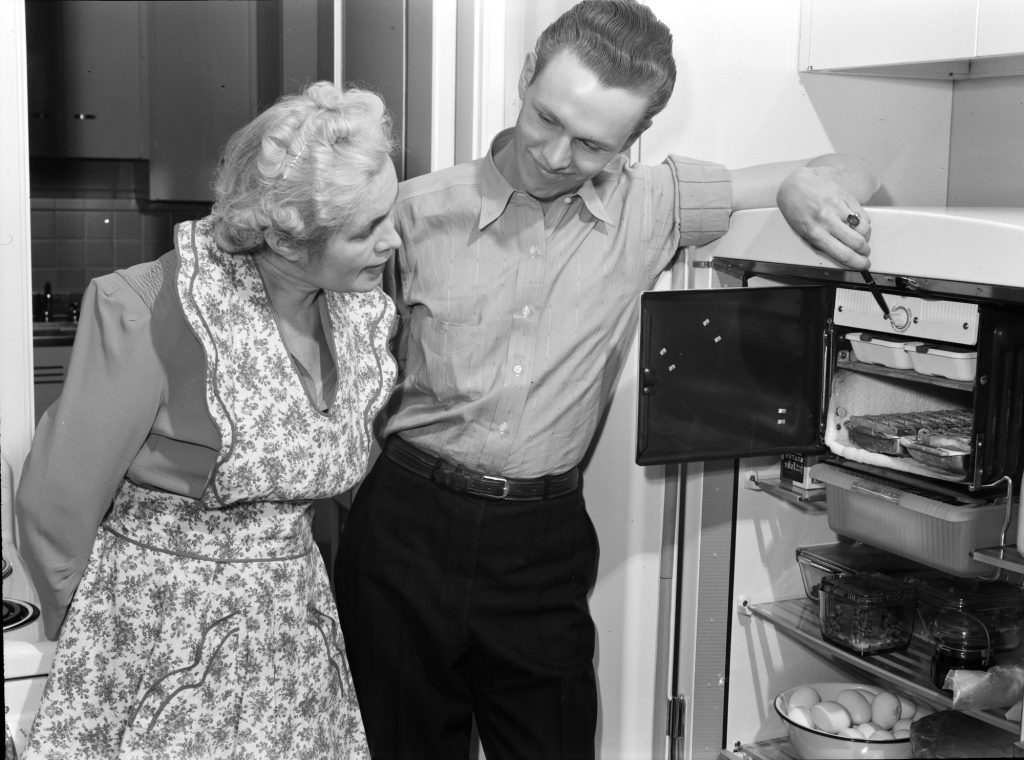
You wanted ice? You filled up the aluminum tray, usually twelve cube sections, in the sink, walked to the freezer without spilling any of it, placed it in the freezer and waited. Later, with great patience and hope you’d lift up on the lever (there was one down the center of the tray) that caused the grid to flex and loosen up the cubes. This was the theory. In reality, more often than not, you’d give that lever a pull and nothing happened. And again. And nothing. Warm water next. Another lever pull and…well, you got some ice but most likely some very cold fingers and more shards of ice than actual cubes. Maybe you’d hear the gratifying crackle-groan of cubes freeing themselves, twelve perfectly formed little gems, but either way, it wasn’t a push-button process. The freezer itself was a small metal box at the top of the refrigerator. Frozen food was just becoming popular then, so the fridge had just one door. Freezers today are often as large as the refrigerator and have their own door.
3. A Bubbling Coffee Percolator
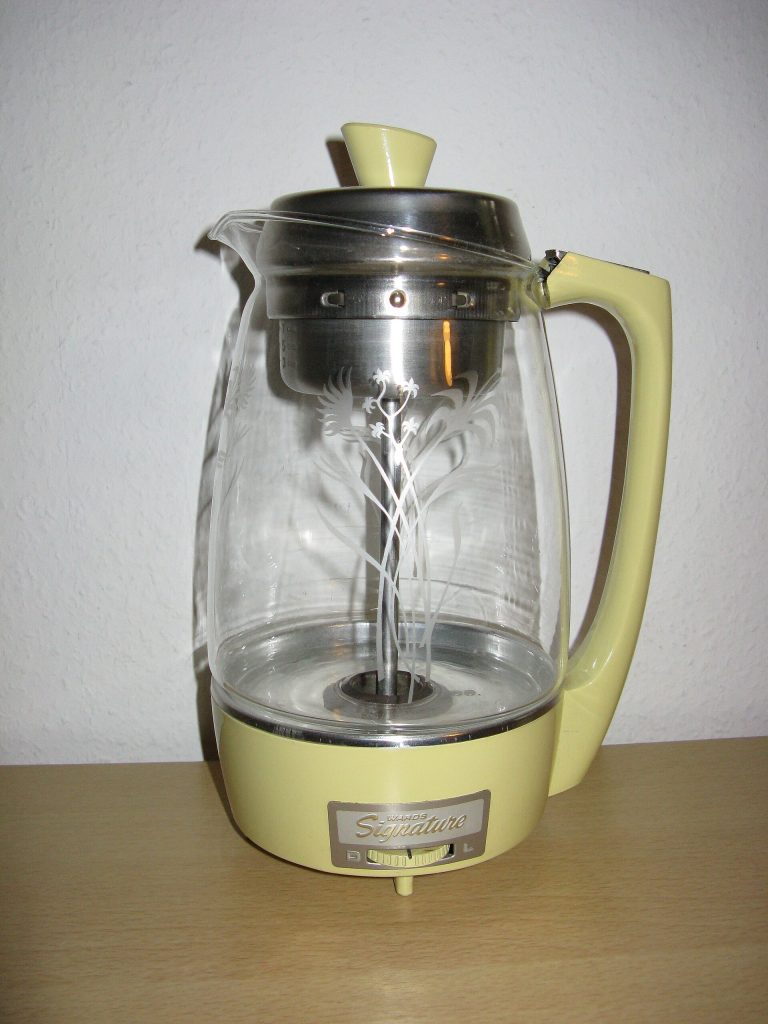
The percolator was the primary means of brewing a cup of coffee whether it was for everyday fare at breakfast or entertaining. You would place the percolator on the stove and listen to the distinctive bubbling sound. The mechanism of the percolator sent the heated water through a small tube to the top and sprinkled it over the basket of coffee grounds (the basket had little holes) and the process repeated over and over until you thought your brew was strong enough (there was a little glass knob on the percolator lid so you could watch the coffee get darker and darker). Most people used stovetop percolators, often Revere Ware or Farberware. Others had the electric version and could plug them into an outlet. Vacuum pots also had their fans and so did instant coffee. In 1961, the gurgling sound was featured in a famous Maxwell House coffee commercial that continued throughout the decade. Two decades later, percolators gave way to drip coffee makers. They never got a jingle, because drip is too quiet to hum. The sound picked up pace and then eased off as the pot finished, and you knew the coffee was ready.
4. A Hand-Cranked Eggbeater
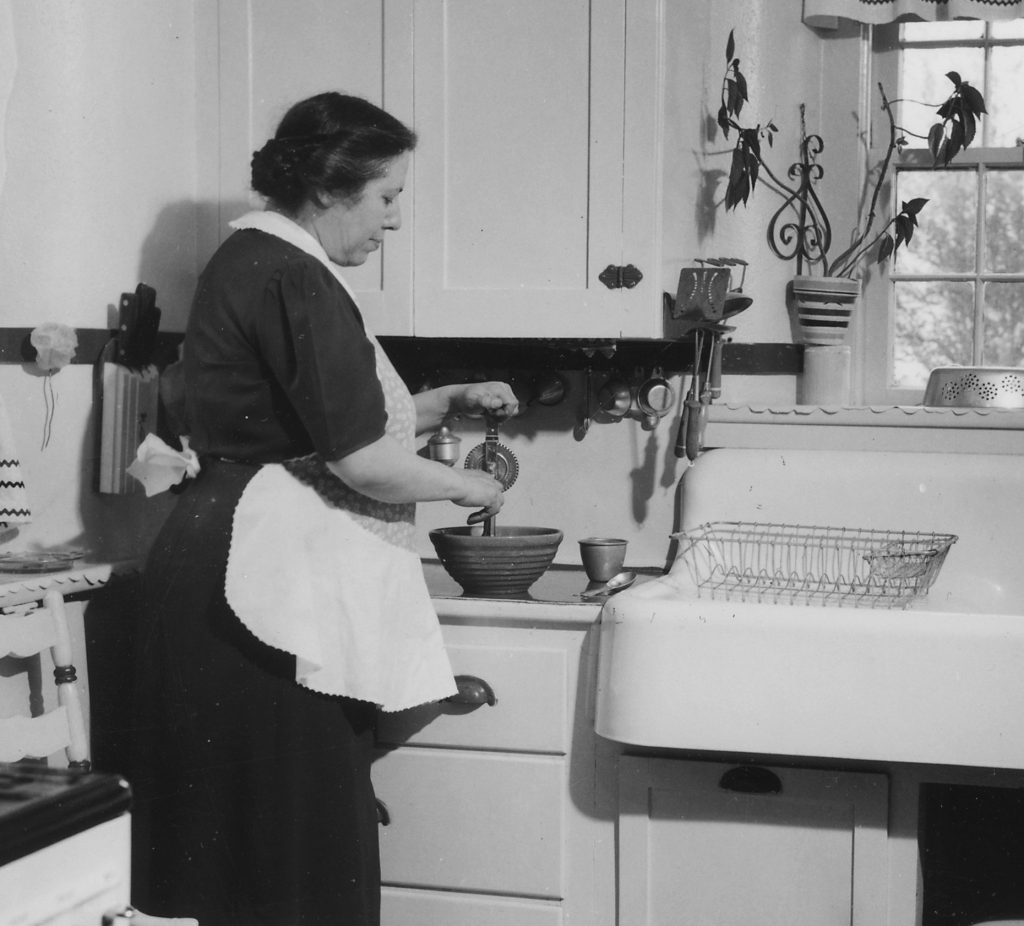
I don’t think much about beating eggs today, but in the 1950s you apparently needed heavy industrial equipment to do it. Many houses used the Dover-style eggbeater, featuring two gears in a metal frame, wire beaters and a crank on one side. You’d hold the bowl in place with your non-cranking hand lest it sail across the countertop (or jam it under a hip or against a knee), and beat away. They worked fine for whipping cream, scrambling eggs, mixing cake batters (anything a fork could do, a Dover could do faster). They made marks on mixing bowls. Ask people about them now, and they mention the satisfying sound. And, like many kitchen implements of the time, they could double as instruments of medieval torture.
Electric mixers like the Sunbeam Mixmaster were available, of course, but they were expensive; some folks had electric mixers, some folks had eggbeaters, some folks had both.
5. A Telephone Directory Beside the Household Phone
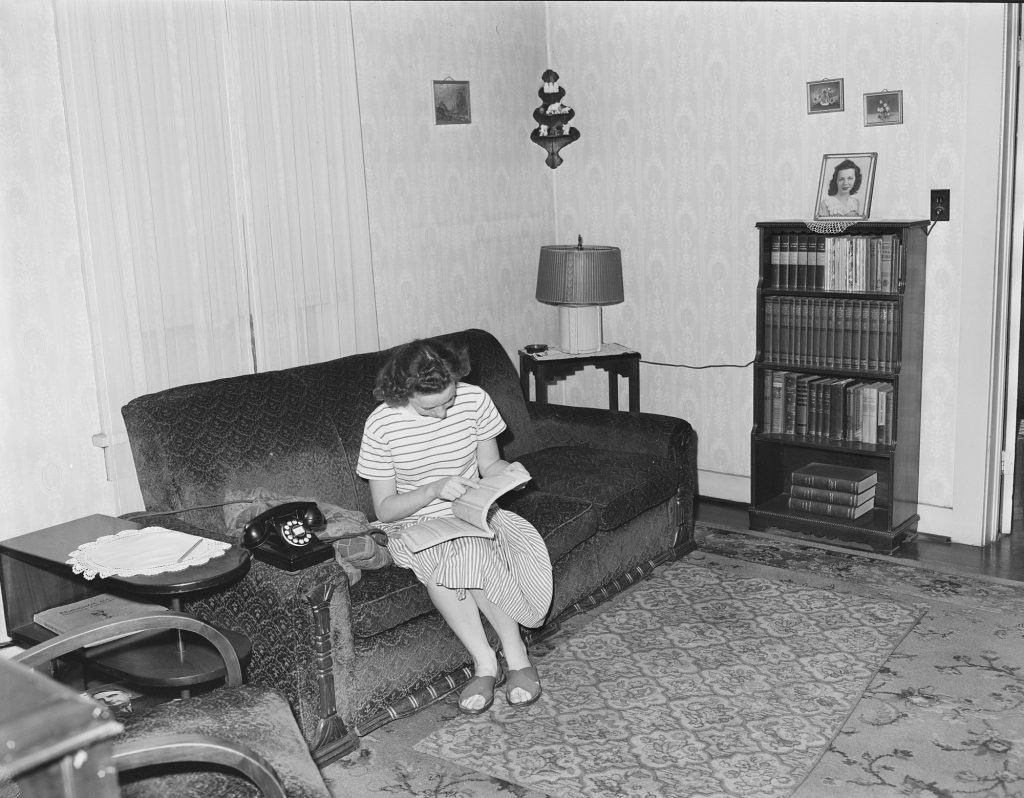
“Look me up, I’m in the book,” was the best way to get in contact with someone. The book was a massive tome listing every number in town, people and businesses both. Usually, there was one phone in the house, and the book sat close to it, in the hallway or the kitchen. Some homes had furniture built for the job, a little seat with a shelf underneath called a gossip bench. At the start of the decade, most people shared a line with their neighbors. It was called a party line, though it was a pretty bad party, because you had no privacy and someone else was always talking. Dialing that heavy rotary phone was slow going: you waited for the dial to click back before the next number, and one wrong digit meant hanging up and starting over. Then you were stuck standing there on a short cord, though at least you had a book to read while Aunt Martha droned on.
6. A Decorative Television Lamp
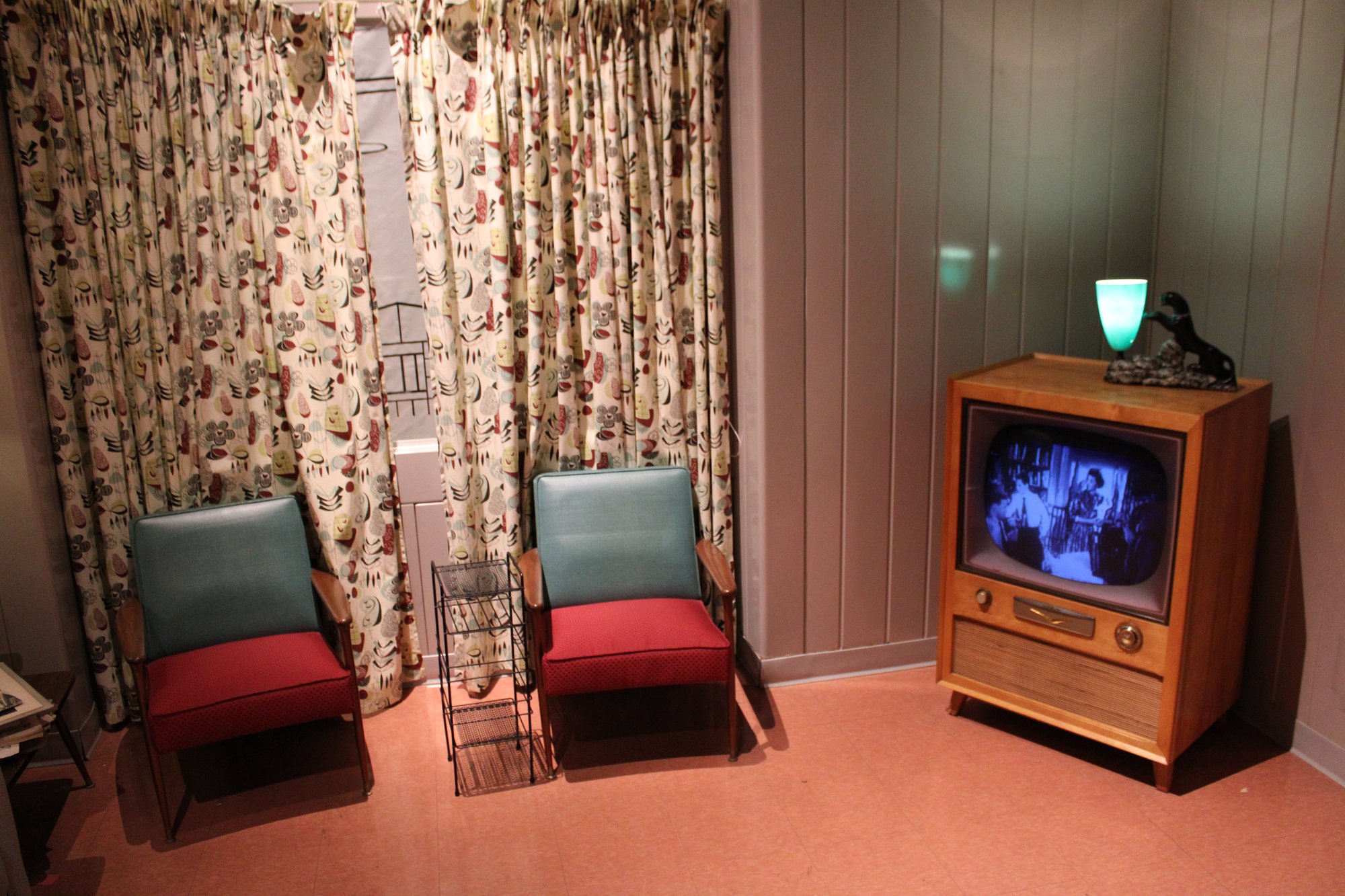
When television arrived in the average American living room, many worried it would take a toll on their eyesight, and that you would go blind if you sat too close. The science never existed, but the fear inspired the television lamp: a ceramic figure with a bulb inside that sat on the set and cast a soft glow behind it, supposedly taking the strain off your eyeballs. The designs were great, usually a black panther or a Siamese cat, perched beside the rabbit-ear antenna you could never adjust exactly right when I Love Lucy was on. Below it sat a boxy black-and-white set with a channel knob you turned by hand. The audience exploded during the decade, from well under one percent of households in 1948 to nearly two out of three by 1955, and more than 100 American companies made lamps for all those sets. They used to cost five bucks and now go for $50 or more, but good luck balancing one on your flat-screen.
7. A Record Changer With a Stack of Records
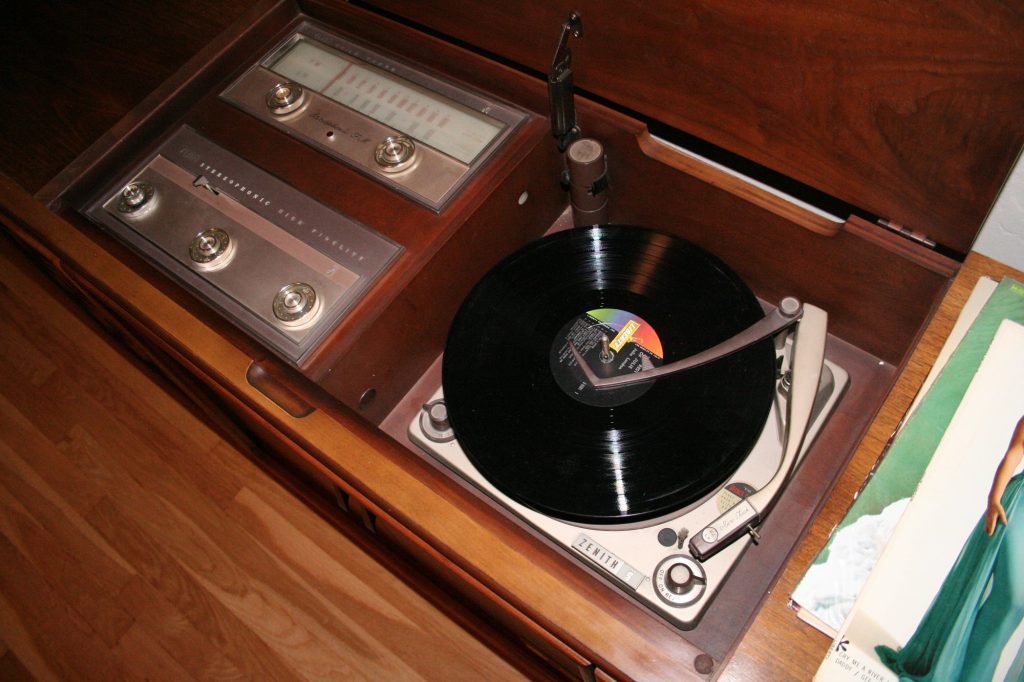
Before you had a playlist on your iPod or Spotify, you had a record changer, which saved you the effort of changing records after every song. The spindle held a stack of records, set in the order you wanted to hear them. Changers had to juggle three speeds in those days, because 78s, 33 1/3 albums, and 45s all shared shelf space, and the 45 was king of the singles. When a song finished, the tonearm swung out of the way, the mechanism released the bottom record onto the platter, and the arm came back down to start the next one. This let you schmooze your guests over a molded salad (a horrific creation involving fruit suspended in Jell-O) and highballs. But the music was often fantastic, and you haven’t lived until you’ve had a cocktail weenie on a toothpick while listening to Nat King Cole.
8. A Mechanical Carpet Sweeper
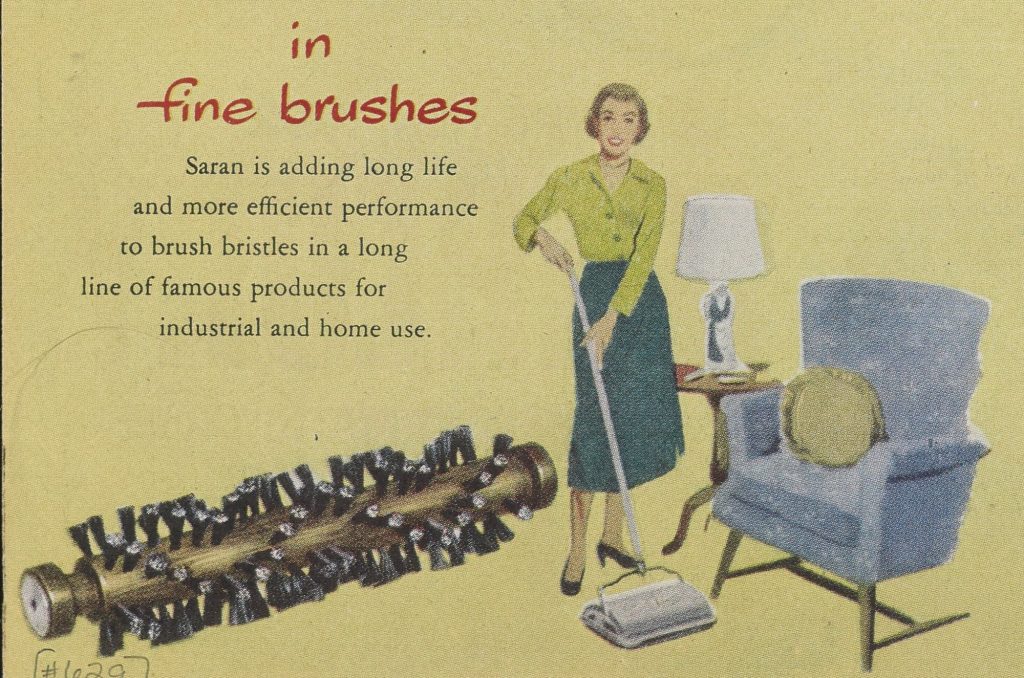
This wonder of technology looked like a small lawnmower, and not like anything that should be indoors. It had a long handle and, at the bottom, a rotating brush to sweep the floor and a compartment for all the dirt it gathered from your carpet. Pushing it was simple, and it collected crumbs and dust with little thought or effort. The unpleasant part was emptying it: opening a small door on the bottom and shaking the carpet-dwelling dirt into the trash. That sounds easy enough, but no matter what you did, about as much dust ended up on your face as in the bin. Vacuums took over the serious cleaning, but for a long while many homes kept both, using the sweeper for a quick once-over after dinner and the vacuum a couple of times a week. You can still buy one today for the same reason. I have a strong feeling the household pets missed these quiet inventions.
9. A Decorative Ashtray on the Living-Room Table
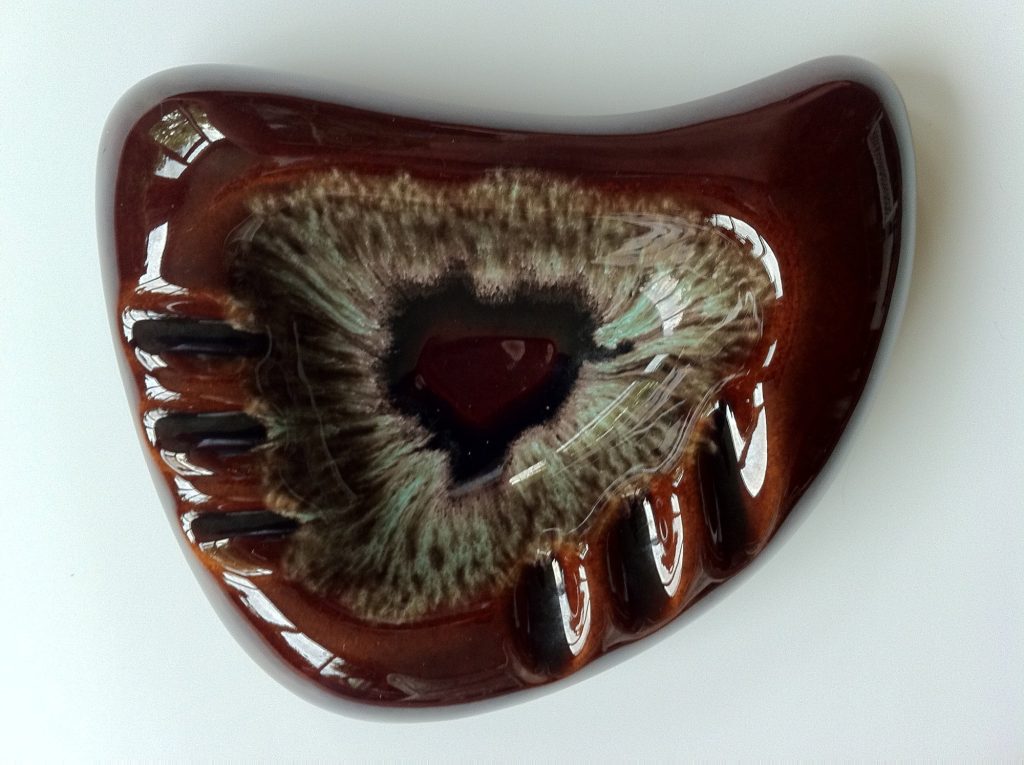
Smoke was hard to avoid in those days, because even if nobody in the house smoked, you could count on a guest who did. Offering an ashtray was as basic as offering your guests a chair and a highball. A social call could be quite hazardous to long-term health, and though research linking cigarettes to cancer had been piling up since the start of the decade, the Surgeon General’s warning was still years away, and most people weren’t thinking about it. All this meant an ashtray in every room, but you didn’t want it spoiling the decor, so it had to complement your flowery wallpaper and Formica countertops. The ashtray you offered guests was often quite elaborate, with atomic boomerang shapes in aqua and pink ceramic among the popular designs. Sometimes you had appropriate ones from a casino or hotel on your last vacation, because they handed out nifty souvenir versions.
10. A Medicine Cabinet With a Razor-Blade Disposal Slot
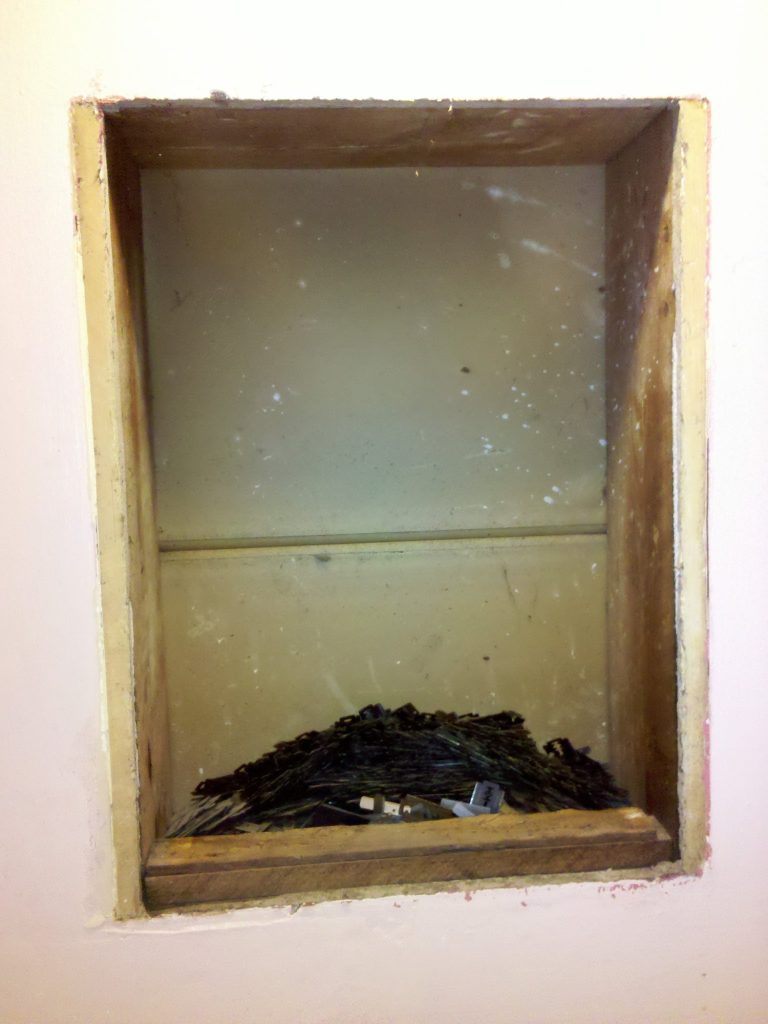
A razor blade can be a dangerous thing, especially in those days, when you handled a bare double-edged blade with your fingers instead of a plastic cartridge. Gillette had popularized them back in 1903, and by the 1950s every shaving household had a steady supply of dull ones to get rid of. People often burned garbage in the backyard, and steel doesn’t burn, so a spent blade lying around was a real hazard. Some medicine cabinets solved this with a narrow slot in the back panel, just wide enough for a blade, which you slid in when you were done. It landed in the cavern inside your bathroom wall. What happened next? Nothing. They remained there indefinitely and rusted, often as thousands gathered over the years. Now and then someone renovates or demolishes a home and finds an enormous cache of them. In the 1970s, cartridge and disposable razors took over, and you no longer needed a hole in your wall that led to a razor graveyard.
11. A Washing Machine With Wringer Rollers
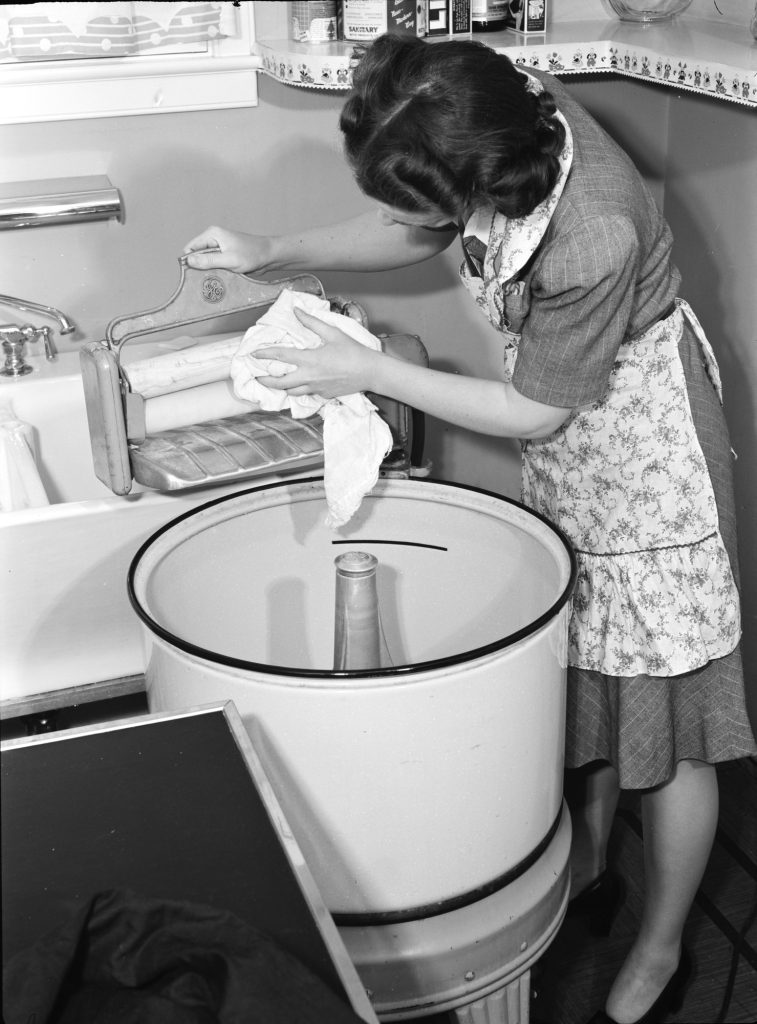
This isn’t what we think of as a typical washing machine. It looked more like a big tub with rubber rollers mounted on top. After agitating clothes in the soapy water in the tub, the clothes are squeezed between the rubber rollers, wringing out all but a little of the remaining water. You’ll be standing over the tub for an entire load of laundry, feeding items to the rollers one by one, but you’ll be grateful that your laundry will come out of those rollers nearly dry and nice and flat, perfect for tossing on a drying rack or a clothesline.
Those rollers could also grab an errant sleeve and suck your finger or worse, your entire arm into the machine. The resulting degloved limb, when flesh is literally skinned away from muscle and bone, was so commonplace that medical journals had a name for it: “wringer arm.” Fully automatic washing machines were available at this time, but they were more expensive, so many families continued to use their wringer machines well into the next decade.
12. A Darning Egg or Mushroom in the Mending Basket
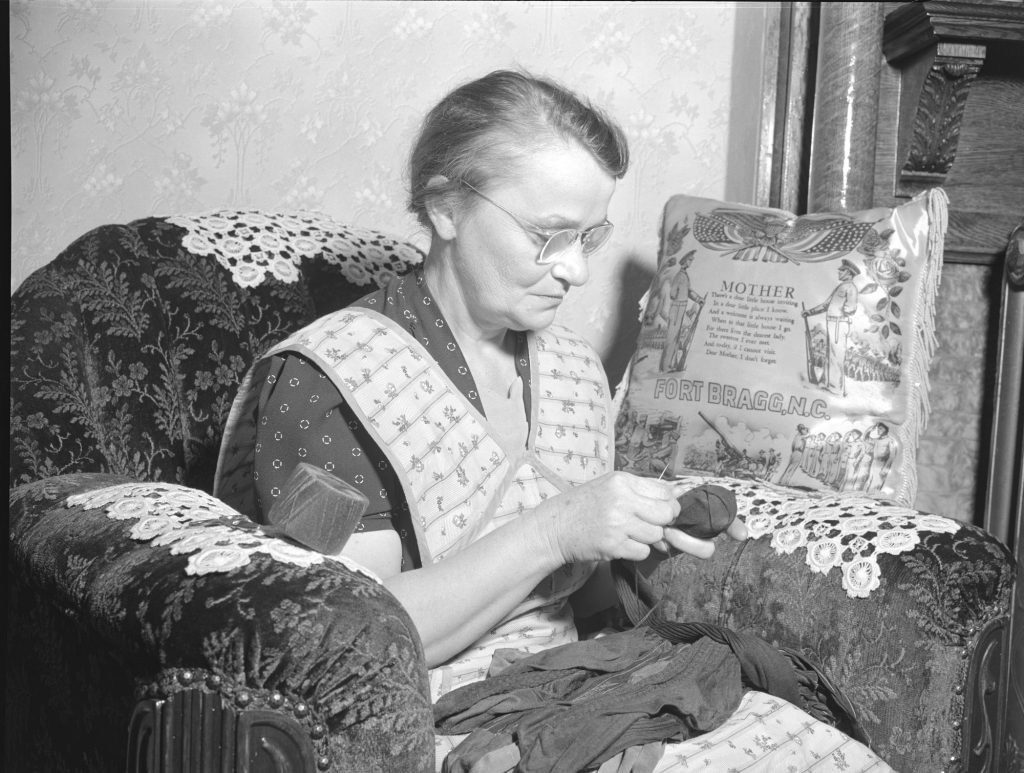
When I hear about eggs and mushrooms, I think of an omelet. But a darning egg was used for repairing worn-out socks. The egg was inserted into a sock where there was a hole. This made the sock stretch out making it easy to darn. The egg also prevented the weaver from making the darned portion of the sock tighter than the rest. For generations, darning eggs (made of hardwood or glass) and darning mushrooms (which had a stem that allowed for an easier grasp during marathon darning sessions) were an important tool for homemakers. They served the same purpose. Darning eggs and mushrooms were already old-fashioned by the 1950s but were still used by many families due to the thrifty ways learned during wartime. Or maybe some folks just couldn’t part with perfectly good socks because of one worn-out heel. Either way, cheaper, more disposable clothing has caused these objects to take a backseat to eggs and mushrooms of the omelet kind.
A Different Pace
It’s funny, these items aren’t necessarily unique, exotic, or unusual, they’re just…from the past. Heavier, clunkier, longer-lasting. They had smells associated with their use, took longer. There’s something to be said for the heft of things, which is representative of a different, slower pace of life. And of course I have to mention the mysterious, rusted razor blades in the walls…which raises the question of what a house is even for! What’s the one you remember from a grandparent’s house, and which item am I missing? Tell me in the comments below.
Featured photo: Seattle kitchen, March 29, 1956, Seattle Municipal Archives (CC BY 2.0). Other photographs are public domain or used under Creative Commons licenses, as credited in each caption.

,_around_1960_-_top_view.jpg)

.jpg)
Leave a Reply