If you were a kid in the sixties, you may remember getting your own library card and poring over picture books on the library shelves or climbing aboard the bookmobile when it was parked in your school’s lot. You held the pile of books you’d checked out, remembering the date they were due back stamped on the inside. Books were being read aloud on living room rugs and in first-grade classrooms throughout the decade.
Not every small, rural town had a library, and some only had bookmobiles. But in 1956, Congress passed the Library Services Act providing federal grants to states to improve library service to communities with populations of less than 10,000 people. Oftentimes this money was used for bookmobiles.
I was a bit older than the intended audience of some of these books as I turned 10 in 1960, but I have a soft spot in my heart for our reading culture during the 1960s. Here are a few of those books with their true-to-life backstories.
1. Dick and Jane (and Sally, and Spot)
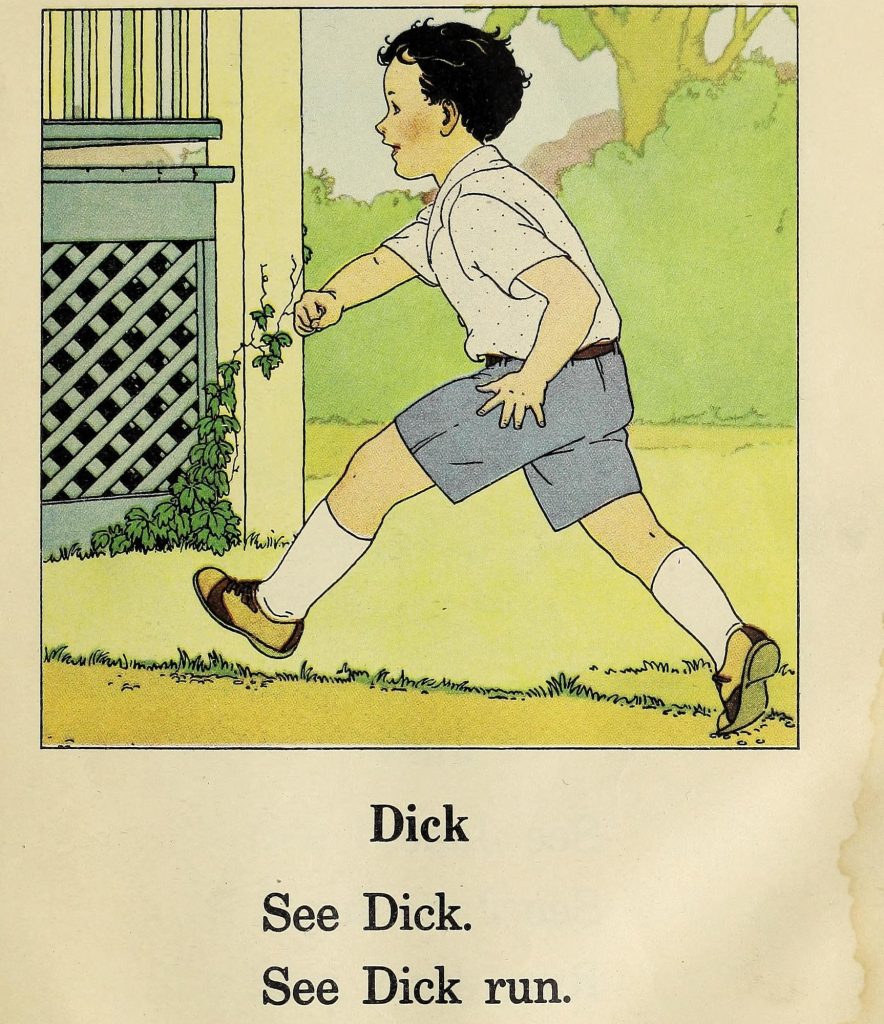
Chances are, you learned to read using Dick and Jane. Published by Scott Foresman beginning in 1930, Dick and Jane, the storybook brother and sister, were at the center of an apparently idyllic, apparently all-white suburb. With short, easily-comprehended narratives and plenty of repetition, children could learn to read through Dick and Jane’s adventures with baby sister Sally, their dog Spot, and cat Puff around their perfectly tidy house. At their 1950s peak, an estimated 80 percent of first graders in America learned to read with Dick and Jane. From their introduction in 1930 until 1970, an estimated 85 million children learned to read with Dick and Jane.
Not everyone was a fan of the series’ look-say approach to learning to read; author and education advocate Rudolf Flesch’s 1955 Why Johnny Can’t Read called for teaching children to read with phonics instead. In 1965, Scott Foresman became the first publisher to introduce a Black family into a first-grade reader. Mike, his twin sisters Pam and Penny, and their parents moved into Dick and Jane’s neighborhood that year. No new editions of Dick and Jane came out after 1965.
2. Little Golden Books
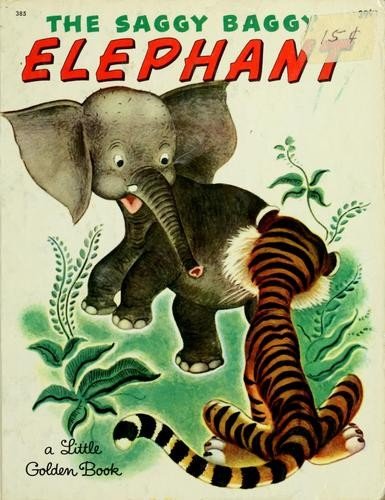
An estimated two billion Little Golden Books have been printed. The Poky Little Puppy was one of the original 12 Little Golden Books introduced in 1942 for just 25 cents apiece. Besides bookstores, the publishers made sure there was a gleaming row of shiny-gold-spined volumes in department stores, supermarkets, train stations, and five-and-dimes where it was easy for a parent to cave in and pick one up for the kiddo at the register. Printers churned out 1.5 million in the first five months alone. The Poky Little Puppy is the bestselling children’s book of the 20th century with nearly 15 million sold. Other titles have sold millions, including The Saggy Baggy Elephant (1947) and Scuffy the Tugboat (1946). By the time your average 1960s kid entered the picture, Little Golden Books were a fixture.
3. Harold and the Purple Crayon (1955)
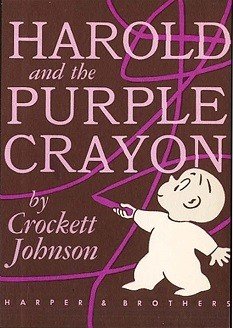
And then there’s Crockett Johnson’s Harold and the Purple Crayon, which was already on library shelves at the beginning of the 1960s. Published by Harper in 1955, Harold is about a boy who sets out one night for a stroll in the moonlight armed only with an oversize purple crayon, with which he draws whatever he needs (even the moon, which he draws hanging above his head).
Johnson was the pseudonym of David Johnson Leisk, who grew up in Queens and studied art at Cooper Union in New York. Before Harold, Johnson was known for his 1940s comic strip Barnaby (once a favorite of Duke Ellington and Dorothy Parker). The book told you that you could create your own world, that there was power in purple. After reading it, kids often wanted a purple crayon of their own to create adventures on whatever surfaces came closest to hand: usually, unfortunately, their own bedroom walls.
4. Charlotte’s Web (1952)
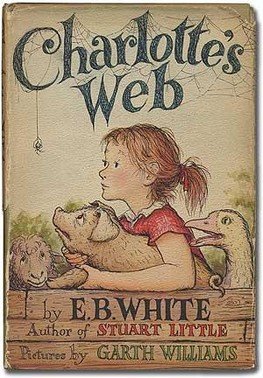
In 1953 the Newbery Medal went to Secret of the Andes by Ann Nolan Clark, and one of that year’s Newbery Honor Books was Charlotte’s Web by E.B. White. It’s another book you’d be hard pressed not to remember from elementary school. Published in 1952 by Harper & Brothers and illustrated by Garth Williams, it tells the story of a pig, Wilbur, and Charlotte the spider who saves him with the words she writes on her web.
White and his wife Katharine bought a farm in Brooklin, Maine, in 1933, and White’s experience with pigs, sheep, and geese on his farm formed the basis for the animals in Charlotte’s Web, including the barn belonging to farmer Zuckerman in the story. White conducted extensive research on spiders and even sent books to Williams about spiders to ensure Charlotte was true-to-life as a barn spider. It’s the kind of story your teacher would read to you during your own elementary school years. One chapter here, one chapter there, and then those precious moments of quiet as your classmates and teacher reached the last chapter.
5. Green Eggs and Ham (1960)
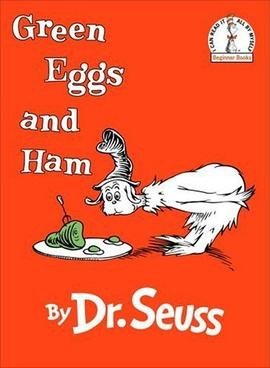
The Cat in the Hat came out in the spring of 1957 and was a huge hit, containing 236 different words. Seuss’ friend, Random House publisher Bennett Cerf, made a bet with Seuss in 1959. He wagered Seuss $50 that he couldn’t write a children’s book using only 50 different words. Seuss took him up on it and wrote Green Eggs and Ham, published August 12, 1960. It is Seuss’ biggest-selling book, but he often said Cerf didn’t pay him for winning the bet. Seuss restricted himself to one-syllable words, with one exception, the word ‘anywhere.’ He described the process of writing it as ‘unraveling a sock,’ especially when he couldn’t come up with rhymes. The story is about a persistent Sam-I-Am trying to get a grouchy character to try green eggs and ham, and for most of the book he refuses. Children love reading it, particularly Sam-I-Am’s lines.
For the rest of Seuss’ life, green eggs and ham was a popular culinary theme used to honor Seuss at public dinners. Apparently Seuss didn’t like them, as he once referred to the dish as ‘Deplorable stuff.’
6. Go, Dog. Go! (1961)
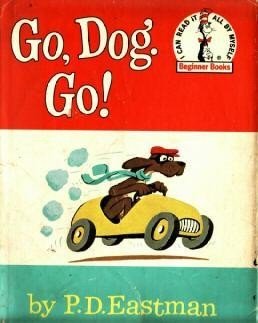
Go, Dog. Go! was published in 1961. Written and illustrated by P.D. Eastman, it was one of the Random House Beginner Books (a reading series edited by Dr. Seuss). Eastman trained as an artist at the National Academy of Design, and his first Beginner Book, Sam and the Firefly, came out in 1958. He wrote numerous other children’s books, and altogether his books have gone on to sell in excess of fifty million copies.
Go, Dog. Go! is full of canine characters zooming around (in cars, on bicycles, scooters and roller skates) intent upon getting wherever they’re going, whatever that may be. One character keeps asking another, ‘Do you like my hat?’ The story ends with all of the characters celebrating on top of a tree. All told, the story contains a mere seventy-five unique words.
7. The Phantom Tollbooth (1961)
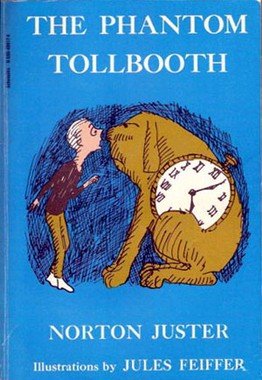
Written for older kids that are ready for chapter books filled with word games, The Phantom Tollbooth is about a bored boy named Milo who one day finds a tollbooth sitting in his bedroom. When he drives his toy car through it he lands himself in the Kingdom of Wisdom where he travels from the Foothills of Confusion to the Valley of Sound.
Trained as an architect, Norton Juster worked for a New York City firm when he was coming up with ideas for what would become The Phantom Tollbooth in his late 20s. It was during this time he met cartoonist Jules Feiffer when they were taking out the trash at their Brooklyn apartment building. Juster would pace back and forth in his apartment while working on his book, and Feiffer started popping up to see what he was writing, which led to Feiffer illustrating the book.
The book was published by Jason Epstein at Random House in 1961 and has since gone on to become a classic. By 2011 it had reached 3.3 million in total sales, and Juster said, ‘I had no idea when I wrote it that it would last more than 15 minutes.’
8. A Wrinkle in Time (1962)
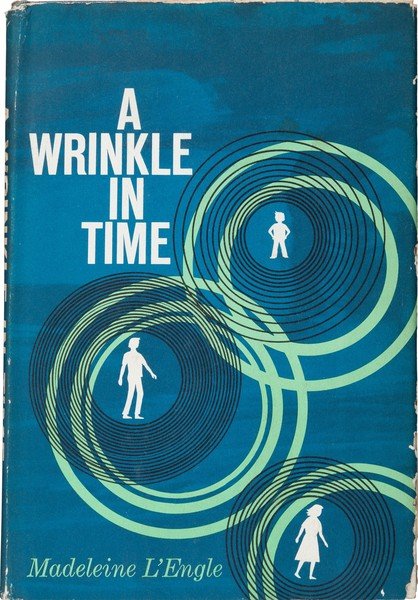
Do you remember A Wrinkle in Time by Madeleine L’Engle? It’s a book many people might have reached for off of a library bookshelf (perhaps around their eleventh or twelfth birthdays) and thought about for weeks afterward. Published in 1962 after 26 rejections and winner of the John Newbery Medal the following year, L’Engle’s classic starts with the words ‘It was a dark and stormy night.’ The story follows a young girl named Meg Murry, who, wrapped in a quilt in her attic bedroom, watches a storm rage on outside of her window as she ponders all of the troubles that have been plaguing her: her issues in school, her father’s absence (the object of much gossip in their town since he’s been missing for so long). By 2007 the book, published by Farrar, Straus, had seen 8 million sales.
9. The Snowy Day (1962)
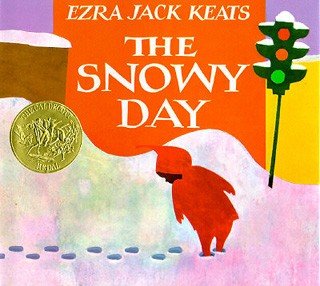
Viking published The Snowy Day by Ezra Jack Keats in 1962. Peter, wearing his red snowsuit, explores his neighborhood, now covered in snow. He knocks the snow off a tree and puts a snowball in his pocket to save for later (only to discover it has melted at bedtime). The illustrations, done with cut-paper collage, were innovative at the time for a children’s picture book.
The Snowy Day won the Caldecott Medal in 1963, becoming the first such book with an African American main character to win. In 2020 the New York Public Library named it as their most checked out book of all time. Keats, who was raised in Brooklyn, kept four photos of a boy from a 1940 issue of Life for more than twenty years before finally using them to create The Snowy Day. His choice to depict an African American boy, even though Peter’s race is not specifically mentioned in the book, was noteworthy. As Nancy Larrick noted in a 1965 article in Saturday Review, just 6.7 percent of children’s books, meaning 349 titles out of 5,206, published between 1962 and 1964 featured African Americans.
The book’s illustrations have been the site of debate because Larrick felt Peter’s mom was depicted in a stereotypical way, leading Keats to pen a letter in response. The Snowy Day still invites discussion around who gets to tell what stories. And yet the plot itself is so simple, just a kid enjoying a snowy day.
Did You Know?
When Viking Junior Books advertised The Snowy Day to librarians in October 1962, its ads in School Library Journal and Top of the News appeared to show Peter as a white child. When ads ran later that year in The Horn Book and The New York Times, Peter was shown as Black, in silhouette. Writing in The Horn Book in 2016, Kathleen T. Horning called it “clearly a conscious choice.”
10. Where the Wild Things Are (1963)
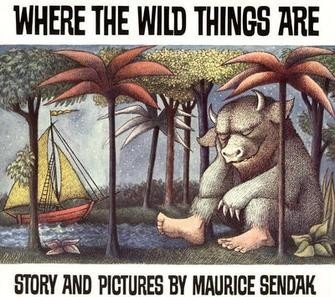
Maurice Sendak’s book came out from Harper & Row in 1963 and won the 1964 Caldecott Medal.
You probably remember Max putting on his wolf suit, getting in trouble, being sent to bed without supper and then traveling to the land of the wild things. Some librarians and parents thought the monsters were too scary for kids, but the kids liked them just fine. According to Sendak, the monsters were based on his own aunts and uncles, who would pinch his cheeks and say ‘I’ll eat you up.’ Fun fact: Sendak’s book dummy of November 17, 1955, was titled Where the Wild Horses Are. The horses didn’t make the final version of the book.
11. Encyclopedia Brown, Boy Detective (1963)
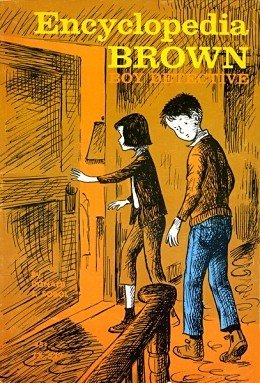
Donald J. Sobol’s 1963 Encyclopedia Brown, Boy Detective introduced ten-year-old Leroy Brown of Idaville. Brown’s father is chief of police, and Brown operates from their garage for a fee of twenty-five cents a day plus expenses. Brown was given his nickname from having what appeared to be an entire set of encyclopedias in his head. Sobol has been quoted as describing Brown as ‘the boy I wanted to be.’
Sobol said he came up with the idea for his book when a clerk at the New York Public Library gave him the wrong book. It was a collection of puzzles with the questions on one side and the answers on the other. Each of Sobol’s Encyclopedia Brown books contains ten short stories. At the end of the book, of course, are the answers to the mysteries, but maybe you could beat Brown to them. The series earned Sobol an Edgar Award from the Mystery Writers of America in 1976.
By the Numbers
- 485,584 times The Snowy Day had been checked out of the New York Public Library by 2020, more than any other book in the library’s history.
- 436,016 checkouts for Where the Wild Things Are, and 337,948 for Charlotte’s Web.
- 1972, the year the New York Public Library finally carried Goodnight Moon (1947). A children’s librarian named Anne Carroll Moore disliked it so much that it stayed off the shelves for 25 years.
- 26 publishers turned down A Wrinkle in Time.
- 25 cents for a Little Golden Book in 1942.
12. The Giving Tree (1964)
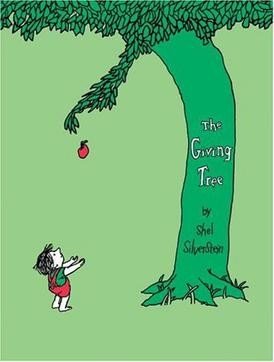
Harper & Row published Shel Silverstein’s The Giving Tree in 1964. On its 50th anniversary in 2014, The Giving Tree was one of the most popular (and most disputed) children’s books ever written, with 10 million copies sold. In the story, a tree falls in love with a boy. She gives him apples to sell, branches to make a house with and eventually gives him her trunk to build a boat. All that’s left of the tree is a stump for the old man that the boy has become to sit on. Some see this story as being about generous love while others see a story about a boy that just takes and takes. New York Times writers Anna Holmes and Rivka Galchen discussed what The Giving Tree was really about back in 2014. If you read The Giving Tree in the 1960s, maybe you couldn’t quite put your finger on why it saddened you.
13. Charlie and the Chocolate Factory (1964)
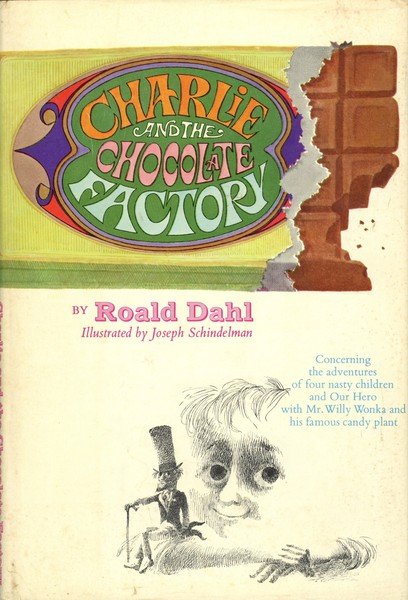
If you grew up reading Charlie and the Chocolate Factory, published in New York by Alfred A. Knopf in September of 1964 (fun fact: author Roald Dahl was British), you probably remember Charlie Bucket, the boy from the poor family who finds the golden ticket in his lucky chocolate bar that allows him to tour Willy Wonka’s incredible chocolate-making factory. Dahl got some of his ideas for the story during his own childhood in England, when Cadbury would ship out boxes of experimental chocolates for schoolboys to taste.
You may not remember that in the original edition of the story, the Oompa-Loompas who work in Wonka’s chocolate factory were Black pygmies brought from Africa, and they were illustrated as being Black. After criticism from children’s book author Eleanor Cameron and the NAACP, Dahl changed the race of the Oompa-Loompas in the revised edition of the book, released in 1973.
14. The Scholastic Book Order
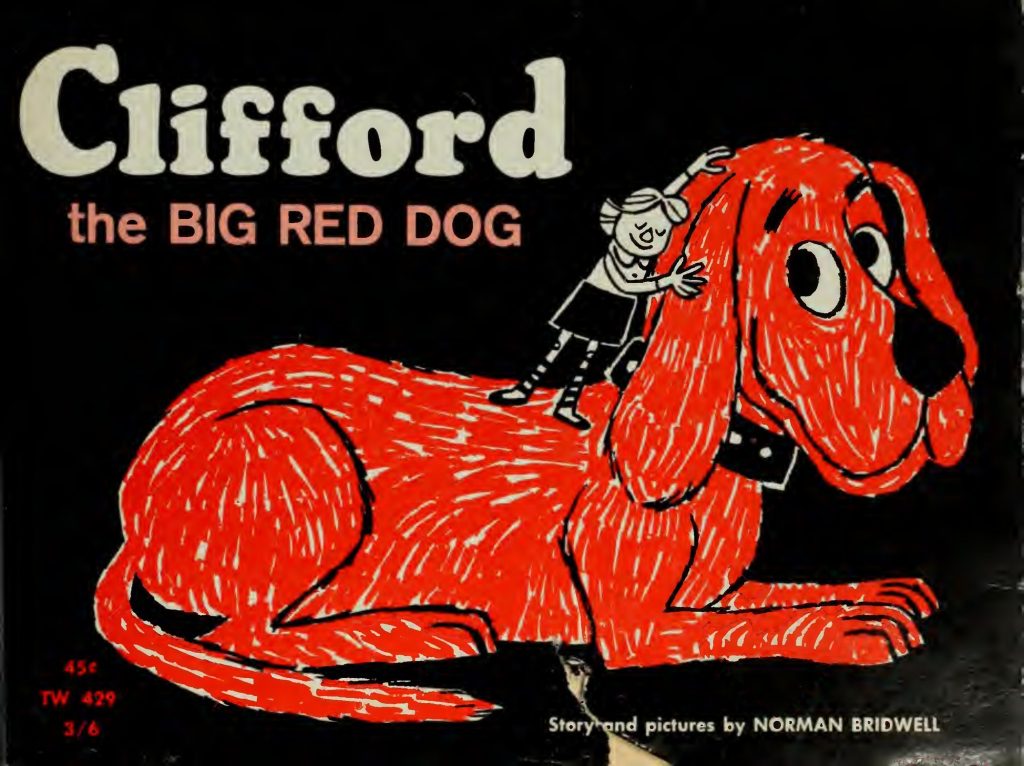
Remember the Scholastic book clubs? For many, receiving the Scholastic book club flyer from their teacher was the best day of the month. The clubs, which were geared toward getting kids excited about reading, gave students the opportunity to own books. The original club, Teen Age Book Club, began in 1948 in partnership with Pocket Books. Order forms were torn out of Scholastic classroom magazines. Lilian Moore came on board as an editor in 1957 and helped develop two more book clubs: Lucky Book Club, which was geared toward the youngest of readers, and Arrow Book Club for kids in grades four through six. And in 1963 a Scholastic book introduced kids to Norman Bridwell’s Clifford the Big Red Dog.
Students would circle the books they wanted, take the flyer home and come back with money. Then, after an agonizing wait for the box to be delivered, their teacher would pass out the paperback prizes and everybody compared finds with friends.
Your Turn
What pictures do you still remember from these books? Did you have a library card, bookmobile stop, or a Scholastic order you were excited for? What book would you add to this list? Tell me in the comments. I’d love to hear your stories and what we all had in common then. It’s always great to get in touch with old friends like you.
If this list sent you back to your school days, you might also enjoy Saturday Morning Cartoons: When One Morning of TV Was Worth the Whole Week’s Wait and Snacks That Only Existed in the 1960s.
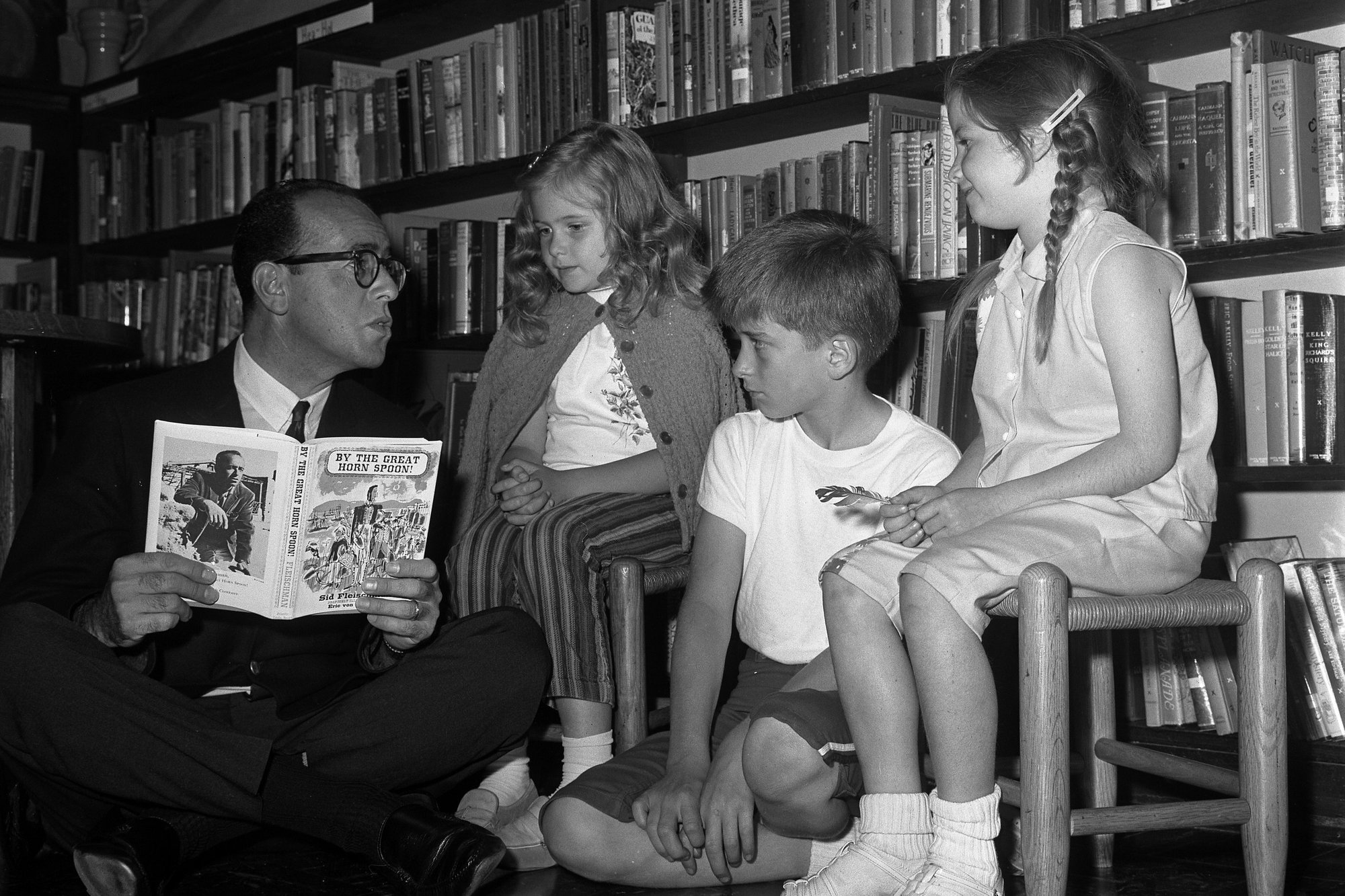
Top photo: Children’s author Sid Fleischman reads from his book By the Great Horn Spoon! to three children in a Santa Monica, California, library, June 1964. Photo: Los Angeles Times / UCLA Library, CC BY 4.0.
Photographs are in the public domain or used under Creative Commons licenses, as credited in each caption. Cover art © the publishers and illustrators named.

Leave a Reply