
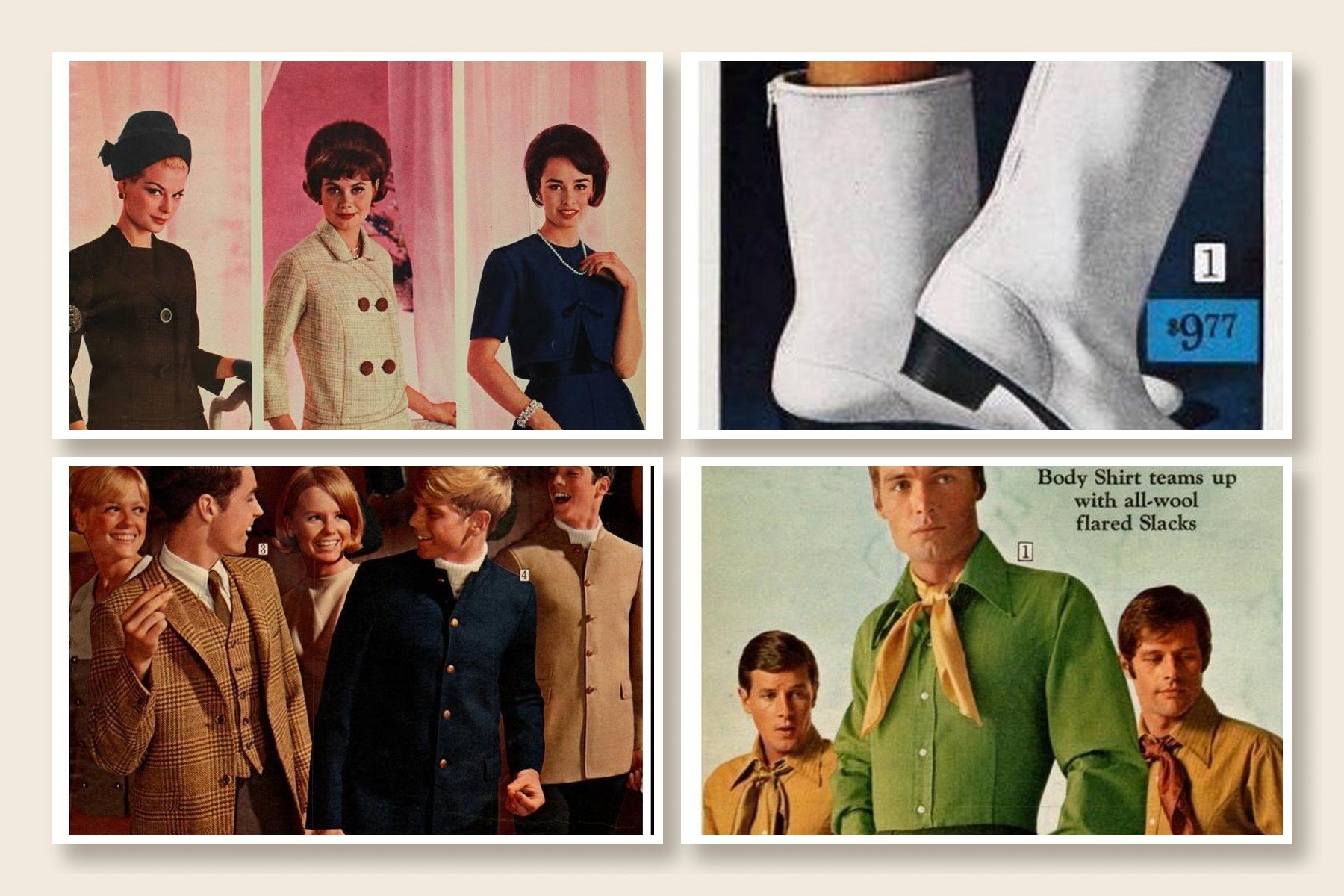
The 1960s had some unique, and sometimes downright far out, fashions that have either long been forgotten or still live rent-free in our minds today. Everything from miniskirts to oversized sunglasses, to corduroy bell bottoms, there were so many fashions and accessories that emerged from this era.
The shift that occurred from the early ’60s where there were tailored looks and everything was very clean cut, to the experimental looks later in the decade including vibrant colors and patterns, showcase the major shift that took place where fashion freedom sort of swooped in and took over, and people began to play with different looks, implementing daring pieces and patterns into everyday looks. Let’s look at some of the most forgotten – and unforgettable – statement fashions of the ’60s, and you can be the judge whether they should’ve stuck around, or it was for the best that they are now gone for good.
1. Paper Dresses
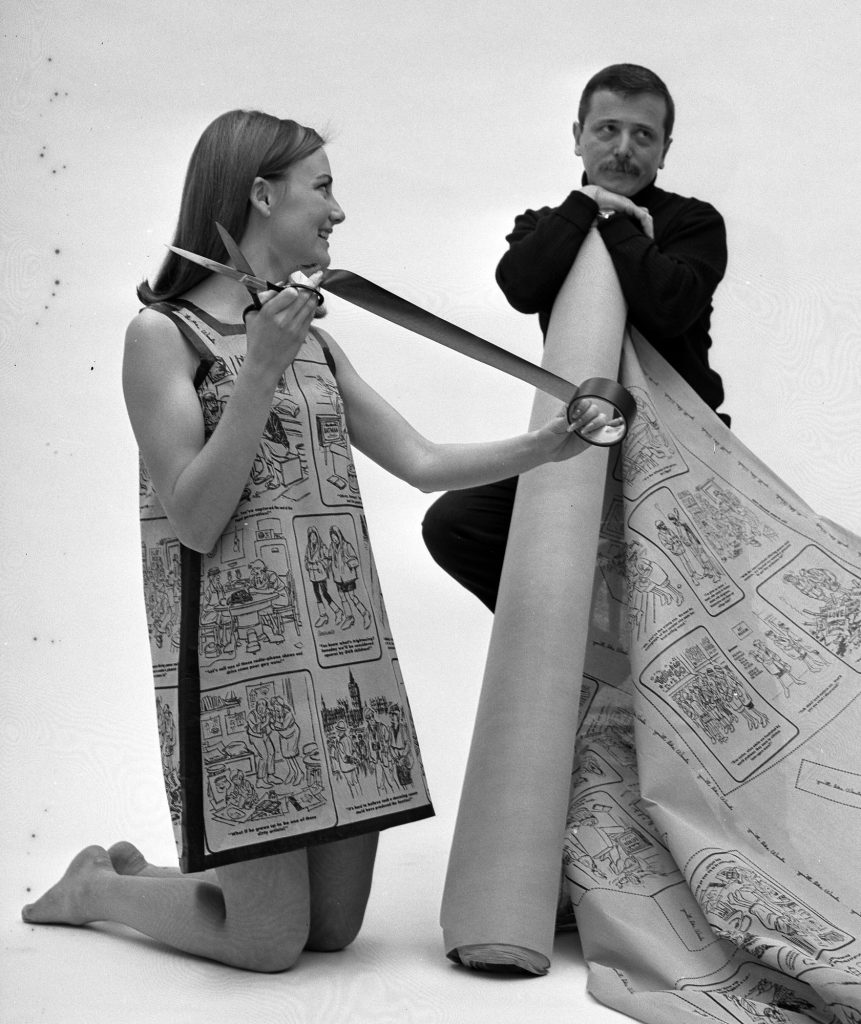
Perhaps one of the craziest concepts of the ’60s was the paper dress. These Dura-Weve dresses weren’t quite ordinary paper, but rather a cellulose paper stock, sometimes reinforced with rayon or nylon mesh. Made popular by The Scott Paper Company in 1966, the Paper Caper disposable dresses were originally supposed to be a marketing gimmick, and the company didn’t expect more than a couple thousand in sales. Much to their surprise, the company wound up receiving nearly 500,000 orders for these disposable dresses – far exceeding anything they had ever imagined possible. The concept was to wear the dress a few times, and toss it.
The way it worked was customers would mail in two proofs of purchase from the company’s paper products, and $1.25, and in return the customer would receive an A-Line paper dress in the mail. Scott offered just two patterns, a black and white op-art print and a red paisley bandana print. The next year the Campbell Soup Company got in on the act with its own paper dress covered in soup cans, made famous by Andy Warhol, for a dollar and two soup labels.
Did You Know?
Scott Paper pulled the plug on its own hit. About six months after the Paper Caper went on offer, the company ended the promotion, with executives saying they “didn’t want to turn into dress manufacturers,” according to the Wisconsin Historical Society. Other companies happily picked up the slack. At the peak of the fad, Mars of Asheville, North Carolina, was turning out 80,000 to 100,000 paper garments a week.
2. Matching Dress and Coat Ensembles
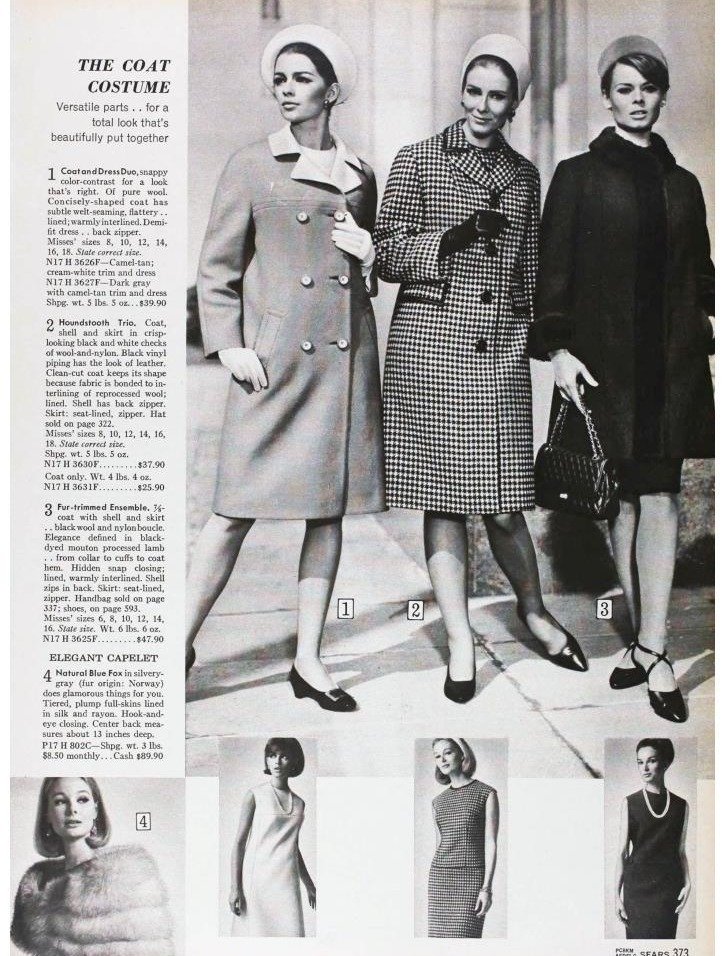
Matching dresses and coats came on the coattails of the matching lip and nail sets Revlon had been selling women since 1940. Matching dress and jacket sets, made popular by fashion icon Jackie Kennedy, were a sign of elegance and high society. It was considered a well-rounded polished look.
The dress and coat sets came in various patterns and colors, most notably wool, velvet, lace, or double-knit fabric. The color schemes varied from yellow, blue, mint green, black and jewel colors. These dresses were typically knee-length, these matching sets were typically paired with pillbox hats, kitten heels or loafers, and pearl necklaces. Stockings or nylons were also worn with the ensemble as well.
3. Pillbox Hats
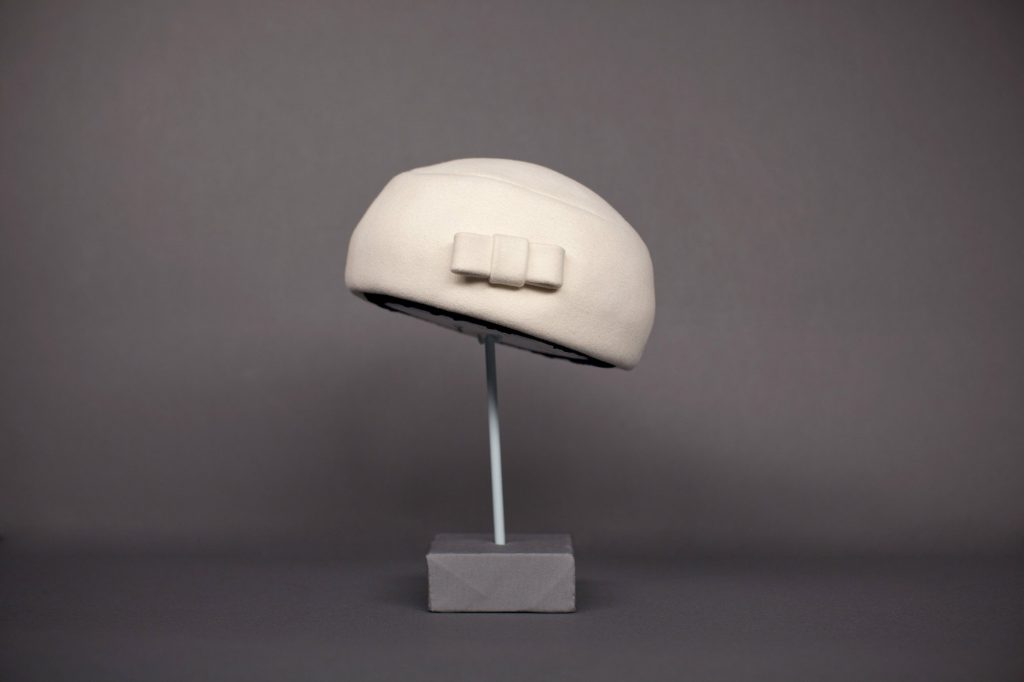
Pillbox hats were known for their round, small, brimless look – a pillbox shape, if you will – sitting high atop the head or tilted slightly to the back or side. As with the matching dress and coat sets, Jackie Kennedy made these hats famous early in the decade.
A small-town department store could sell you a white straw pillbox for $3.98 in 1962, while big-city stores charged a good deal more. Designer hats cost significantly more. Many of the hats were embellished with lace veils, feathers, flowers, beads, and other accents.
4. White Go-Go Boots
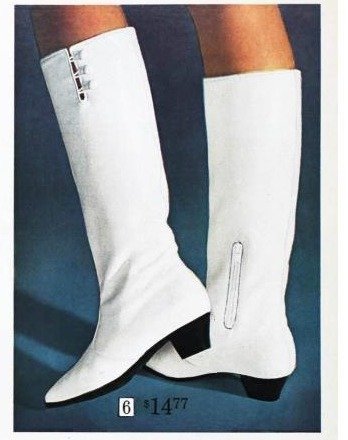
In 1964, the world got access to a new kind of boot never seen in the fashion world – go-go boots. The short, chunky heels, squared-toe, mid-calf white boots would come in either shiny or patent leather styles, and eventually as years went on became taller, climbing to the knee. These boots were usually worn with miniskirts and mod mini dresses.
By the late ’60s, the boots began phasing themselves out as new trends took hold, putting an end to an iconic and memorable look from the era. By the late ’70s, the boots had virtually disappeared from everyday wear.
5. Colored and Patterned Tights
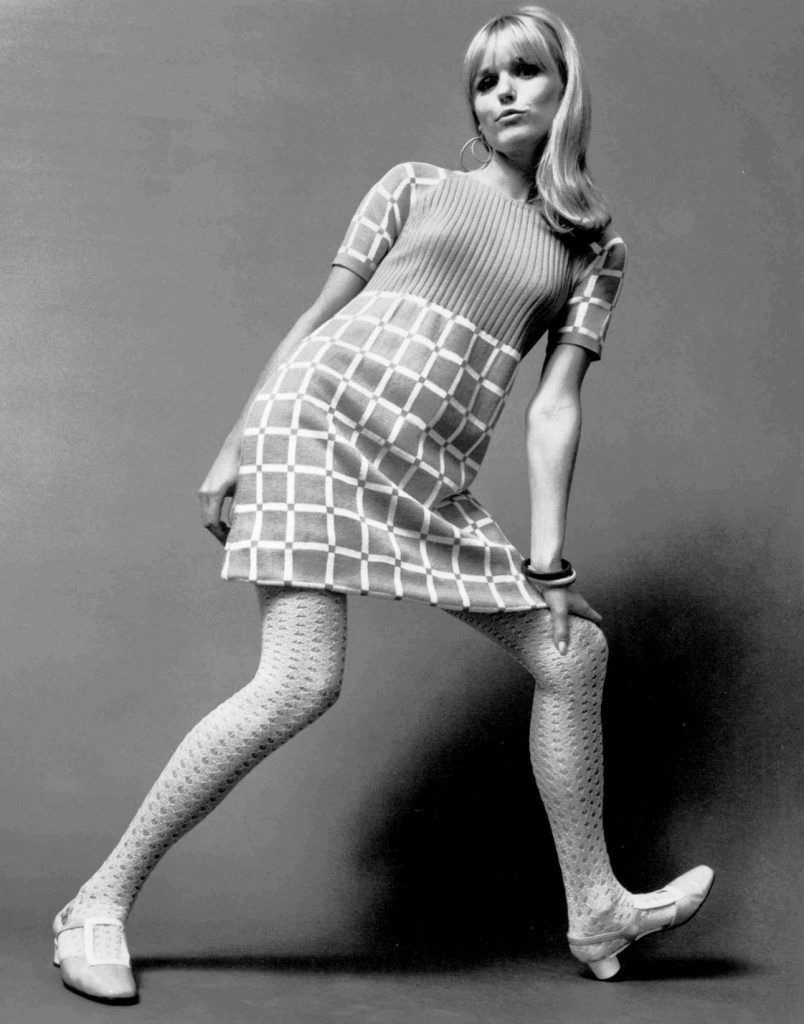
When miniskirts became popular in the 1960s, women’s legwear, such as stockings, nylons, and tights also transformed and changed dramatically. Opaque, colored and patterned tights took hold and became the look for mod fashion.
Women everywhere were now wearing solid-colored tights that perfectly matched their miniskirts and short hemmed dresses, which created a virtually seamless look that felt intentional. Fashion model, Twiggy, made this look incredibly popular.
On the contrary, some women enjoyed wearing patterned tights and/or contrast tights to the overall color they were wearing with their skirt or dress, adding a color block look to their outfit. Towards the end of the decade, these tights seemed to phase out as more neutral tones and trousers took hold.
6. The Monokini
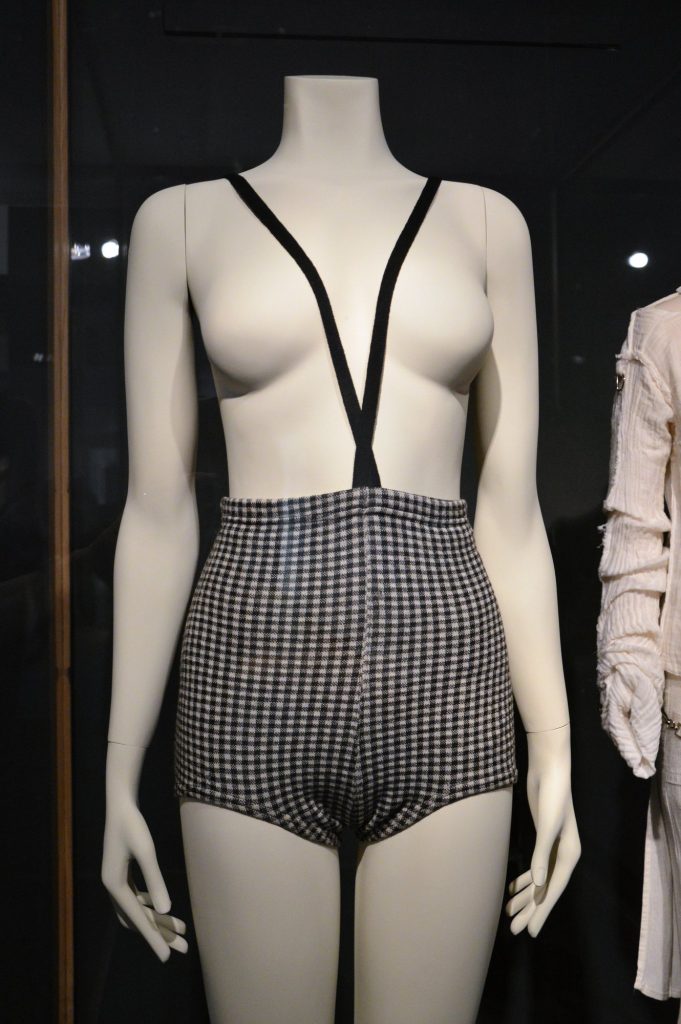
The Monokini was an extremely daring, yet liberating, first of its kind in the way of women’s swimwear. It even gives today’s thong bikinis a run for their money! In essence, the Monokini was a topless women’s swimsuit that consisted of high-waisted bottoms which were held up by two thin strings and fashioned like a halter top. The breasts would be completely exposed and bare.
This look was created by designer Rudi Gernreich, and was apparently created not for public wear, but more to advocate for bodily autonomy, and to somehow desexualize females – though, that may have somehow backfired, unintentionally.
The pieces were widely banned in public settings, and only a handful of women ever dared to wear one in public. Of the roughly 3,000 sold, the most famous outing was a 19-year-old Chicago model who wore hers to North Avenue Beach in June 1964 and left with a $100 fine. Out of all these nostalgic fashion pieces of the era, this may be the one we’re super happy said adieu.
Price Check
- $1.25 plus two proofs of purchase for a Scott Paper Caper dress in 1966, according to The Henry Ford.
- $1.00 plus two soup-can labels for Campbell’s Souper Dress in 1967 (Museum at FIT).
- $3.98 for a white straw pillbox hat at Barnum’s Department Store in Chardon, Ohio, in March 1962 (Geauga Record).
- $8 to $100 for a wide Countess Mara tie in the fall of 1968, per a UPI report that December.
7. Vinyl Rainwear
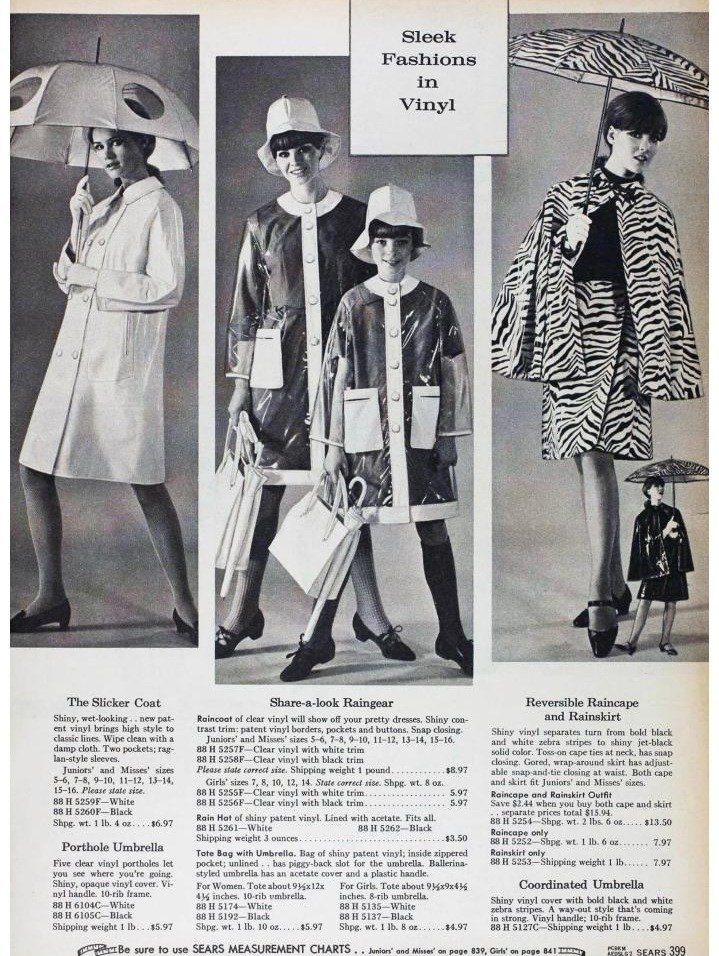
Raincoats and rain boots have been popular since the 1800’s and are a staple in many homes around the world. On those rainy days, it’s always nice to know you don’t have to show up to work, waterlogged and soggy. Fast forward to the Age of Aquarius, and vinyl rainwear put everyone in a chokehold.
During this time vinyl rain wear was shiny and made a culture statement. The wet look raincoats, rain bonnets, and even handbags were made popular by designers like Mary Quant, whose shiny PVC Wet Collection arrived in 1963, and by cheap fold-up brands like Pakamac. The various vinyl offerings came in all sorts of colors and patterns, like red or yellow, and in patterns such as polka dots, stripes, and geometric shapes.
The problem with these raincoats and other pieces is they weren’t breathable and caused sweating and uncomfortability. In addition, they smelled incredibly foul due to the chemicals in the vinyl, and when it was hot out, they’d stick to your skin. Sometimes, they’d even allow water to leak through – completely defeating the purpose of what they were intended to do.
8. Babydoll Dresses
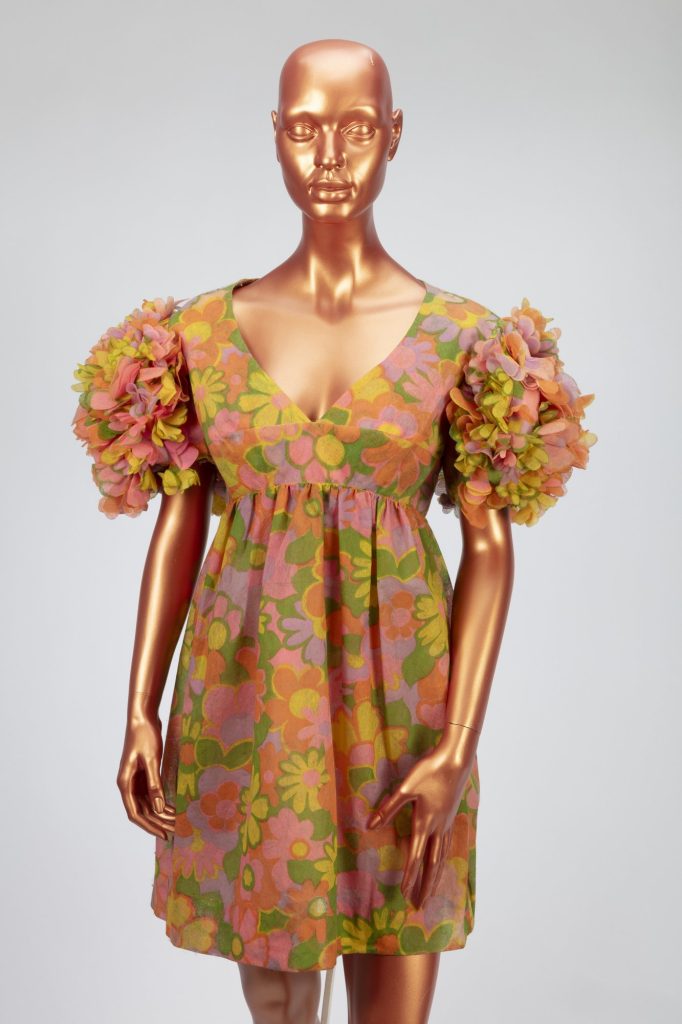
Babydoll dresses got their beginning as a short nightgown in the 1940s, which were created shorter to use less fabric due to shortages because of the war. In the 1960s women eventually began wearing these nightgowns as dresses, a shortened version of the daily dresses they were accustomed to, with a length of mid-thigh typically, and with a higher waist. The dresses were loose-fitting, flaring into an A line. Many of the dresses had short sleeves, puffed sleeves, and V neck necklines, and were adorned with lace, ribbons and ruffles. The style was first popularized in England among the Mod crowd.
The dresses were phased out of fashion around the end of the decade.
9. Space-Age Helmets and Visors
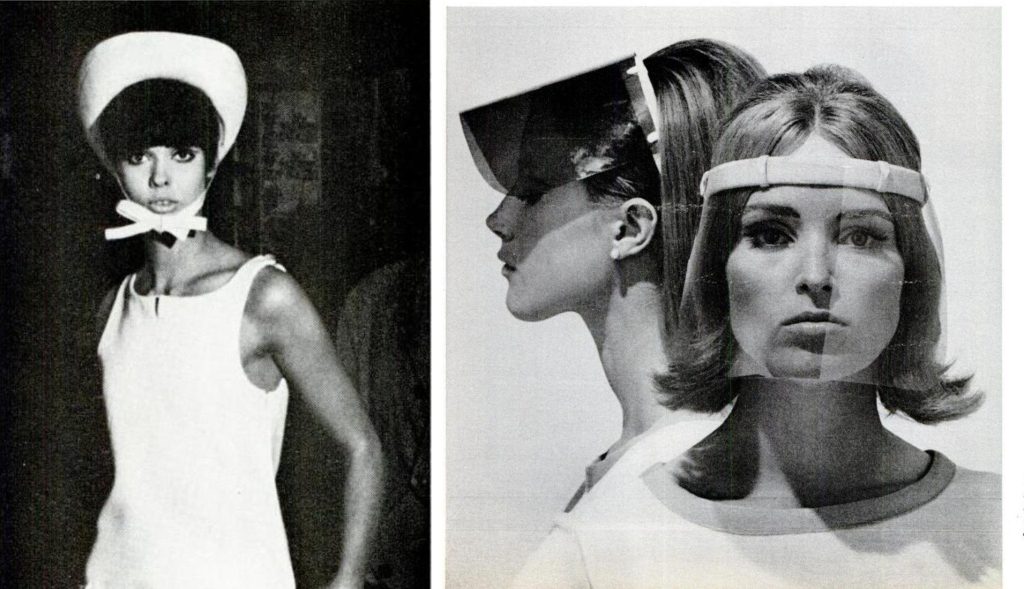
Space Age helmets came on the heels of the space craze of the ’60s, which could be found in everything from children’s toys and programming to fashion. Space Age helmets were quite literally modeled after NASA’s helmets, with various eras and styles throughout the decade. They spanned in styles and eras, beginning with Mercury Era Helmets, to Gold Plated Visors, with a few eras in between.
High fashion pieces were eventually brought to market, such as André Courrèges’s 1964 Moon Girl collection and Pierre Cardin’s space-age helmet hats, soft space bonnets featuring geometrical shapes, and British milliner Reed Crawford’s 1966 Dollar Princess hat, which was half visor, half helmet and was crafted out of silver milk bottle tops.
It’s a wonderful thing that this incredibly strange fad left almost as quickly as it came.
By the Numbers
- Nearly 500,000 orders for Scott’s paper dress by the end of 1966 (The Henry Ford).
- About 3,000 Gernreich topless swimsuits sold in 1964, and an estimated 20,000 press articles written about them.
- February 26, 1966: the day Nancy Sinatra’s “These Boots Are Made for Walkin’” hit No. 1 on the Billboard Hot 100.
- 270 million neckties sold in the United States in 1967, worth $410 million, as the wide tie took over (UPI, December 1968).
- 4¾ inches: the width of a 1966 Mr Fish kipper tie in the Victoria and Albert Museum.
- 1823: the year Charles Macintosh patented the rubberized cloth that gave the raincoat its nickname.
10. Men’s Nehru Jackets
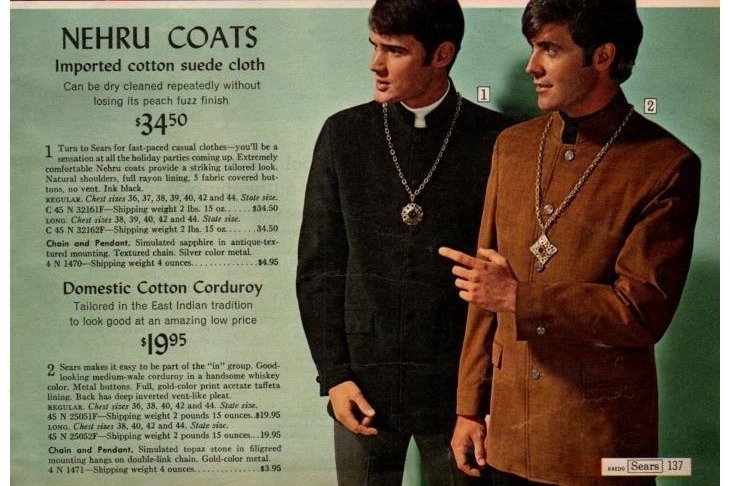
These jackets were a status symbol driven by Mod styles, and were named after Jawaharlal Nehru, the first Prime Minister of India. This hip length coat was made of wool, linen, and cotton, and was typically lined with silk. Many high profile male celebrities of the time wore these jackets, propelling their popularity forward among men young and old.
The difference between this and other jackets of the time was the high-standing band collar, which differed from a regular lapel. Men of this era were very interested in minimalist looks, while also blending geometric styles and clean, avant garde looks. The coat would typically be styled with a turtleneck or dress shirt, bell bottom jeans, or tailored trousers.
11. Men’s Peacock Era Shirts
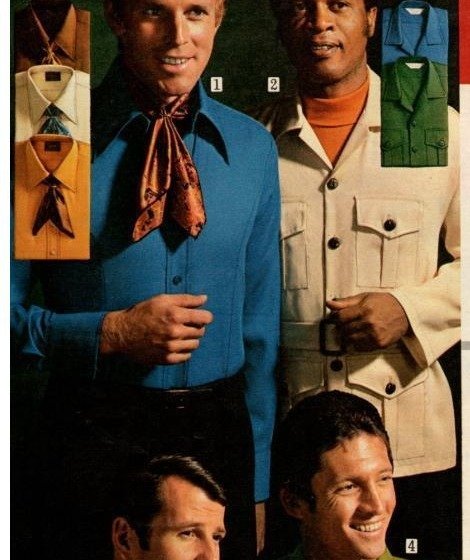
Men’s fashion changed dramatically in the 1960s, as their look trended from clean cut and pressed to more bold colors, bold prints, oversized collars, and ruffles took hold. The Peacock era shirts featured dagger collars, synthetic blends like polyester, or silk, ruffles or frills, and psychedelic prints. Paisley and floral prints were also super trendy at the time.
Michael Fish of London, a designer, launched his boutique in London in 1966, and began selling flamboyant dandy shirts, peacock shirts, and the famous man dresses seen worn by David Bowie and other celebrity rock stars.
This style was phased out in the early ’70s.
12. Wide Ties with Bold Patterns
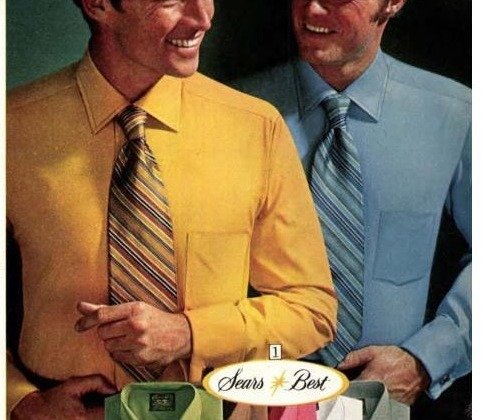
Men’s neckties saw a major shift in the 60s, with the Kipper Tie making an entrance. Most men had been used to minimalist, smaller ties with black, gray, or tan color schemes, and in walked Mr. Kipper with its wide width, flamboyant color schemes, and floral patterns. Part of the peacock revolution, these ties typically measured nearly 5 inches across! Most of the ties of this era were shiny and made of silk and rayon, and were high contrast colors like psychedelic patterns, mustard yellow and burnt orange in color.
Did You Know?
When David Bowie posed in a Mr Fish satin “man-dress” for the cover of The Man Who Sold the World in 1971, his American record label refused to use the photo and swapped in a cartoon cowboy for the U.S. release. Mick Jagger had already worn a Mr Fish dress on stage at the Rolling Stones’ Hyde Park concert on July 5, 1969.
Forgotten Fashions or Glad It’s Gone
Whether you’d forgotten about favorites of times gone by, or you’re just super thankful they’re gone, the ’60s is certainly an era where fashion was anything but drab and boring. Love it or hate it, the creativity sparked a revolution, the likes of which the world had never seen before. It paved the way for the fashion we know and love today.
What are your most loved or hated fashion finds of the ’60s? Tell us all about it in a comment!
Top photo: Top image, clockwise from top left: jacket-and-dress costumes, Sears Fall/Winter 1962, p. 9; white boots, Sears Fall/Winter 1966, p. 577; a body shirt with an Apache scarf, Sears Christmas Book 1969, p. 190; Nehru coats, Sears Christmas Book 1968, p. 263. All © Sears, Roebuck and Co.; scans: Muse Technical.
Photographs are in the public domain or used under Creative Commons licenses, as credited in each caption. Catalog pages are reproduced as historical documents; their copyrights belong to the companies named.



Leave a Reply