Picture a Friday night in the 1970s: turning out the lights, popping popcorn on the stove, fixing the rabbit ears and crowding onto the couch. Whoever lost the argument for a spot on the couch would take a pillow on the floor and a TV tray. Your options were the network’s idea of what you should be watching, and commercials. If you wanted to see one of the big new movies, you went to the movie theater or the drive-in. I turned 20 in 1970, which means that I spent the entire decade in my twenties.
If you’re looking for an excuse to gather some loved ones and recreate memories from yesteryear, try a 1970s movie night. We may not all fit on the couch, but at least we won’t have to deal with someone changing the channel during the exciting scenes, and these days we get to be our own programmers. Below are some scene-setting ideas to make it feel more like the seventies and ten crowd-pleasers from this time, in the order they came out. All of these popular films were released between The Sting in 1973 and Grease in 1978. Choose two from the list and you have a double feature.
1. Turn the Living Room Into a Drive-In
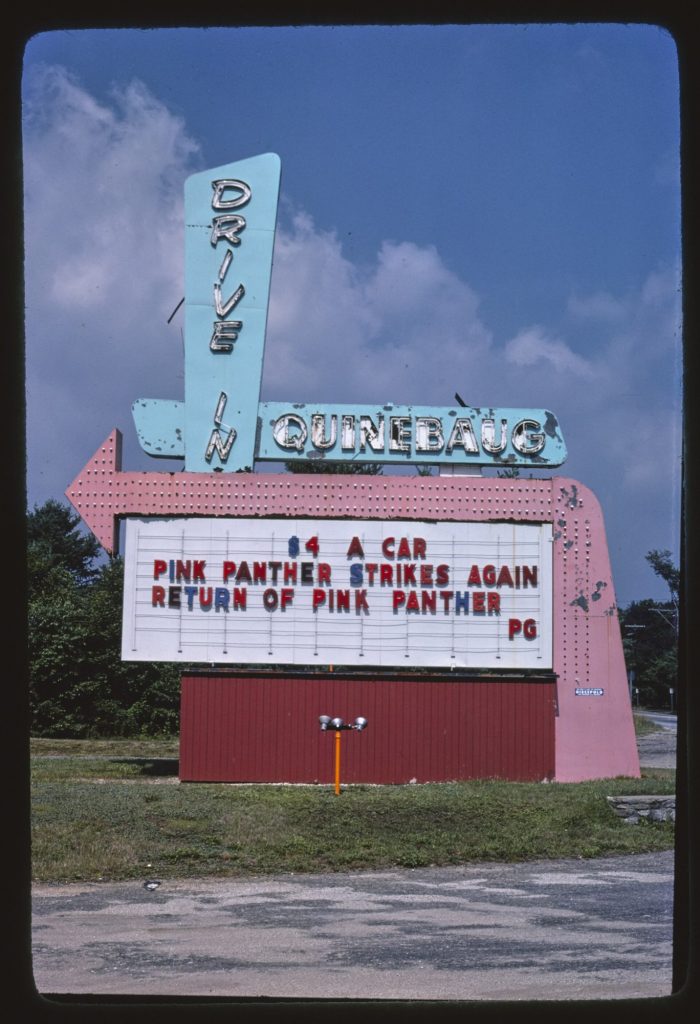
Set the scene first. Dim the lights, set out some TV trays for people to place their drinks and popcorn, and lay out throw pillows and sleeping bags for people who don’t quite fit on your couch. It may even remind you of lying in the back of the station wagon at the drive-in as a kid.
Screen two movies with an intermission in the middle for everyone to stretch their legs and get more drinks. For the intermission, throw in ‘Let’s All Go to the Lobby,’ a 1957 cartoon about dancing food that was shown during movie theater intermissions to coax moviegoers into purchasing concessions. It was added to the Library of Congress’ National Film Registry in 2000, and the Library described it as “the once-omnipresent movie theater intermission trailer seen by millions of Americans.”
2. Shake the Jiffy Pop
Have you ever made Jiffy Pop? It came in a flat aluminum pan with a wire handle and a foil top, and you held it over a burner on your stove and kept it moving all the time. The foil on the top swelled into a huge silver balloon, and when it was ready you had to rip it open (not too fast, or you’d burn your fingers on the steam). And if it stayed on the stove too long, it got burned on the bottom. You can certainly pop corn in a pot with a lid, but there’s nothing quite like Jiffy Pop.
The entire process demanded your attention, and it made popcorn seem like a special occasion. Then there was that wonderful aroma of popcorn wafting throughout the kitchen. Jiffy Pop was developed by a man named Frederick Mennen back in 1958 in LaPorte, Indiana. He started out with $6,000 and help from a handful of local investors.
3. Put Some Tab on Ice
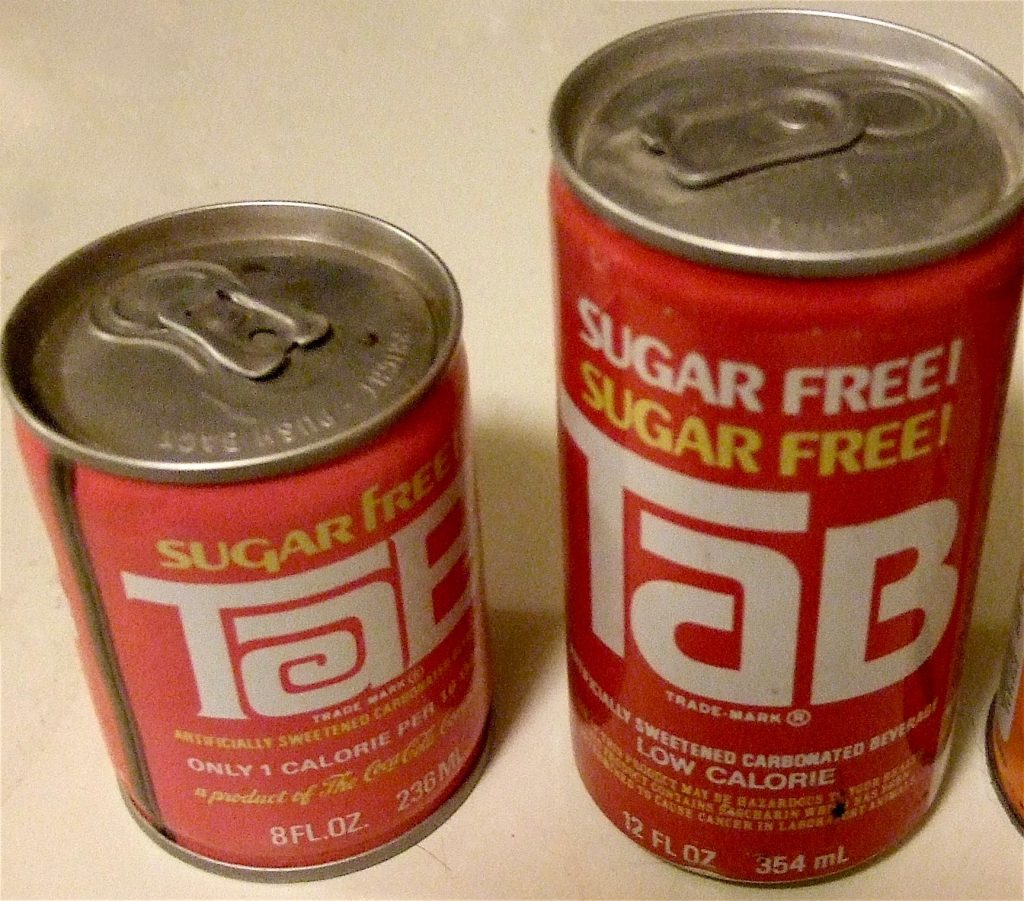
Coca-Cola introduced Tab, its first diet soda, in 1963. In the 1970s, the soda’s artificial sweetener was saccharin. People either loved it or hated it. Research in the early 1970s linked saccharin to bladder cancer in laboratory rats. In 1977, Congress required products containing saccharin to bear a warning label, though later research showed this effect in rats didn’t apply to humans and the label was removed in 2000.
If you were hoping for a nice, cold Tab at movie night, you’ll be in for a disappointment, because Coca-Cola stopped making Tab at the end of 2020. You can grab another diet soda, or even a regular pop and plenty of ice, and they’ll be just as refreshing during a movie, but they’re not quite the same.
Did You Know?
Movies from a major Hollywood studio didn’t come out on videocassette until 1977. That year Andre Blay’s Magnetic Video Corporation became the first company to release motion pictures on videocassette, after Blay began paying 20th Century Fox a yearly fee to license films from its catalog. Blay also started the Video Club of America, which advertised cassettes in TV Guide and was a forerunner of the video rental store. The business did so well that Fox bought Magnetic Video in 1979.
4. The Sting (1973)
The Sting opened on Christmas Day 1973. The film went on to win seven Academy Awards (including Best Picture) and was the highest grossing film of 1974, taking in more than $68 million at the North American box office. The Sting reunited Paul Newman, Robert Redford, and hit-movie director George Roy Hill (Butch Cassidy and the Sundance Kid, 1969) to tell the story of two con men (Newman and Redford) planning an especially tricky swindle in 1936.
It’s an intricately plotted crowd pleaser that should delight moviegoers who think they can anticipate every twist and turn (they can’t, and almost everyone gets it wrong). The theme was based on ‘The Entertainer,’ a ragtime classic written by Scott Joplin in 1902, and its popularity brought renewed interest in Joplin’s entire catalog. Its Academy Award for costume design was the eighth and last Oscar of veteran designer Edith Head’s career. It’s rated PG.
5. Young Frankenstein (1974)
Young Frankenstein, released in December of 1974, is a Mel Brooks film that is just plain silly. Mel Brooks directed it, and he wrote it along with Gene Wilder, who stars as the grandson of the famous Dr. Frankenstein. Other stars include Peter Boyle as the monster and Marty Feldman as Igor. It uses classic horror elements like black and white cinematography (rare in films by the early seventies) in order to pay homage to the horror movies it is making fun of.
It received two Academy Award nominations (sound and screenplay), and was added to the Library of Congress’ National Film Registry in 2003. Fun fact: Mel Brooks also released Blazing Saddles in 1974. The film is rated PG, and if your crowd is looking for a lighter film, this is the one to choose.
6. Jaws (1975)
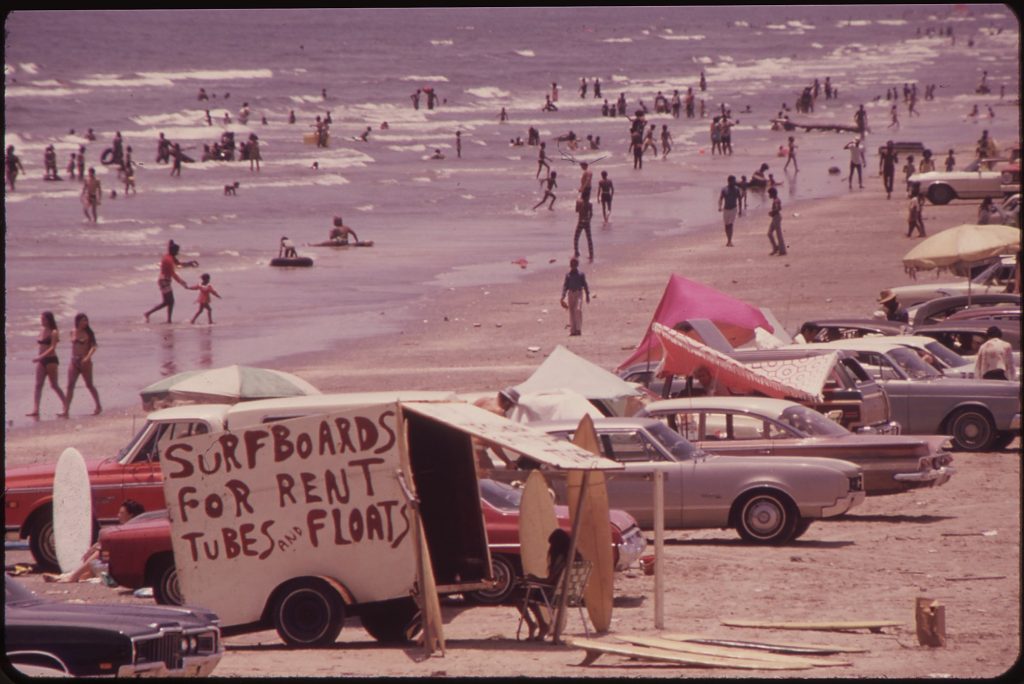
Released on June 20th, 1975, Steven Spielberg’s Jaws starred Roy Scheider, Robert Shaw, and Richard Dreyfuss and was shot off Martha’s Vineyard in Massachusetts. The film grossed $25.7 million in its first 13 days, according to The New York Times, which Universal said was the biggest amount in the shortest time for any movie up to that point. Jaws went on to become the most successful movie in the history of the United States and Canada, surpassing The Godfather by September of 1975.
Often called the first summer blockbuster, Jaws, along with Star Wars (released two years later), is credited by film historians with creating the trend for Hollywood to begin summer with a bang by premiering big action pictures at the start of the season. It went on to receive three Academy Awards (film editing, sound, John Williams’ musical score) and was nominated for Best Picture. Jaws is rated PG, but the infamous opening scene is pretty brutal, so use caution if you are bringing small children.
7. The Bad News Bears (1976)
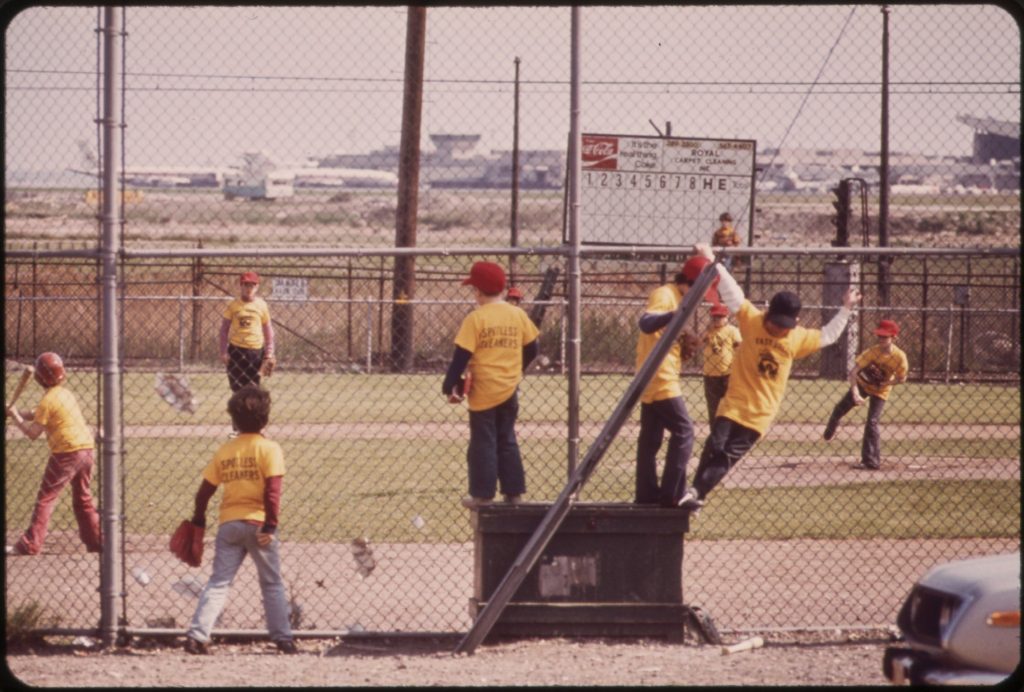
Released back in April of 1976, The Bad News Bears has some great laughs for grandparents to share with grandkids. That said, you should definitely watch it once yourself before handing the remote over.
First off, while The Bad News Bears is rated PG, that was a different era of PG. Lots of the kid characters use foul language in the film, and the Little League lodged a protest with Paramount over it in February of 1976.
Starring Walter Matthau as pool cleaner and ex-minor-league ballplayer Morris Buttermaker, who agrees to coach the worst team in a Little League, the picture is quite different from what would be allowed of coaches today. Case in point: Buttermaker drinks beer on the job and hands out cans of beer to his players at the end. Still, it’s quite fun and features Tatum O’Neal as the team’s star pitcher (she had already won an Oscar for Paper Moon in 1973). It was written by Bill Lancaster, son of actor Burt Lancaster, who based the story partly on his own time playing Little League with a leg crippled by polio.
8. Rocky (1976)
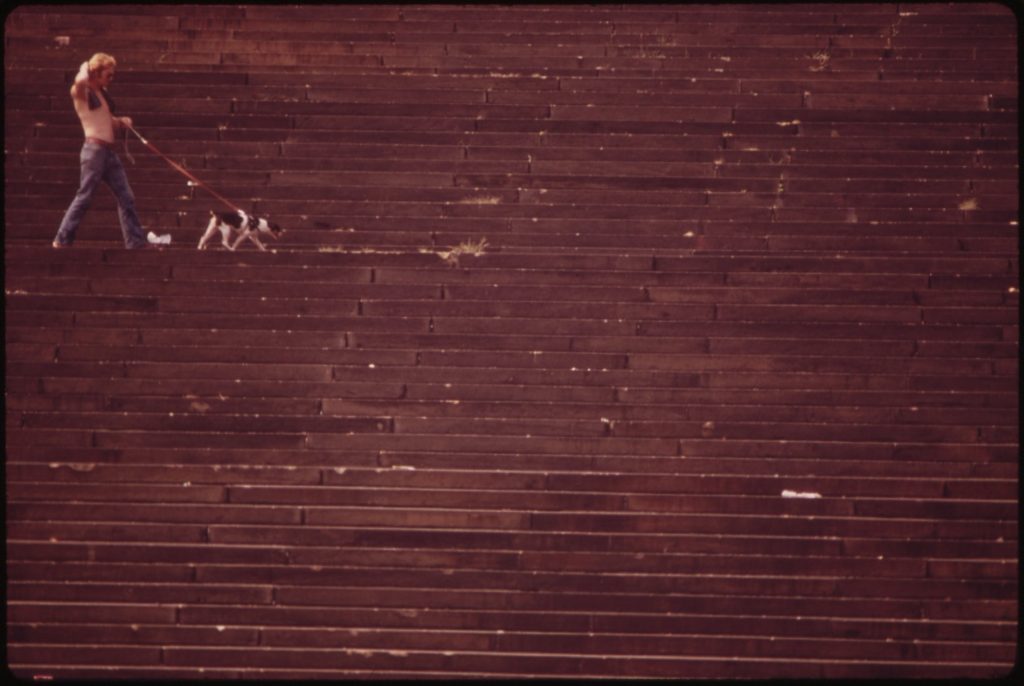
Rocky was released in late 1976. Sylvester Stallone, the star of the film, wrote the original rough draft of Rocky in three and a half days, and he was adamant that he would play the title role. The producers agreed to make Rocky for $1,000,000. Most of it was filmed in Philadelphia, and Rocky trains by running through the city at four in the morning.
Have you run up the Rocky steps? Rocky ascends the stone steps of the Philadelphia Museum of Art in the course of his training, and they have since become a famous tourist attraction where tourists run up them and hold their arms up in imitation of the film. It went on to take home three Academy Awards, for Best Picture, Best Director (John G. Avildsen), and Film Editing. Rocky also sported a wonderful soundtrack, including the number one Billboard hit ‘Gonna Fly Now,’ composed by Bill Conti. It received a PG rating.
By the Numbers: The Oscar Scorecard
- 7: Academy Awards for The Sting, including Best Picture
- 6: Academy Awards for Star Wars, plus a special award for its alien, creature and robot voices
- 3: Academy Awards for Rocky, including Best Picture, and 3 for Jaws
- 2: nominations for Young Frankenstein, and no wins
- 1: Academy Award for Close Encounters of the Third Kind, for cinematography, plus a special award for sound effects editing
- 1: nomination apiece for Smokey and the Bandit (film editing), Saturday Night Fever (John Travolta) and Grease (“Hopelessly Devoted to You”)
9. Smokey and the Bandit (1977)
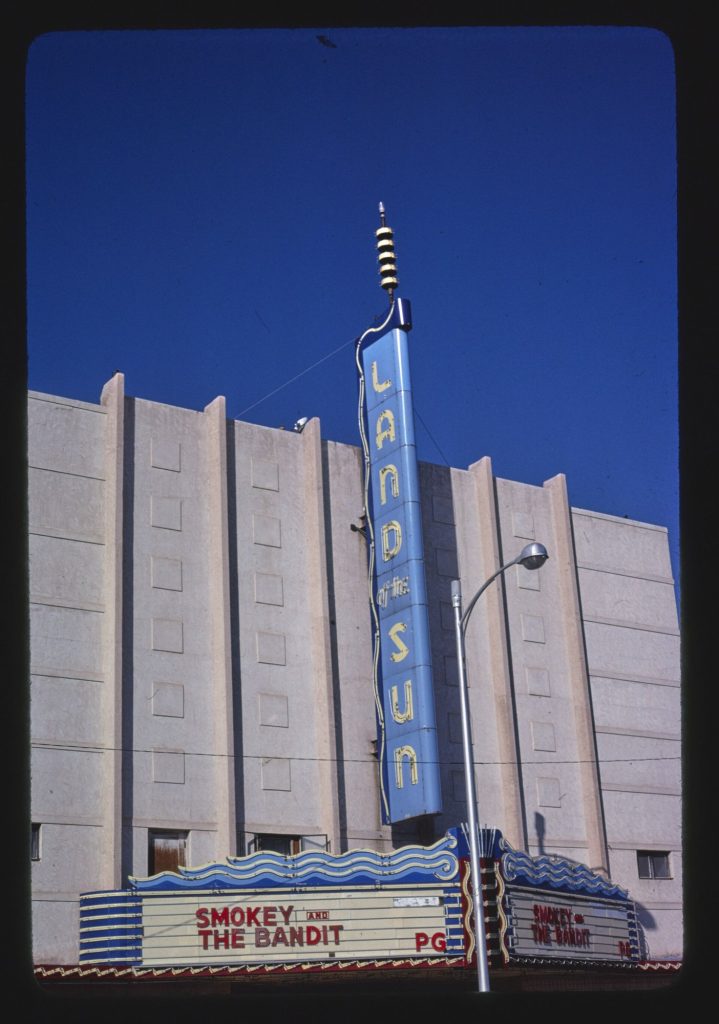
Chances are you’ve seen Smokey and the Bandit many times before. Released in May of 1977, the PG-rated film was a big hit, bringing in over $40 million in rentals and becoming the second highest grossing film of the year. The plot revolves around a dare to transport a truckload of Coors beer to Georgia, which was against the law, because Coors was sold only in eleven Western and Southwestern states at the time. Burt Reynolds stars alongside Sally Field (as a runaway bride) and Jerry Reed (as Cledus, the Snowman), and Reed co-wrote and sang the song ‘Eastbound and Down.’
It was directed by former stunt coordinator Hal Needham, which means lots of car chases. Reynolds’ character (the Bandit) drives around in his ‘blocker’ (a Pontiac Trans Am) to draw the law away from the beer truck, while characters talk over CB radio throughout the film.
10. Star Wars (1977)
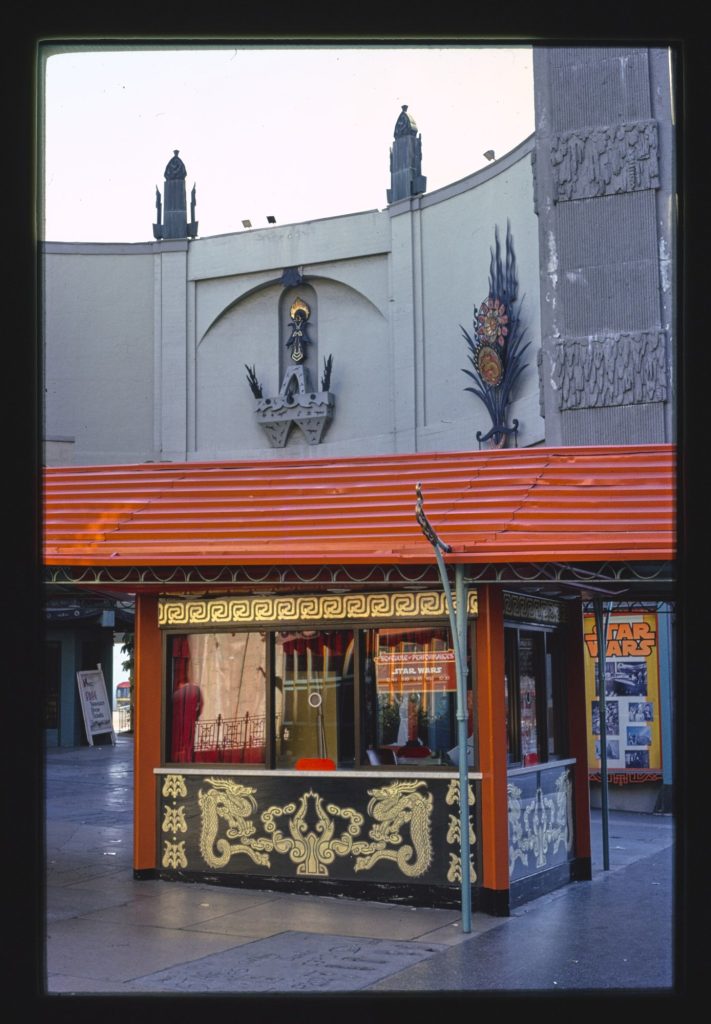
When Star Wars opened on May 25, 1977, in 43 theaters in 31 cities, it broke the box-office record in each and every one of them. People lined up early in the morning and many showings sold out. The original Star Wars beat Jaws as the highest-grossing film of all time (up to that point) in early December of 1977, raking in $190 million at US theaters.
Star Wars took home six Academy Awards, plus a special achievement award for Ben Burtt for his creation of the voices of the film’s robots, aliens and other creatures. When it was first released, excitement ran rampant over the action figures, and Kenner, based in Cincinnati, sold certificates for figures that couldn’t make it into stores in time for Christmas 1977. My son had a set of Kenner Star Wars figures when he was a boy. Star Wars is rated PG, and it’s the easiest recommendation on this list if the grandkids are coming.
11. Close Encounters of the Third Kind (1977)
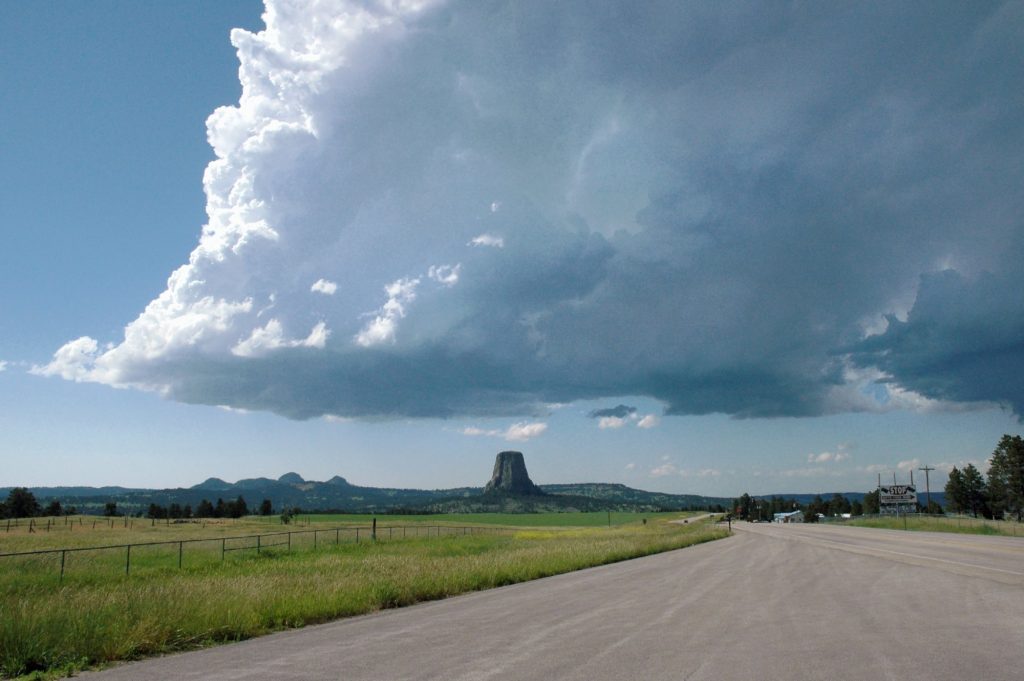
Close Encounters of the Third Kind was a huge box office hit upon its release. It opened in New York on November 16, 1977, and nationwide on December 14, when the film took in between $1.3 and $1.4 million on its first day. By 1981 it was Columbia Pictures’ biggest moneymaker in the United States, at more than $116 million. Steven Spielberg wrote and directed the film, which is a great complement to Star Wars, making for a stellar science fiction double feature since they were both released in 1977. Two years after Jaws, the film was another triumph for Spielberg. The movie’s cinematographer, Vilmos Zsigmond, won an Academy Award and it was the recipient of a special award for achievement in sound effects editing.
Close Encounters tells the story of Roy Neary (Richard Dreyfuss) who sees a spacecraft one night and becomes obsessed with the shape of a certain mountain. At one point at dinner, he molds a helping of mashed potatoes into this shape in front of his wife Ronnie (Teri Garr). The mountain is a real place, Devils Tower in Wyoming, and portions of the movie were shot there. Close Encounters of the Third Kind is rated PG.
12. Saturday Night Fever (1977)
Saturday Night Fever was released on December 16, 1977. John Travolta gives a breakout performance as Tony Manero, a nineteen-year-old disco fanatic from Bay Ridge in Brooklyn who works at a hardware store and lives for each and every Saturday night at a local disco called the 2001 Odyssey. The soundtrack includes several well-known Bee Gees tunes including ‘Stayin’ Alive,’ ‘Night Fever,’ ‘How Deep Is Your Love’ and ‘More Than a Woman.’ Travolta received a nomination for an Academy Award for Best Actor for his performance in this classic.
Now before you invite your neighbors over for a Saturday Night Fever screening, you need to be aware of a couple of things. The original cut of this movie is rated R and is not for everyone. Lots of people remember Travolta in his white suit, the Bee Gees and the dancing, but would be shocked to see the film again. There is some harsh language and some pretty graphic scenes in this film including one scene where Tony’s friends sexually assault a drunk, crying young woman named Annette in the backseat of a car. If you don’t want to show your neighbors that particular scene, Paramount released a PG-rated version of Saturday Night Fever back in March of 1979. That version had first been prepared for television. Just be sure to get the correct version before you invite folks over.
13. Grease (1978)
Grease was released June 16, 1978, and is a 1970s interpretation of the 1950s. John Travolta, Olivia Newton-John, and Stockard Channing, as Danny, Sandy, and Rizzo, star in this crowd-pleaser, a PG-rated film people love to sing along to. Olivia Newton-John bruised her ribs at its premiere (June 15, 1978, at the State-Lake Theatre in Chicago) trying to get through a crowd of nearly 3,000 people. Within about a year, Grease had reeled in about $200 million, second only to Star Wars at the time, and received one Oscar nomination for its song ‘Hopelessly Devoted to You,’ written by John Farrar.
Grease made its musical debut on stage in New York on February 14, 1972. Some critics panned the musical’s ending, contending that Sandy gives in to peer pressure. Watch this musical classic and form your own opinion as to whether or not Sandy made the right decision in the end.
So, now I am curious, what two movies do you think make the perfect ’70s double feature? Was Jiffy Pop on the list of items that went in the bowl on movie night in your home? Did you catch any of these flicks at a theater or drive-in in the year that they were released? Let me know down below in the comments.
More trips down memory lane: revisit a double feature under the stars, or fast-forward to Friday nights at Blockbuster.
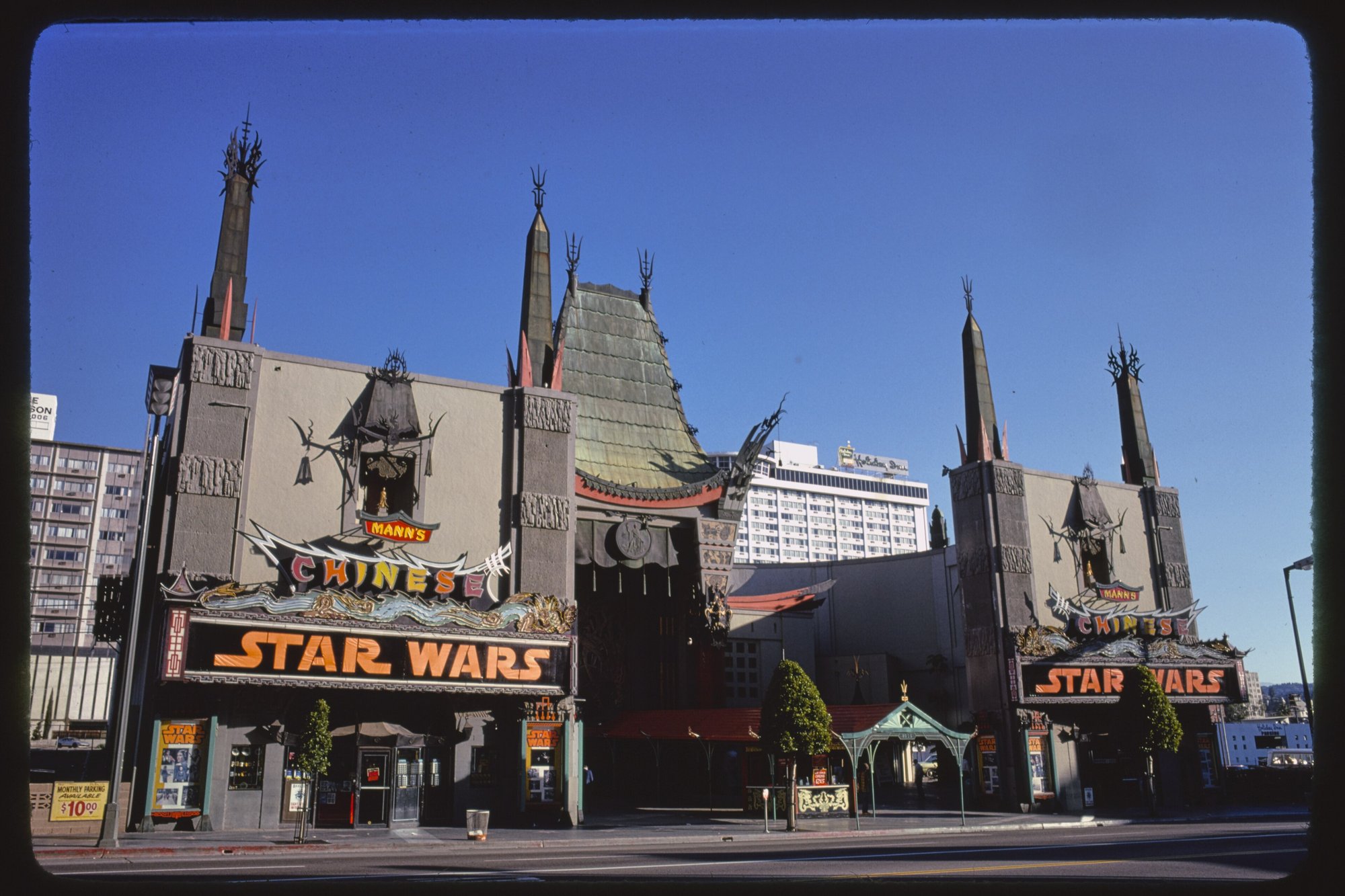
Top photo: Star Wars on both marquees at the Chinese Theater, Hollywood, California, 1977. Photo: John Margolies / Library of Congress, public domain.
Photographs are in the public domain or used under Creative Commons licenses, as credited in each caption.



_NEAR_BENNINGTON..._-_NARA_-_549284.jpg)


Leave a Reply