
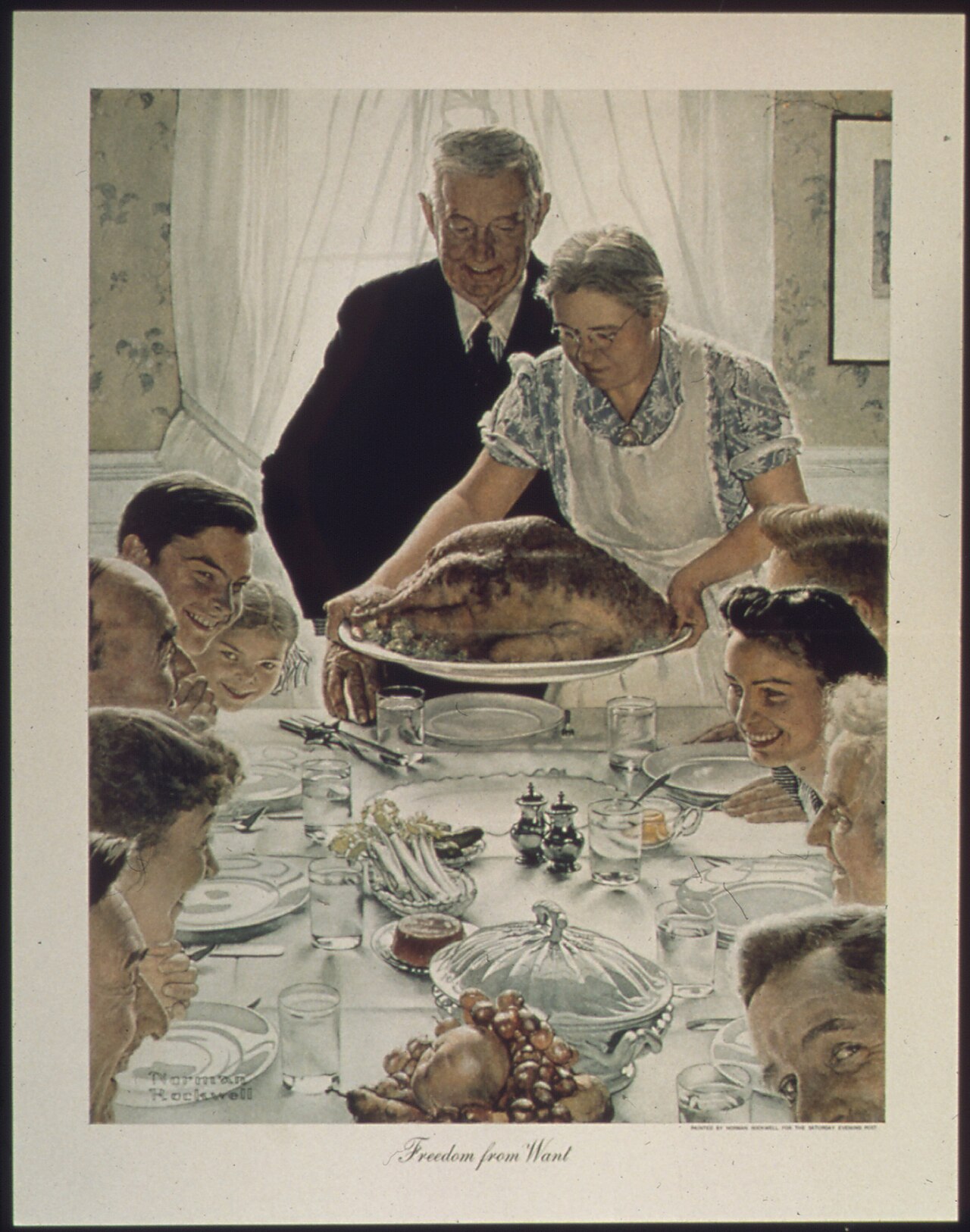
What are some of your favorite culinary memories? For me, one of my favorite foods to eat is a fried egg sandwich made on white bread with mustard in my mom’s kitchen. Although this recipe has never made its way onto an index card, it’s one I’ll remember forever. In almost every family’s kitchen there used to be a small wooden or metal box full of index cards. Most of these index cards had recipes either written or typed on them. Though many of the cards had butter or other stains from ingredients commonly found on kitchen counters, each one was created with great care. Grandma never needed to refer to her recipe box, because her recipes were engraved in her memory. The box was for the rest of the family, so that none of these recipes would be lost. Below, I’m going to share with you seven family recipes that I think should be saved and shared. Each recipe will be accompanied by a small story of their own. After all, everything tastes better when there’s a story involved!
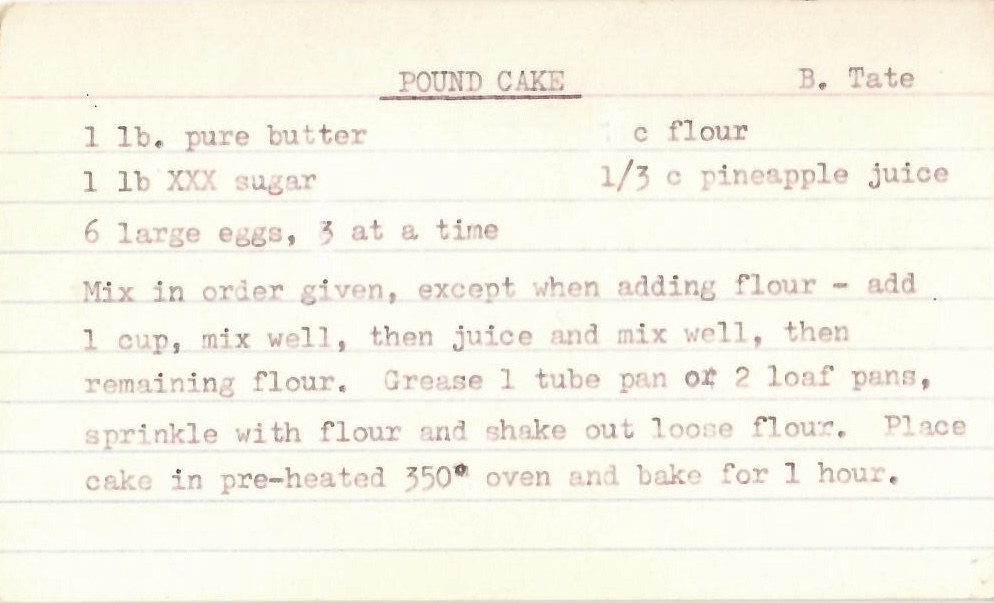
It feels strange that a recipe card nowadays needs to include prep time, suggested pairings and number of servings, not to mention nutritional information. But the old handwritten card above has nothing but the basic information. Because she cooked with intuition and experience, she eyeballed how much sugar or flour was needed and did it so many times she knew how much was needed by heart. A card like this one takes you back in time to her kitchen, to the sounds of the creaky oven door and the radio, and to her saying, “don’t you ever open that oven again until this cake is done rising.”
1. Sunday pot roast
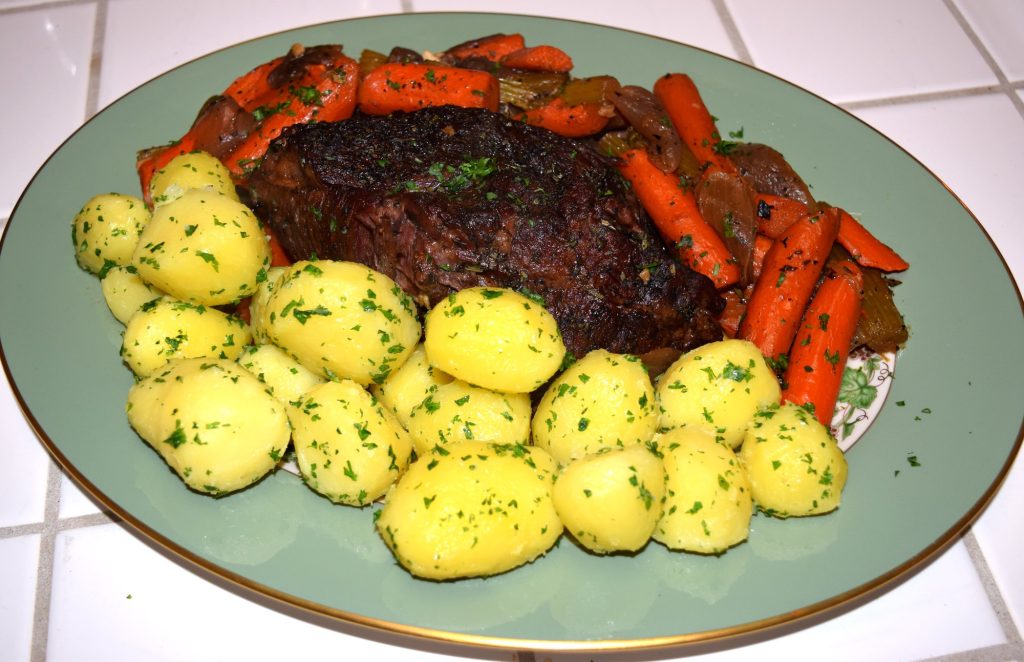
Chuck roast is a relatively inexpensive cut of meat (about 50 cents/lb. on average in 1955, according to the U.S. Bureau of Labor Statistics) that’s pretty tough, which means it needs to bake for a long time. On Sunday the pot roast went into the oven before church, and by the time you made your way back the whole house would smell amazing. Dinner was always at the table, everybody came, and the good dishes came out. By two o’clock the meat would fall apart. The roast, carrots, potatoes, onions, nothing fancy or overly complicated, but I’m convinced that nothing in culinary circles could improve on the dish. Nothing beats pot roast.
2. Tuna noodle casserole
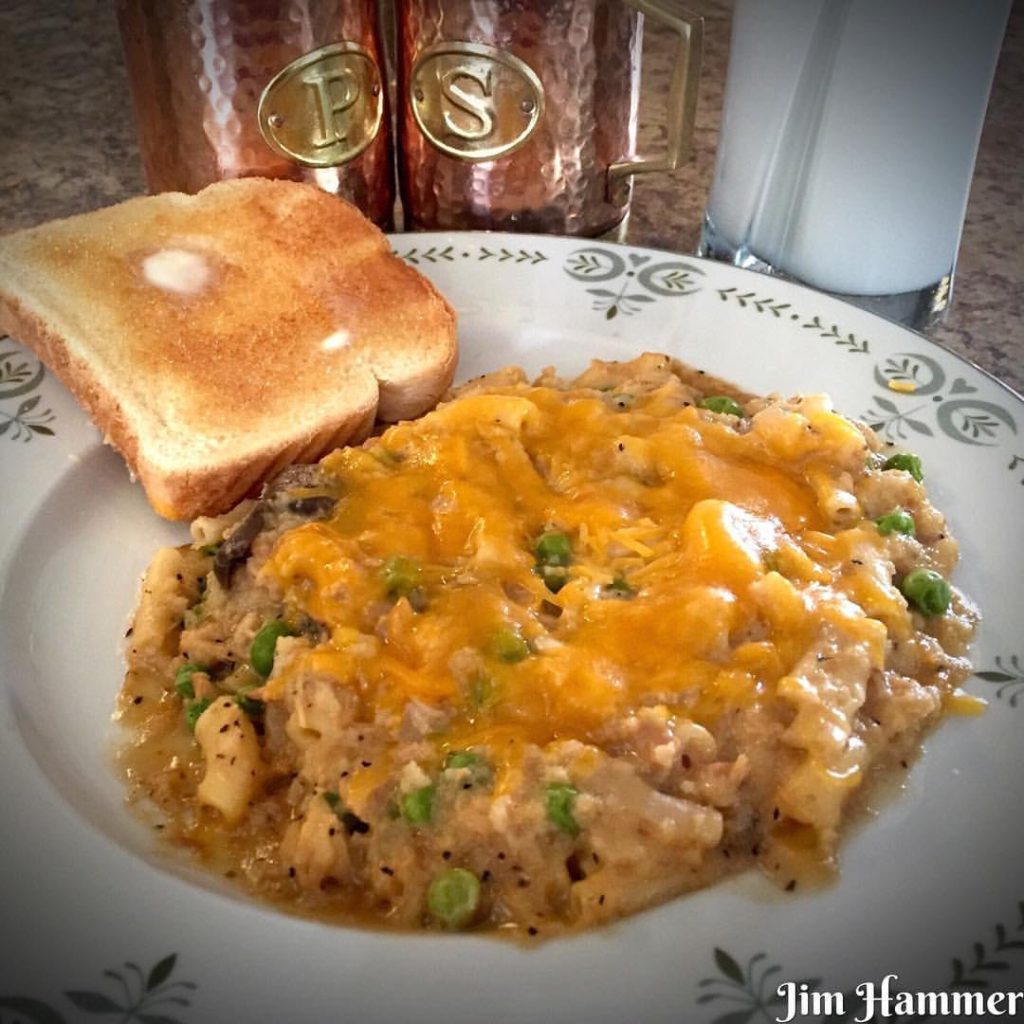
Tuna noodle casserole was another one of those recipes that was cooked more often than not from memory. Egg noodles, a can of tuna and a can of cream of mushroom soup was its basis. If a family was feeling really fancy they would top it with crushed potato chips. It was a meal that could feed six for pennies. Canned tuna dates back to Albert Halfhill’s California Fish Company located in San Pedro, California, which started canning tuna in 1903, and advertised it as a low-cost alternative to chicken. Add in Cream of Mushroom soup which was first manufactured by Campbell’s back in 1934, the glue that held all of the casseroles of the mid-century together, and you have a hit on your hands. This dish called for no fussing around with added ingredients, and I’m sure there were families that ate it week after week. It was one of those reliable meals that somehow tasted like security.
3. Ambrosia salad
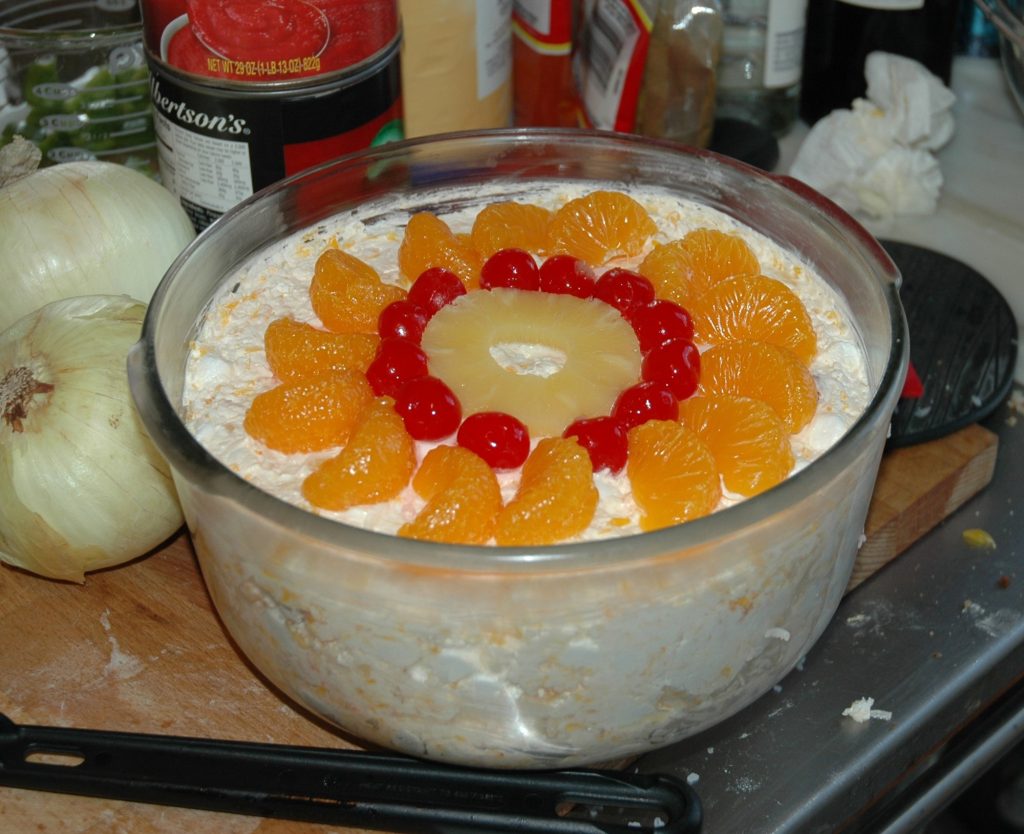
Salad or dessert? Who cares when it’s a mix of mandarin oranges, pineapple, shredded coconut, mini marshmallows and fluffy whipped cream? Somebody’s aunt was certain hers was the secret version, and the secret was usually just sour cream. And at holiday gatherings, where everybody assumed it was somebody else’s job to bring ambrosia salad, it appeared every single time. The oldest known ambrosia recipe is in Maria Massey Barringer’s cookbook, Dixie Cookery (1867). That version, nothing more than grated coconut, a little sugar and oranges layered in a glass bowl, was considered special (coconut and oranges being treats back then), so it was saved for holidays.
4. Meatloaf with the ketchup glaze
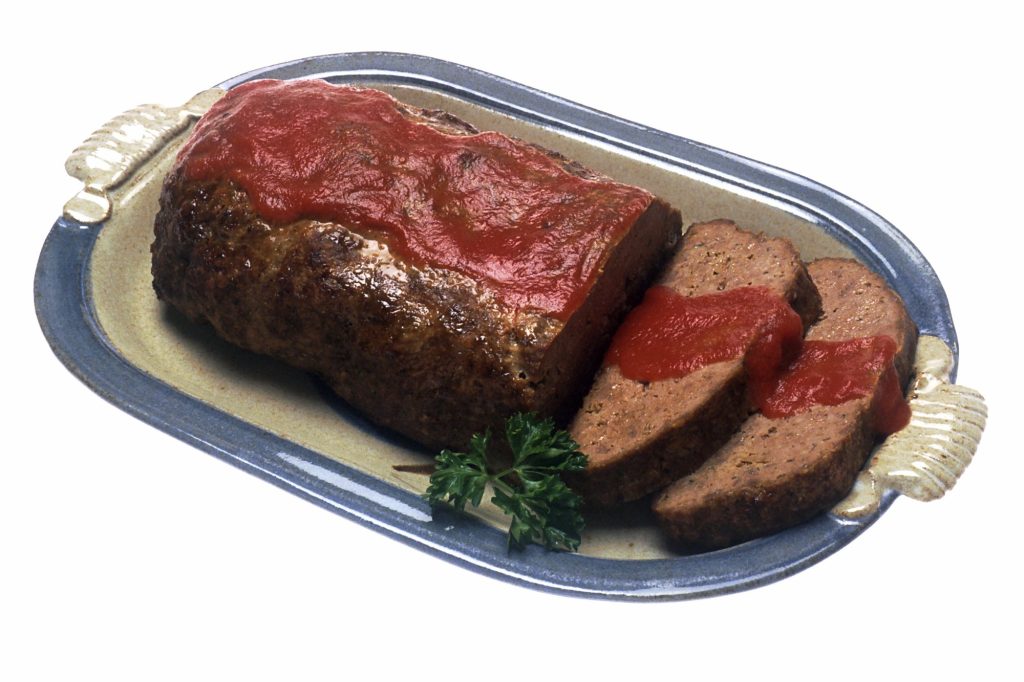
Mothers each had their own way of making meatloaf and were certain that theirs was the best. Some used oats, some breadcrumbs; onions were finely chopped or grated; ketchup mixed with brown sugar or plain ketchup straight from the bottle made the glaze. However it was done in your family was the way you did it and anyone questioning this doctrine was courting trouble. Meatloaf was a regular feature on the family’s menu, especially during the week because ground beef was relatively inexpensive (a pound of hamburger cost on the order of 40 cents on the average in 1955, according to data from the U.S. Bureau of Labor Statistics) and meatloaf stretched that dollar. If you grew up eating meatloaf you remember what it smelled like when it was in the oven and recognize that as another one of those wonderful meals that said home. The next day, cold meatloaf sandwiched between two slices of soft white bread with mayonnaise was an improvement on the original, and that’s the one thing about meatloaf the entire country could agree on.
5. Jell-O salad, in all its wobbly glory
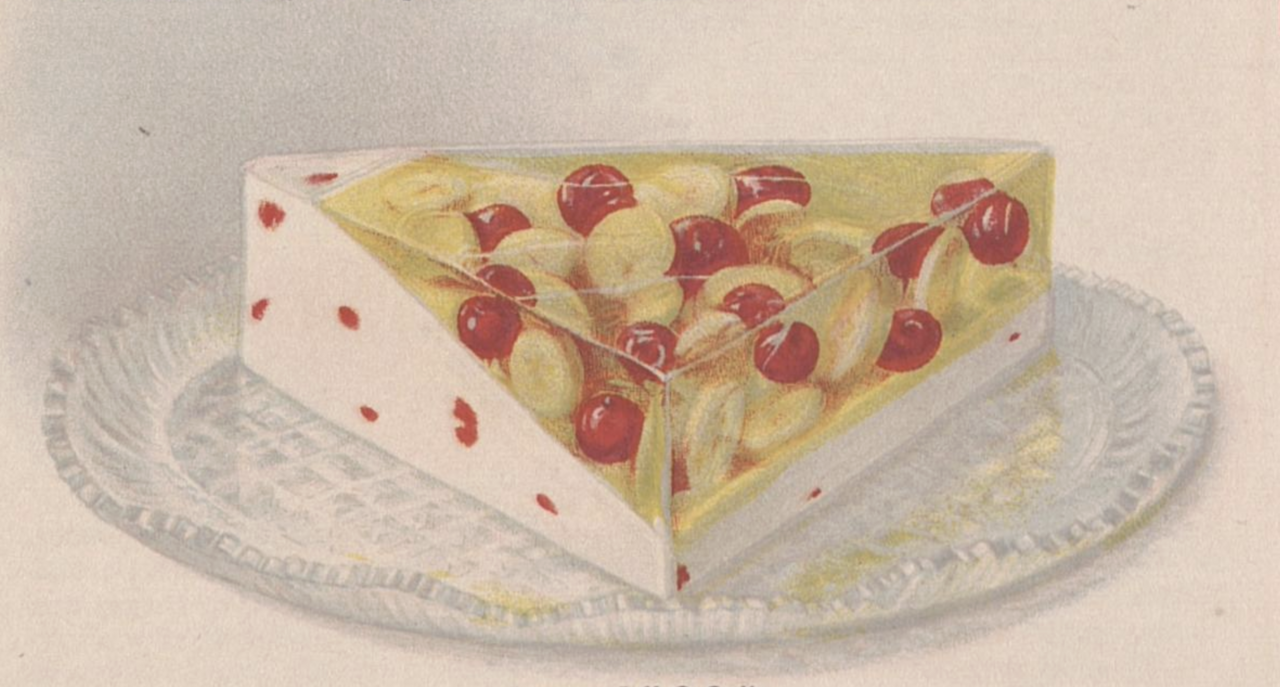
Of course, lime gelatin salad with pears, cherry gelatin salad with fruit cocktail, orange gelatin salad with shredded carrots, they’ve all graced plenty of tables. They hit their heyday in the 1950s. The savory tomato aspic is another matter entirely, and only the true believers went near it.
I love to see the wobbling contraptions before dinner. And the molds! Bundt rings were common but some folks had fish or other shapes made of copper that were proudly displayed on their kitchen walls, waiting patiently for the next holiday.
Gelatin salad has a long and storied history. In 1905, Mrs. John E. Cooke of New Castle, Pennsylvania, sent a recipe for “perfection salad,” consisting of chopped red peppers, cabbage and celery suspended in gelatine, to a Knox Gelatine recipe contest where she placed third and was awarded $100. One of the judges was none other than cookbook queen, Fannie Farmer.
In the ’50s, appearance ruled gelatin salad creation in the kitchen. Items were chosen for their gelatin mold destinies as either “floaters,” such as marshmallows or fresh strawberry slices, or “sinkers,” like canned fruits and fresh grapes. Other tricks included adding cream cheese into the mix to make a non-translucent salad and adding a layer of mayonnaise on the top of the gelatin mold as “frosting.” One ’50s Jell-O ad called for a lime gelatin mold filled with fish salad, grated onion and cottage cheese. In the ’60s, Jell-O introduced savory flavors, namely celery, Italian salad and seasoned tomato, that didn’t last long. Gelatin salads were out of favor by the mid-’70s.
Did you know?
Jell-O was nearly a flop. A carpenter and cough-syrup maker named Pearle Wait created it in LeRoy, New York, in 1897 — and couldn’t sell the stuff. He let the brand go to a neighbor for $450. Within a generation it was billing itself as “America’s Most Famous Dessert,” and by our childhoods, no church potluck in the land was legal without at least three molds of it.
6. Chicken and dumplings
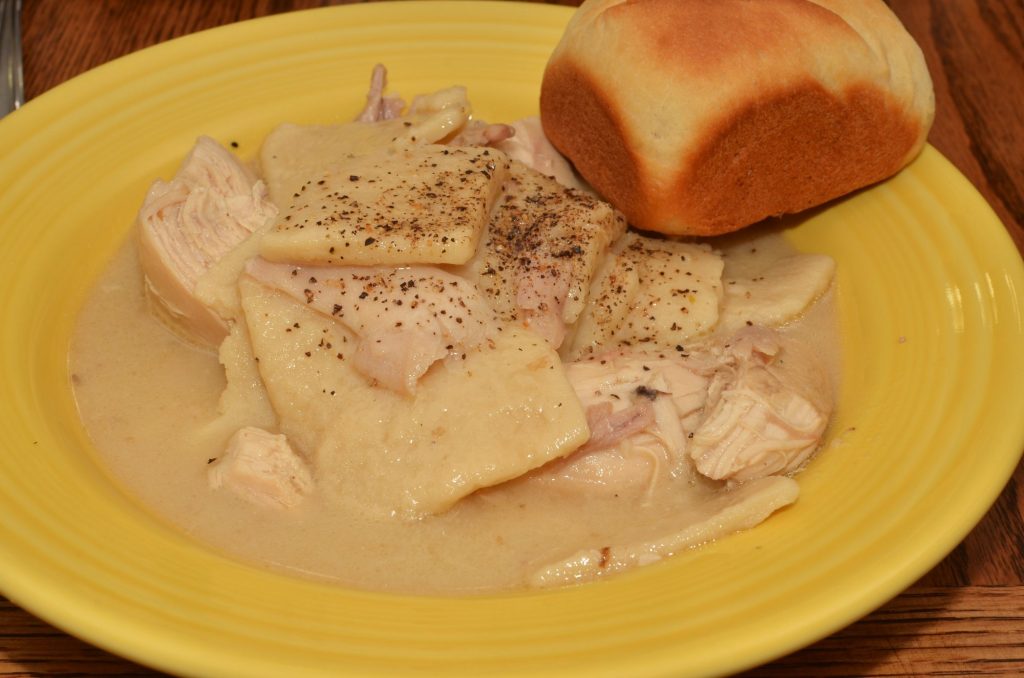
Nothing could compare to chicken and dumplings. Whether you were sick, had gotten a bad report card, or had a broken heart, chicken and dumplings would fix everything. The fluffy clouds versus flat slicks debate divided plenty of families down the middle and outlived several of the people who started it. It was nothing extravagant, only chicken, bubbling broth and dough. But chicken and dumplings meant someone cared enough to bring it on a tray when you were sick, or set a steaming bowl in front of you with a hand on your shoulder when you were sad.
7. Icebox cake
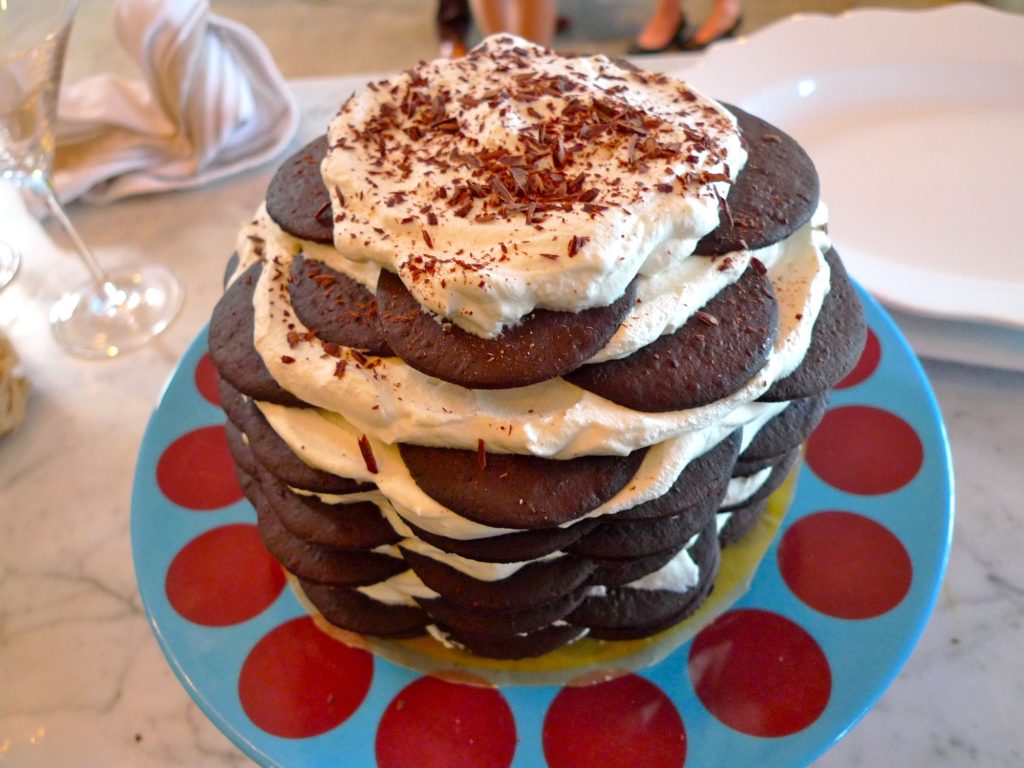
Have you made an icebox cake? You layer chocolate wafers with whipped cream, stacking them on their sides in a log shape. Refrigerate it for a few hours and the wafers soften into cake. The recipe, made with Nabisco’s now-defunct Famous Chocolate Wafers, graced the cover of the company’s 1938 cookbook and was reprinted on the Famous Chocolate Wafers package.
Icebox cakes took off in the 1920s once refrigerators became affordable. The term icebox stuck with some folks, and many a grandma called the fridge by its original moniker long after the iceman stopped coming.
Icebox cakes were an easy way to feed a crowd. No lengthy stint in front of the stove was required, and it could be assembled in advance. Patience was its secret ingredient, meaning waiting for the wafers to soften.
Icebox cake fans are scrambling for alternatives after Nabisco quietly discontinued the chocolate wafers in 2023. Recipes abound, made with wafers that approximate the originals. They won’t taste the same but maybe, in our imaginations, they’re close enough.
The rules of the supper table
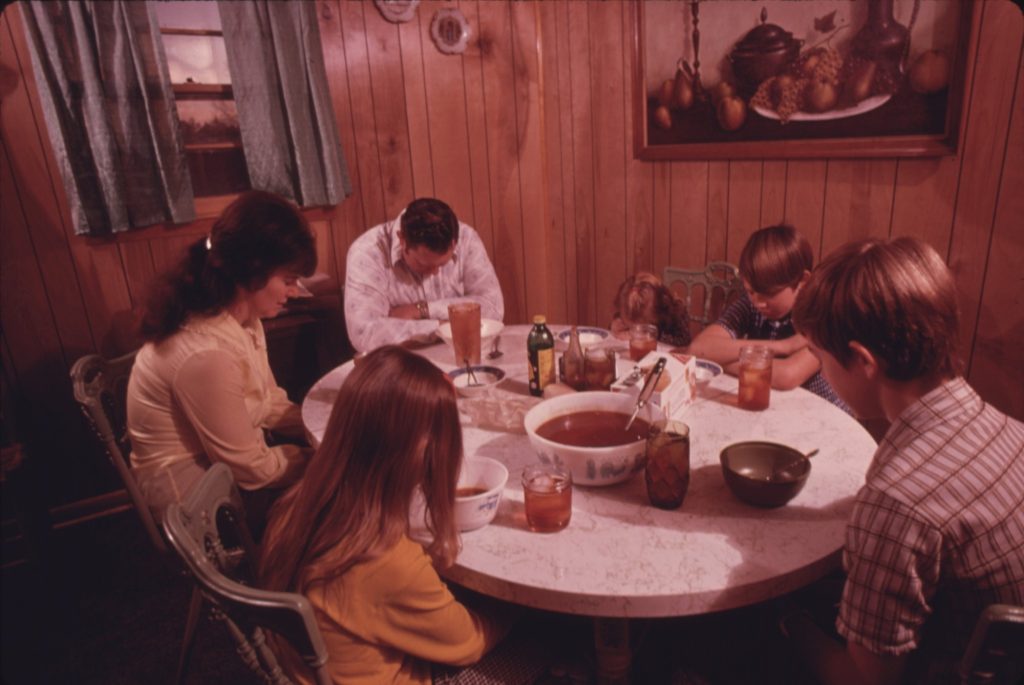
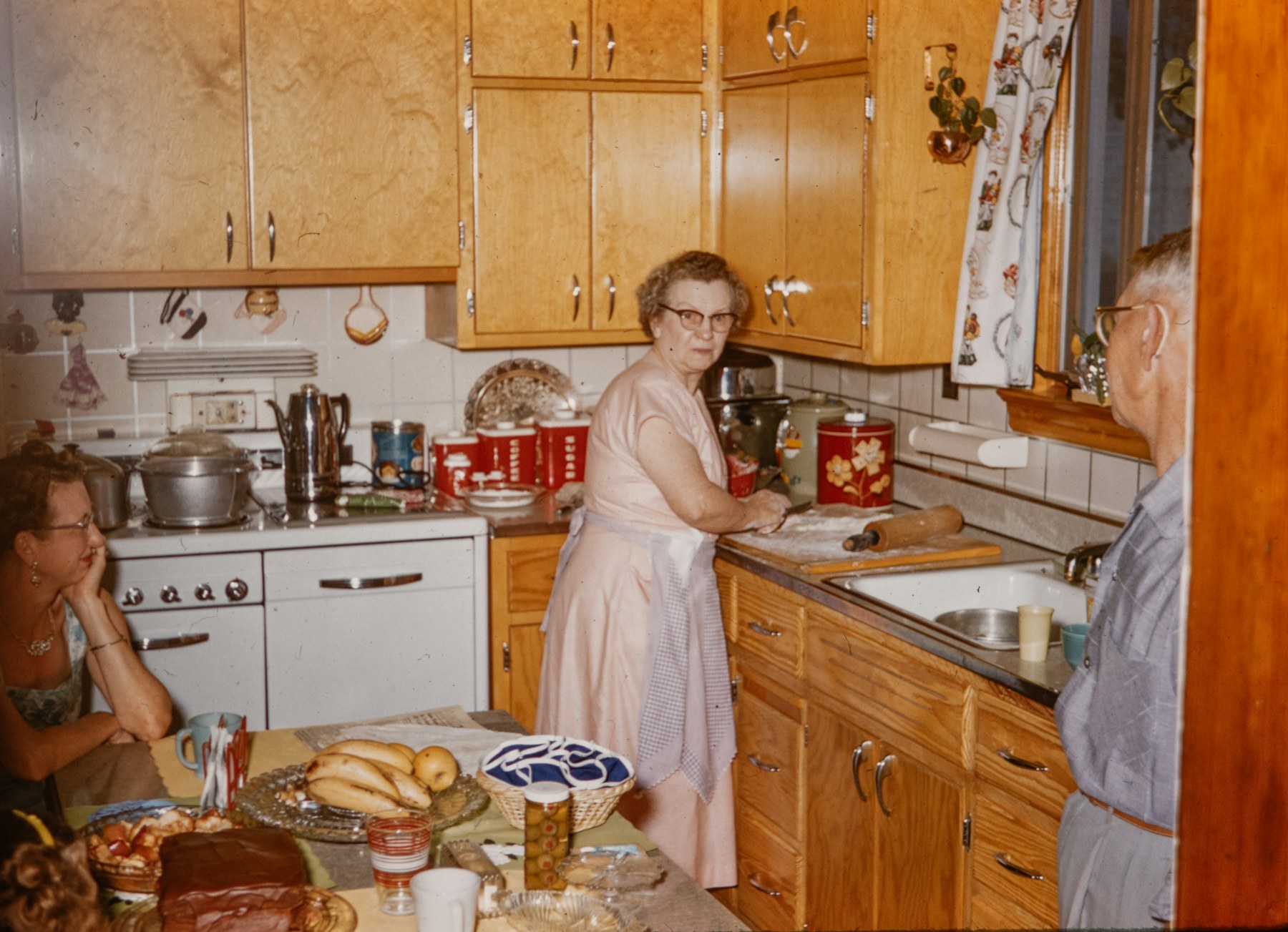
The recipe box came with unwritten rules you could probably still recite today.
Whatever was on your plate was what you were going to eat. That’s it, end of story. When you were done, you had to ask to be excused from the table. Elbows never went on the table. There was a right way to eat and sit, and then there was the wrong way to eat and sit.
When there was company, they got the good dishes, and the kids got a flimsy card table that wobbled every time someone leaned forward to get more potatoes. The conversation was better at the wobbly card table, though.
By the numbers
- 50¢ — the average price of a pound of chuck roast in 1955
- 3 — minimum number of Jell-O molds at any respectable church potluck
- 1897 — the year Jell-O was invented in LeRoy, New York
- 0 — number of times anyone measured anything. “A pinch of this, a little of that, and you’ll know when it’s done”
Where the cards came from
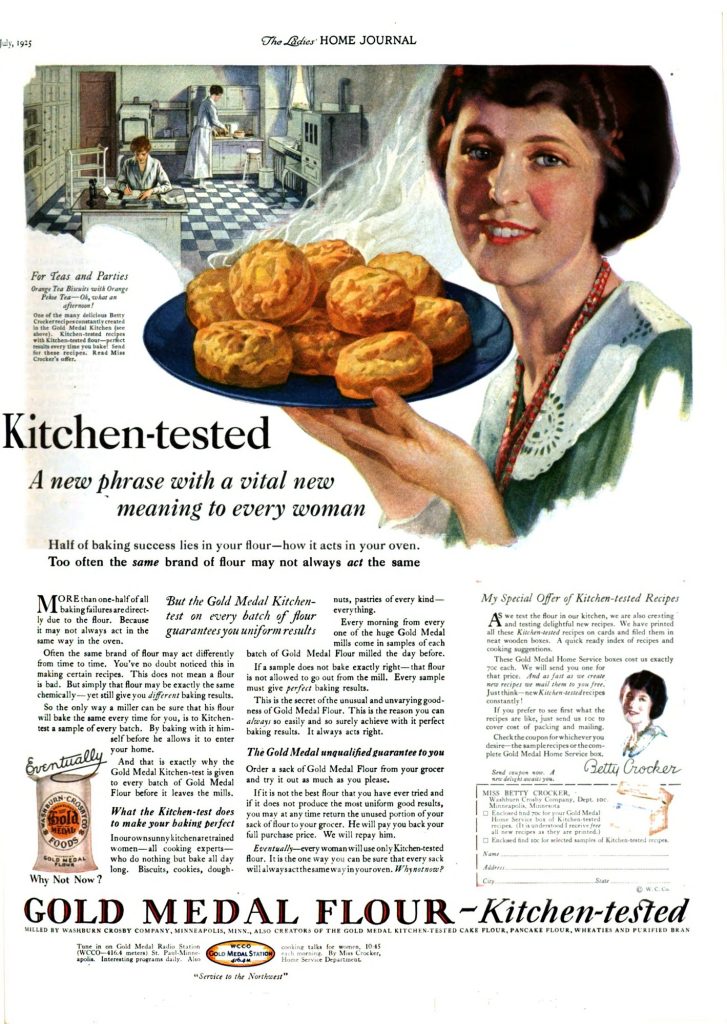
Open up your recipe box. Bet there’s at least one recipe in there that’s been copied from a magazine, given by a neighbor, found on a package, or supposedly created by Betty Crocker. Yes, the one and only Betty Crocker might be responsible for many of your family’s finest recipes. Her story goes back to October of 1921, when an ad for Gold Medal Flour appeared in The Saturday Evening Post. The ad encouraged consumers to complete a jigsaw puzzle and mail it back to the Washburn-Crosby Company in Minneapolis. Consumers began writing in with baking questions along with their puzzle pieces. In an effort to answer all of these letters a new persona was born: Betty Crocker. The surname came from a retired executive in the company, William G. Crocker. Her signature, however, came from a contest held among the company’s female employees with the winning entry belonging to Florence Lindberg. By the early 1940s nine out of every ten American homemakers recognized the name Betty Crocker, and Betty Crocker’s Picture Cook Book came out in 1950. The book went on to sell over 2.5 million copies in its first year. Next time you make one of Betty’s recipes you’ll have to admit she’s a keeper!
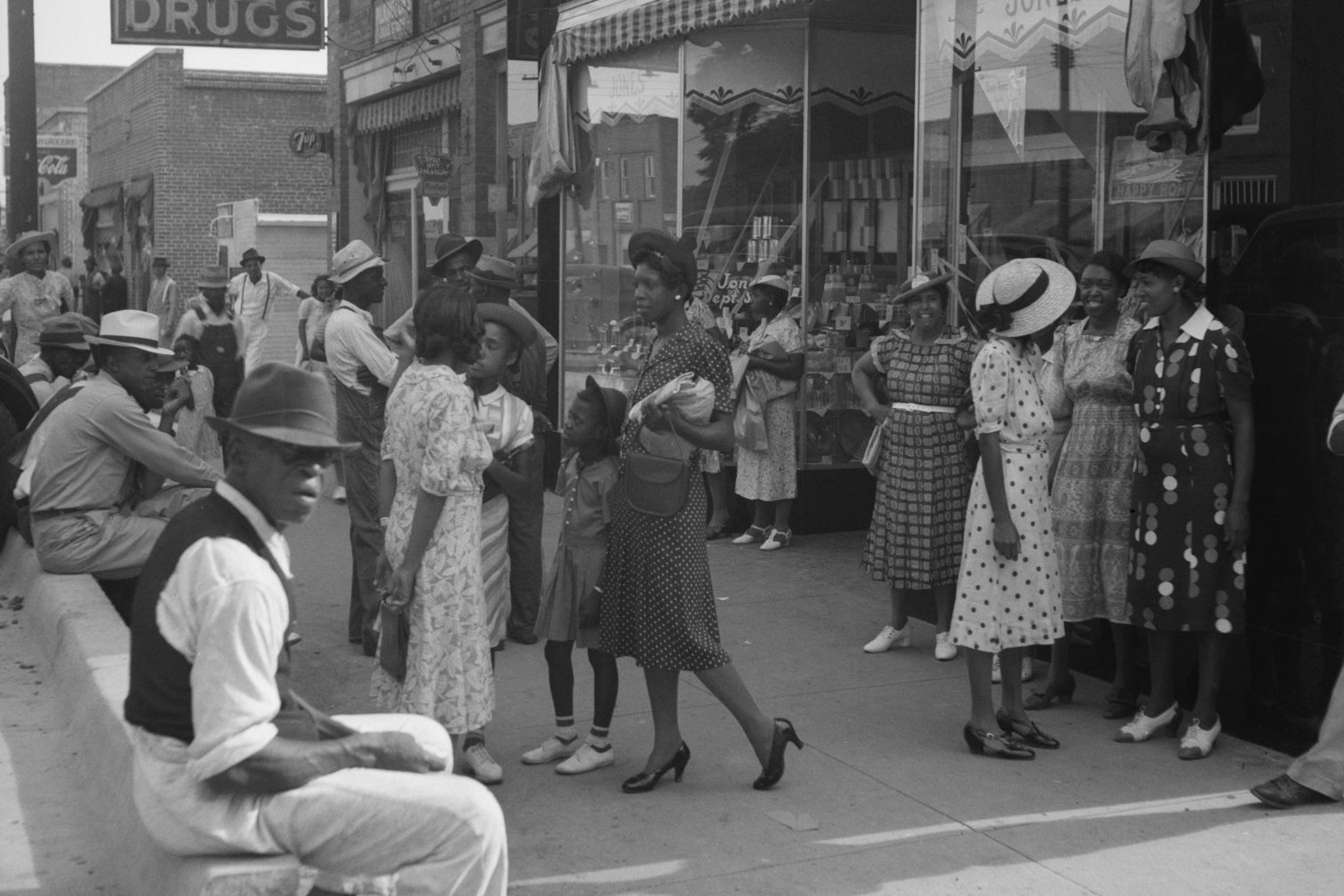
Nobody ever left grandma’s table hungry. It simply wasn’t permitted.
Tell us: What was your grandmother’s specialty — the dish nobody else could ever quite get right? Do you still have her handwritten cards? Share the memory (and the recipe, if you’re feeling generous) in the comments.
Norman Rockwell, “Freedom From Want.” National Archives — public domain, via Wikimedia Commons.



.jpg)
Leave a Reply