
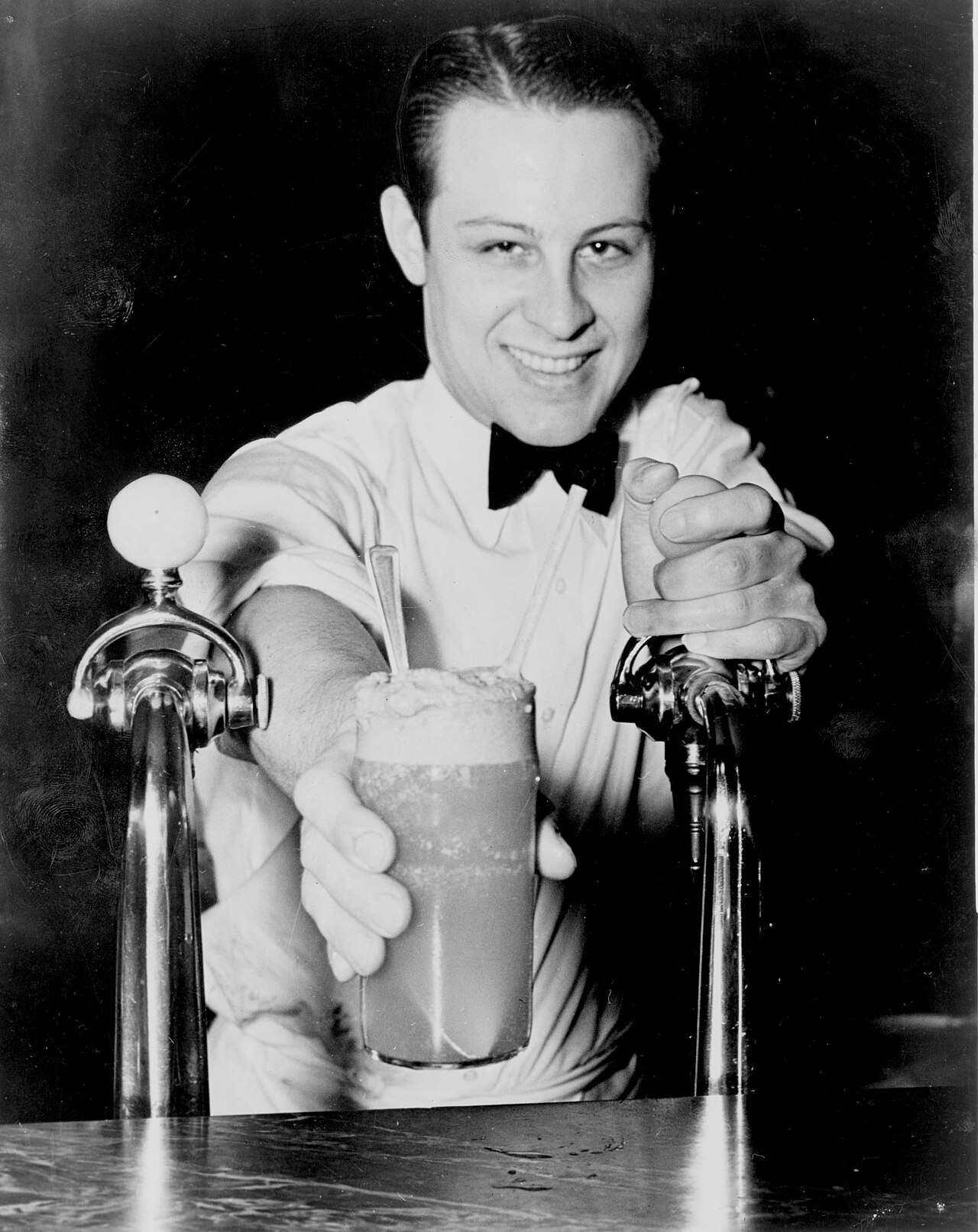
There was a time when the soda counter was the community gathering place, long before there were coffee shops on every corner. The soda fountain at the drugstore was at the very back of the store. Kids couldn’t leave the spinning stools alone. The chrome and marble counter gleamed. You went there after school, after a movie, after church, or just because. It was the place to be. You might sit there for hours and hours, enjoying the people and the comings and goings. It was the place where friends gathered. And, of course, you couldn’t pass up a trip to the fountain when a cold ice cream sundae or milkshake was calling your name!
Why the drugstore, of all places?
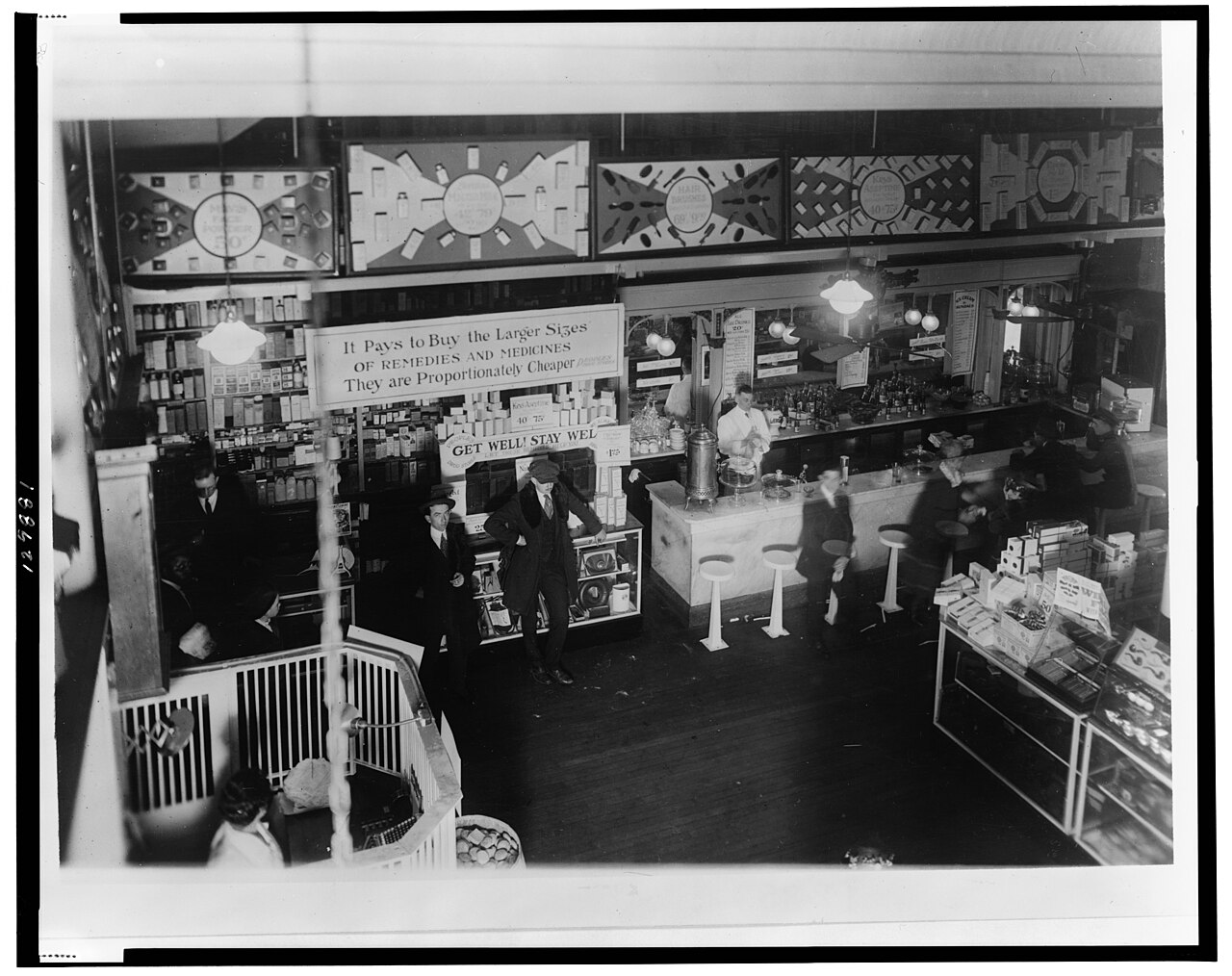
Drugstores used to sell prescriptions and comic books and ice cream sodas, and somehow they all fit together. In the 1800s druggists sold carbonated water as a tonic. Adding flavorings helped folks swallow their medicine easier. But the concoctions also became highly sought-after treats. You’d be surprised how long of a line you’ll stand in if something’s good enough. On May 8, 1886 Dr. John Pemberton brought his syrup to Jacobs’ Pharmacy in downtown Atlanta. That’s where the first glass of Coca-Cola was poured. They sold about 9 glasses a day in Coke’s first year. It cost a nickel back then, and it still cost a nickel in 1959!
Picture the marble counter, the chrome spigots and penny candy next to the cash register. In the 1940s and ’50s the soda fountain was the place to be on Main Street. Every person in town made his or her way into People’s Drug, Rexall, Walgreens or simply the drugstore at some point, and they all looked alike inside. You could sit for hours sipping your root beer float and take it all in. A young man in a paper hat ran the whole operation.
Prohibition fills the stools
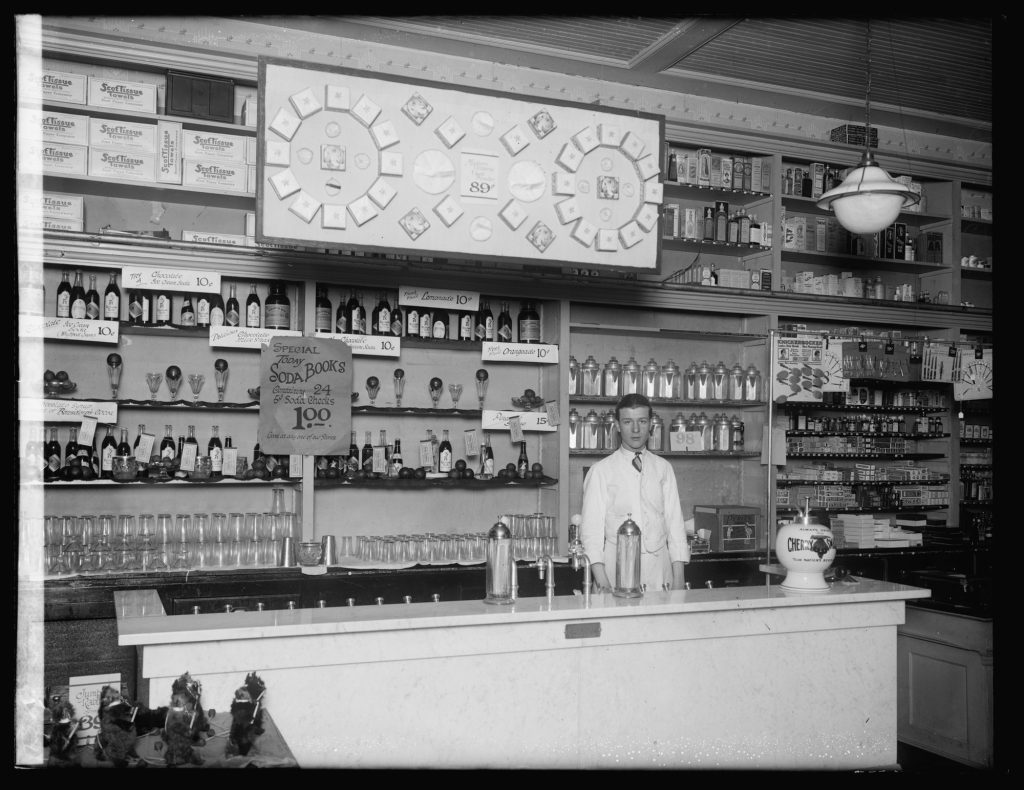
As you sit on a stool, savoring a root-beer float, you might not realize how much Prohibition helped the soda fountain. When saloons across the country shuttered during the 1920s, the nation’s tipple of choice went sweet. According to the New York Times, the number of soda fountains in America was estimated to have exceeded 100,000 as early as 1922, most of them in drugstores. Total sales reached $1 billion that year. An estimated 40 percent increase in ice cream consumption occurred during the decade from 1920 to 1929. Unable to sell beer, large brewers such as Anheuser-Busch and Yuengling turned partly to making ice cream. The fountains of the 1940s and ’50s grew out of the Roaring Twenties.
The soda, the sundae and the split
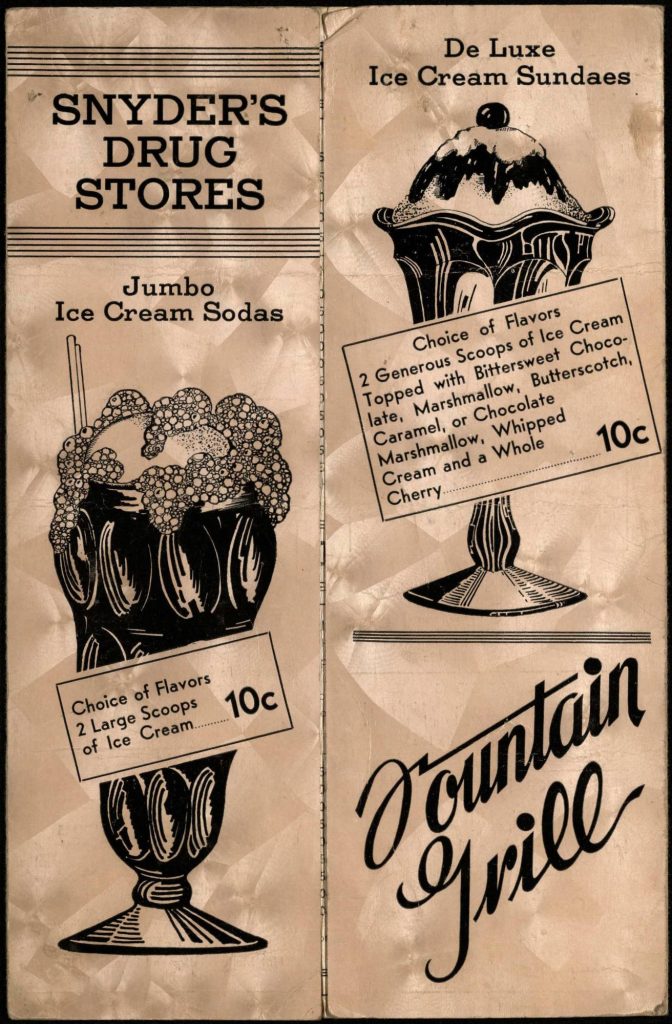
Can you believe that the ice cream soda was an accidental creation? The usual story starts at the 50th anniversary of the Franklin Institute in Philadelphia, Pennsylvania, in 1874, when vendor Robert M. Green sold sweet cream sodas but ran out of cream and substituted vanilla ice cream. The sundae is a bit up in the air. Two Rivers, Wisconsin claims it was invented in 1881; however, the first written evidence of the treat appears in an April 5, 1892 advertisement in the Ithaca Daily Journal from Platt & Colt pharmacy in Ithaca, New York for a “Cherry Sunday” from their fountain. The banana split has a bit of a clearer origin. The National Ice Cream Retailers Association credits twenty-three year old apprentice pharmacist David Strickler for creating the banana split in 1904 in the fountain at the Tassell Pharmacy in Latrobe, Pennsylvania. At ten cents, the banana split cost twice as much as the sundae.
The soda jerk: part chemist, part showman
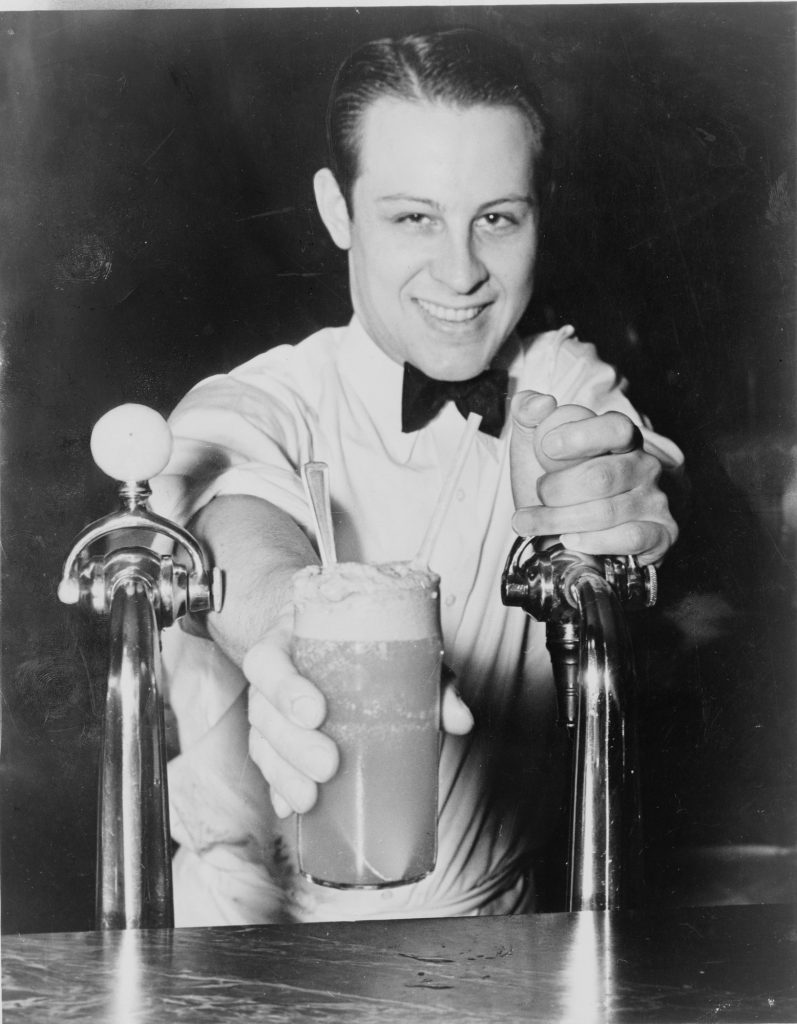
Your soda jerk was usually an adolescent, probably working his first job, but if he had a flair for the craft he was practically a star in your neighborhood. He got his name from the action of reaching back and pulling a handle to get your concoction flowing. The good ones could scoop the cream with one hand and pull the seltzer handle with the other. Once your libation was complete, he would give it a nudge down the marble-top of the counter, and you’d both watch to see if it stopped in front of you. It always did.
The fountain even had its own secret language, called out from counter to soda man:
Soda jerk slang decoder
- “Burn one!” — a chocolate malted
- “Black cow!” — a root beer float (in some towns, chocolate soda with chocolate ice cream — the debate rages)
- “Draw one!” — a cup of coffee
- “Squeeze one!” — fresh orange juice
- “Adam’s ale” — a plain glass of water (on the house, always)
- “Eighty-six it!” — we’re all out — a phrase that escaped the fountain and lives on in every restaurant kitchen in America
What we ordered
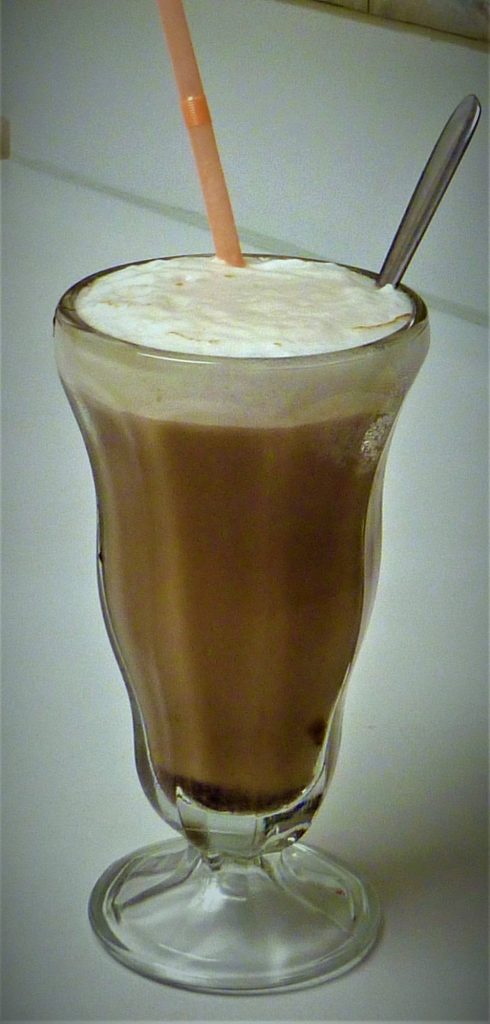
Everyone had a usual, and the man behind the counter knew it before you sat down:
- Cherry Coke — the real kind, syrup pumped right into the glass, no can involved
- The malted — thick enough to bend the straw, served with the frosty metal mixing cup on the side, which meant a bonus half-serving. That metal cup was the fountain’s greatest act of generosity
- Egg cream — no egg, no cream, just milk, seltzer and Fox’s U-bet chocolate syrup. And don’t let a Brooklyn native hear you question it
- Cherry phosphate — that sour fizz you can still taste if you close your eyes
- Banana split — the special-occasion order, when your allowance or your report card justified it
Do you remember malteds? Back in the 1950s they were available at soda fountains all over the country. They gave you extra drink in a metal cup. It was an inexpensive treat to enjoy. The malted got its big start at Walgreens in 1922, when Ivar “Pop” Coulson, a Walgreens fountain manager, added two hefty scoops of vanilla ice cream to a malted milk recipe. Walgreens named the concoction Double-Rich Chocolate Malted Milk. At a mere 20 cents a glass, the Double-Rich quickly became a customer favorite, and malteds have been part of the Walgreens story ever since.
Price check: the fountain menu, about 1955
A nickel bought a fountain Coke. A dime, an ice cream soda. Fifteen cents, a malted — twenty if you wanted two scoops. A banana split was a quarter, and a full lunch — grilled cheese, fries and a cherry Coke — came in under fifty cents. A kid with a dollar was a king.
Hot sodas, phosphates and the free lunch counter
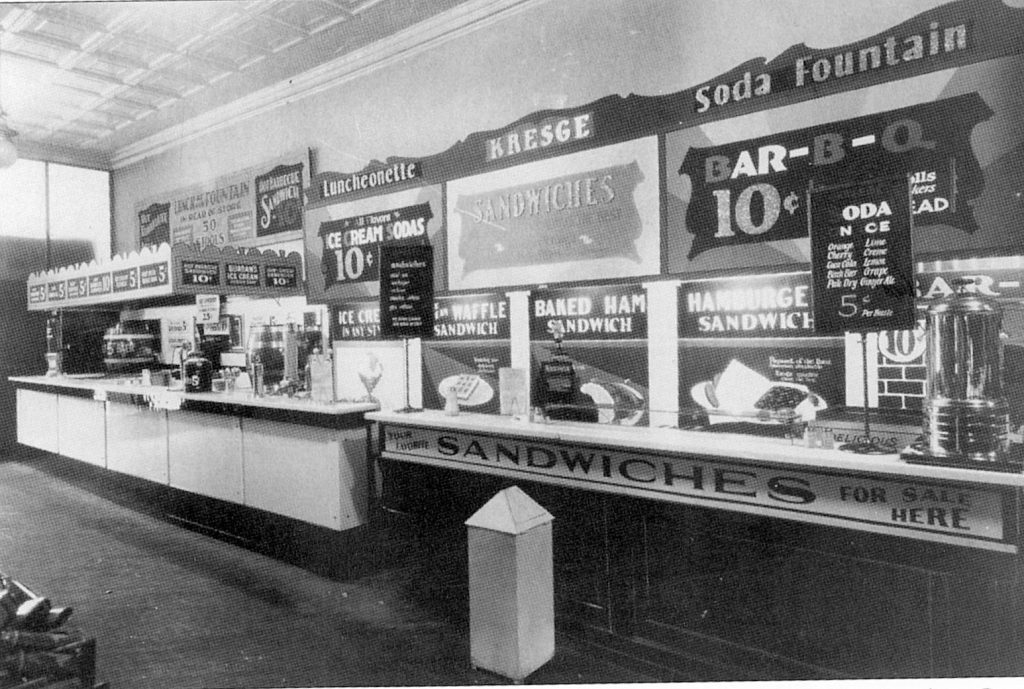
Have you ever wondered how soda fountains became lunch counters? It all started with women stopping into drugstores at noon for hot beverages and crackers. Together, this equated to a quick lunch. A New York Times column in March 1902 called one city drugstore fountain the “Woman’s free lunch counter.” Gradually, fountains began to make soup and sandwiches and other foods, and lunching became just another aspect of the soda fountain’s normal business.
Fountain business slowed down considerably when it turned cold. Fountain books encouraged proprietors to lure customers with a selection of “hot sodas”. These could be as mundane as coffee or tea, or as outlandish as clam juice and cream (called the “Reeking Smatch” when whipped together with ginger). Other possibilities included hot chocolate (topped with whipped cream), hot eggnog, cup soups, and broths. Trade journals warned proprietors “Never serve a straw with a hot drink.” Fountain phosphates (used to add a tart element where lemon or lime juice was too difficult to obtain or too expensive) included an ingredient called “acid phosphate”.
More than a drink
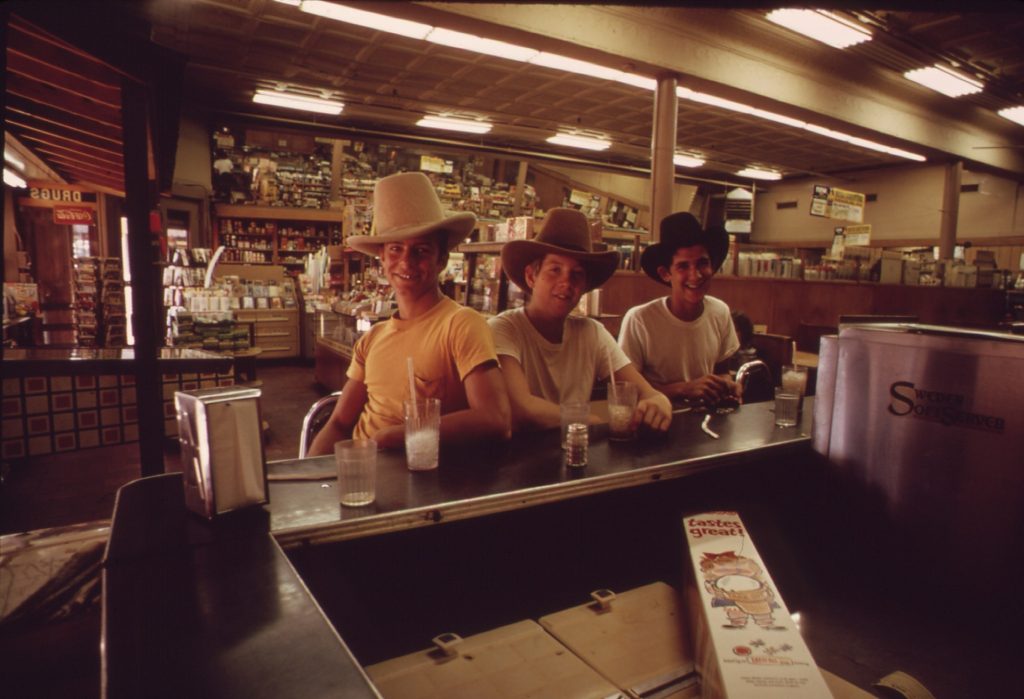
You could buy a soda, sit down and feel like you owned the place. Neighborhood gossip out-competed the news and reached the soda fountain counter long before it appeared in print. Mom would send you to the fountain to find out who was around. More than a few romances started with one malted and two straws.
And then, of course, there was the trip to the soda fountain, which, whether or not it was labeled as such, was a lesson in public behavior. Sitting there with your ice cream, you learned how to take your turn, leave a tip and speak to grownups who weren’t your parents. Nobody called it social skills; it was just an ordinary Tuesday afternoon. Somehow, through repetition and osmosis, you learned the rules of etiquette and conduct in the larger world until it was second nature.
Not everybody got a stool
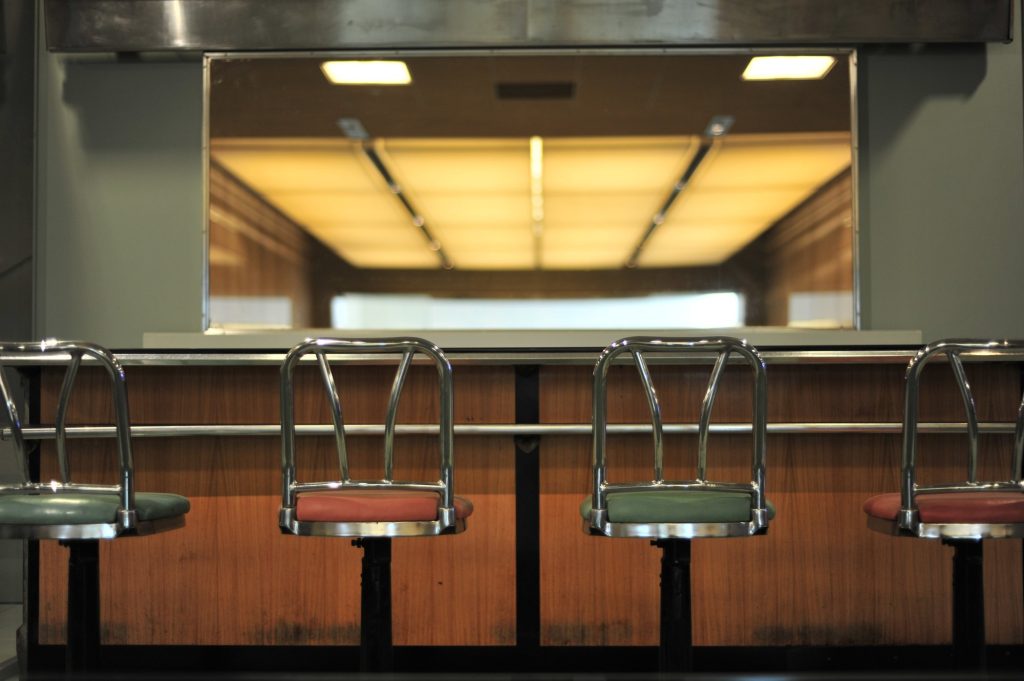
Lunch counters in many a southern town were for white customers only. Ezell A. Blair Jr., Franklin E. McCain, Joseph A. McNeil, and David L. Richmond, four Black college students, sat down at the “whites only” lunch counter of Woolworth’s store in Greensboro, North Carolina on February 1, 1960 and asked for service. It took real courage to politely ask for what they were rightfully due but were being denied, simply because of the color of their skin. When service was denied, they calmly but firmly stayed at the lunch counter. By late March 1960, sit-ins had occurred in 55 cities in 13 states. For six months, hundreds of students and others boycotted the store and participated in protests. During those six months, churches, civil rights organizations and community members rallied to support desegregation of Woolworth’s store. Persistence prevailed and on July 25, 1960, Woolworth’s lunch counter was desegregated. Such segregation was the norm, sadly, just the way of everyday life. But it wasn’t right. The sit-in started by these four college students from the Agricultural and Technical College of North Carolina helped ignite a youth-led movement against racial inequality throughout the South. A piece of Woolworth’s lunch counter sits in the Smithsonian’s National Museum of American History in Washington, D.C. as a reminder of the important strides made toward civil rights.
Where did they all go?
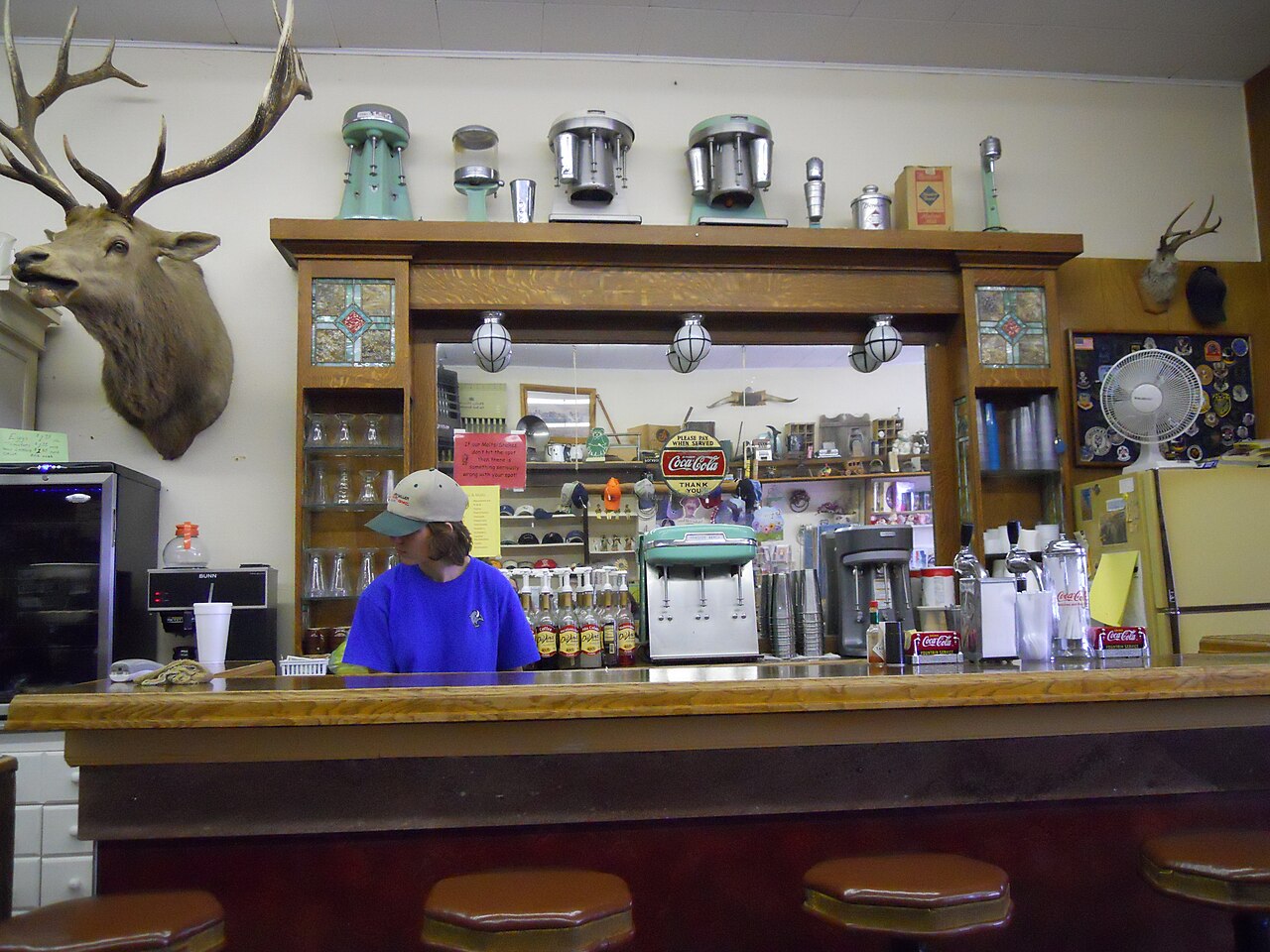
The Chugwater Soda Fountain pictured above is located in Chugwater, Wyoming (pop. about 175), opened in 1914, and is the oldest operating soda fountain in Wyoming. There used to be tons of these. By the seventies many had been ripped out or boarded up; those lovely marble countertops sacrificed or scarred by progress. Some, though, remain. If you’re lucky enough to find one still standing, stop, order a malted (ask for the cup), and sit. The sweetness of the concoction hasn’t changed over the decades, nor has the calming effect of sinking into a well-worn stool to watch the world go by. The drugstore around the fountain hasn’t changed much either. Chances are you’ll be sitting on the original stools at the same counter where countless other thirsty customers sat before you. Sit for a while.
Two straws, one malted, and the whole afternoon ahead of you. That was the good life, and it cost fifteen cents.
Over to you: What was your fountain order — and what did it cost? Was your soda fountain in a drugstore, a five-and-dime, or a diner? Tell us in the comments. First malted’s on the house.
A soda jerk in action. Photo: Alan Fisher, New York World-Telegram & Sun — public domain, via Wikimedia Commons.

.jpg)
Leave a Reply