
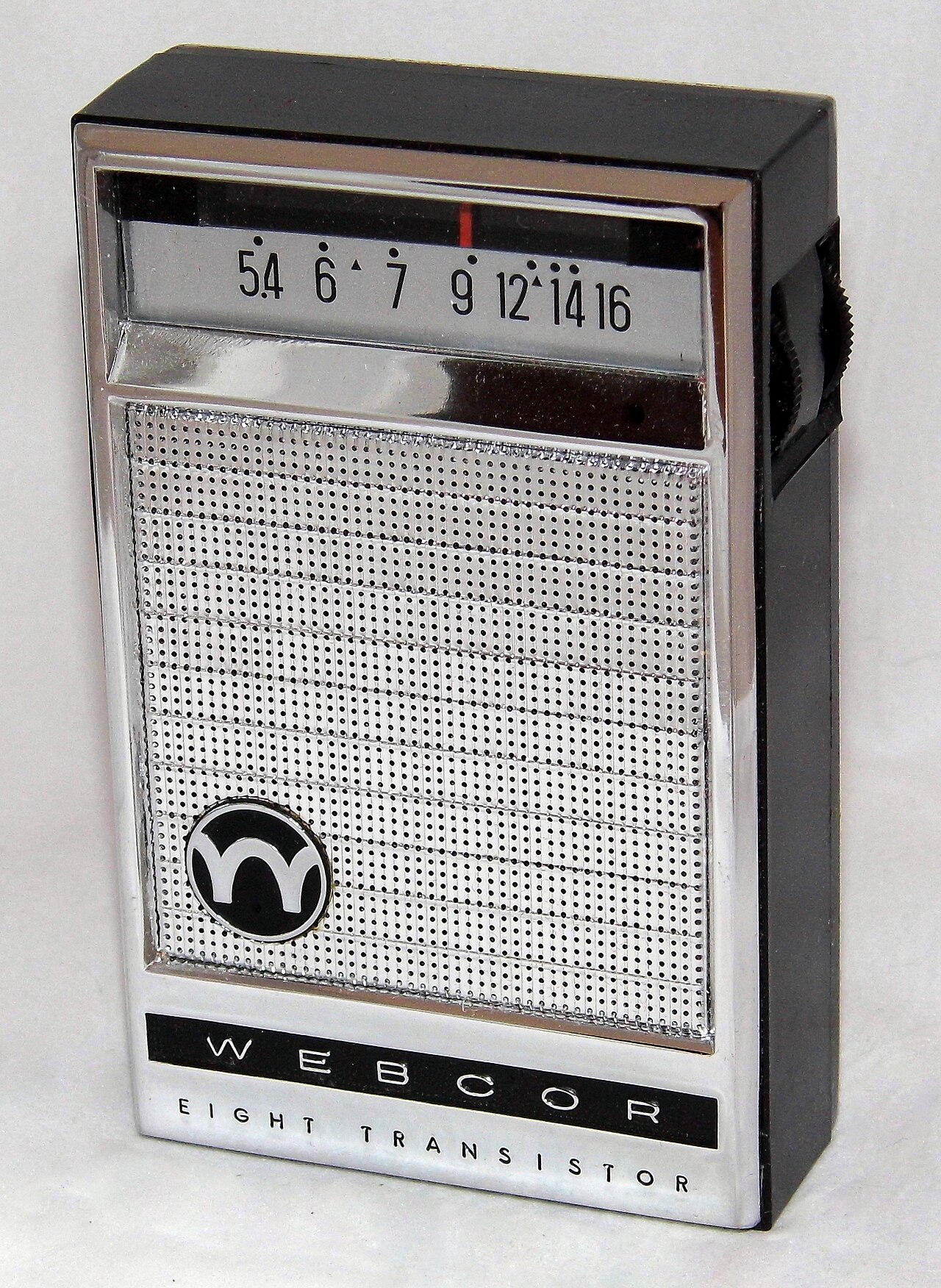
Bedtime meant turning off the lights, but it didn’t mean giving up listening to the music. The other people in the house were asleep and you treasured that little transistor radio. Just one earphone under the pillow, the volume barely audible, and rock and roll coming in from hundreds of miles away.
The gadget that changed everything
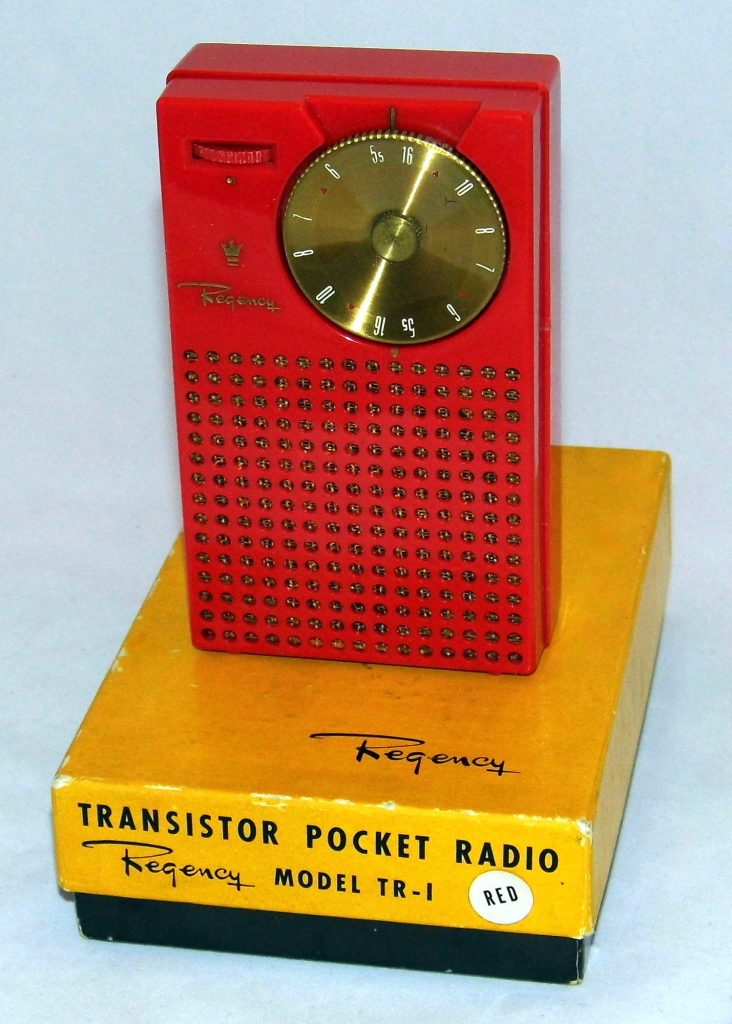
People who’ve been raised with smartphones have no idea what it was like when music arrived in a device you could take everywhere, including under your pillow at night. On October 18, 1954, Texas Instruments announced the Regency TR-1, the first transistor radio for sale to consumers. On November 1, 1954, this pocket-size technological advancement was available in certain stores in New York and Los Angeles. This may seem like an insignificant step in tech evolution to younger generations, but prior to the introduction of this nifty piece of electronics, the radio was an item that sat in the family’s living room. Families listened together and parents controlled the dial. With a transistor radio, you didn’t have to wait until after dinner and ask permission to see if there was any music you liked.
All of a sudden, music was portable, and it was private. It was your music, it was your station, and it was your earphone. And the teenagers were never the same again. They’d just lie there in the dark with that little box under their pillow, listening to the static and the music, like they had their own private world.
Price check: freedom, 1954
The Regency TR-1 cost $49.95 — more than $580 in today’s money. Within a few years, cheaper Japanese imports brought prices way down, and by the early ’60s plenty of kids had one, usually earned a nickel at a time. That little radio cost two months of paper-route money, and it was worth every penny.
What was inside that little case
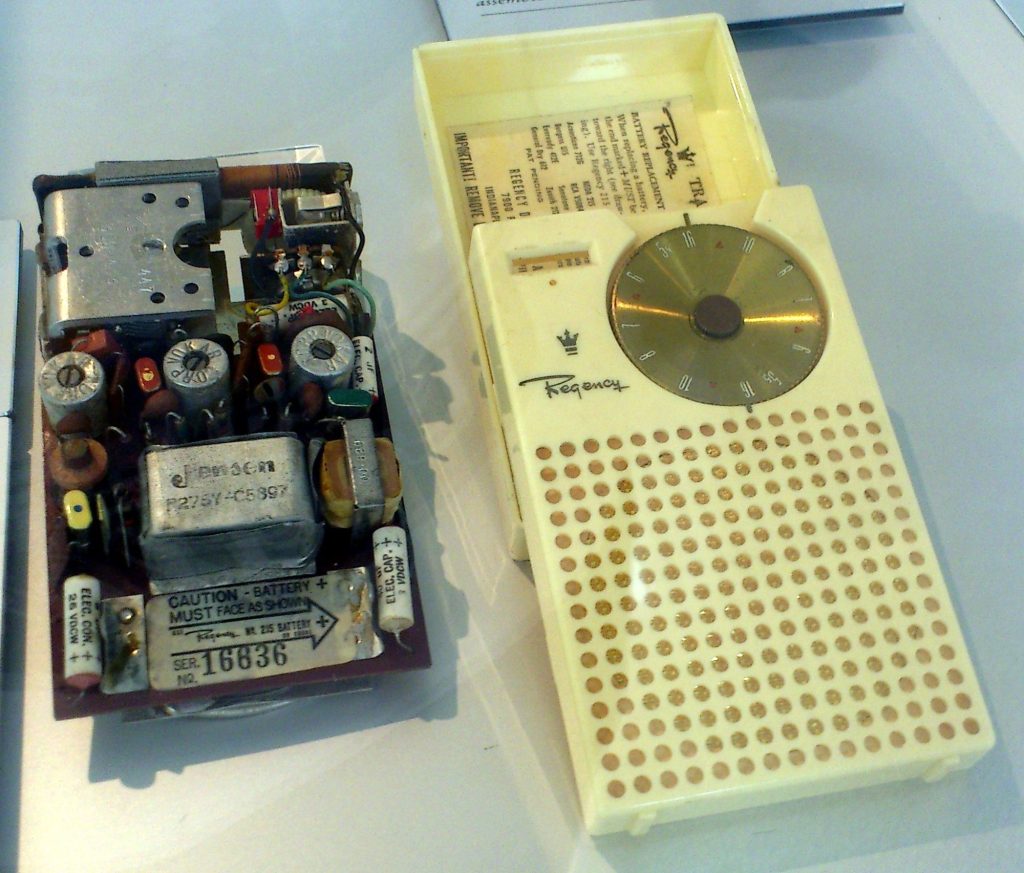
And it wasn’t like it was perfect. It used four transistors (made by Texas Instruments), which made it possible for it to be small, and was made by Industrial Development Engineering Associates, a small Indianapolis-based company, which produced the device under the name Regency. The radio was powered by a 22.5-volt battery, which would last between 20 and 30 hours and cost about $1.25, meaning that dead batteries were common. Radios were available in black, gray, red, and ivory. Despite its flaws, sales were successful: 100,000 radios were sold in its first year! One review from April of 1955 in a consumer’s magazine described the quality of speech as adequate and the quality of music as unsatisfactory.
Made in Japan
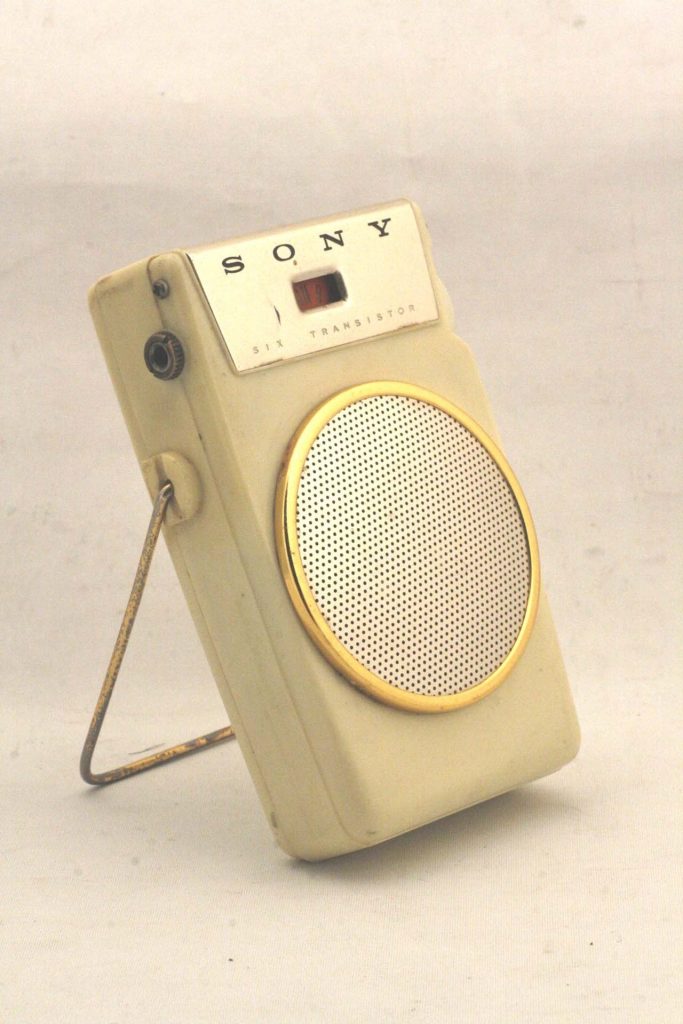
Not long after the TR-55, the first commercial transistor radio in Japan, was introduced for sale in August of 1955 (the company, Tokyo Tsushin Kogyo, would assume the name Sony in January of 1958), Sony released a low-cost model (the TR-63) in 1957, which was promoted as shirt-pocket size. It caught American buyers’ attention. It is said that it was actually larger than a shirt-pocket, and Sony salesmen had to be provided with shirts with tailor-made bigger pockets! Soon after, as other inexpensive transistor radios came out of Japan, prices fell to the extent that a teenager could save up their pocket money for their own radio. For many people, I’m sure, their first transistor radio was one of those little gems.
The magic of the nighttime dial
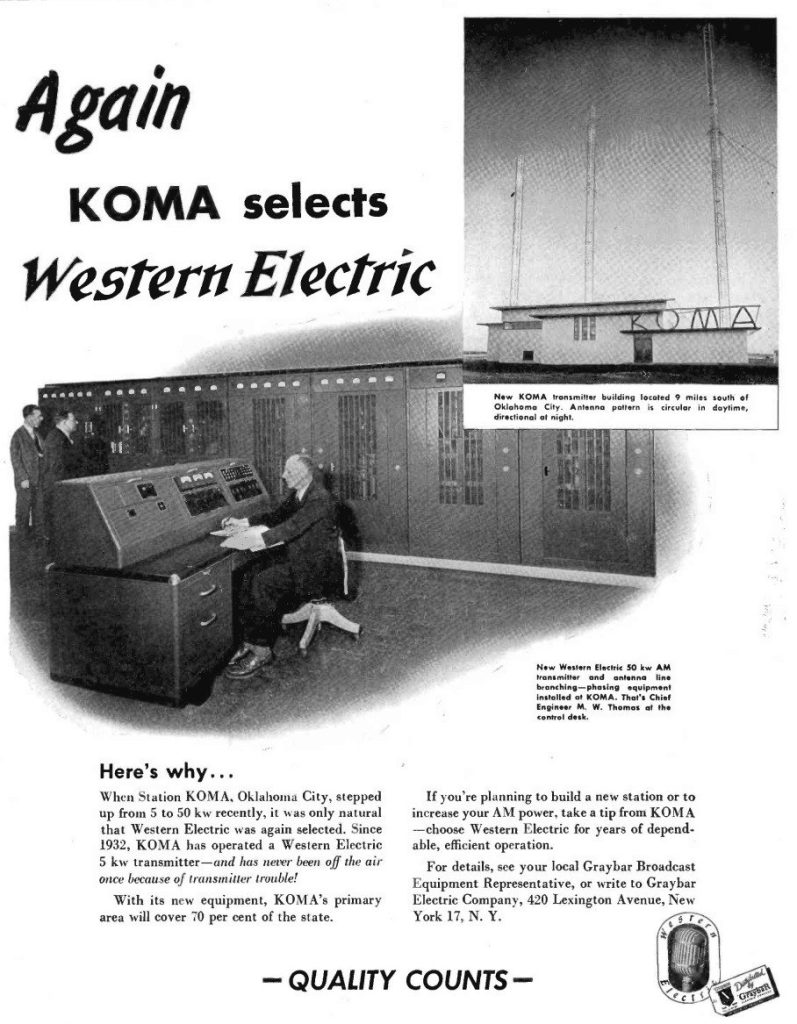
You learned to give it a light touch, dialing in the dark. At night, AM radio was something else. The stations leapt from the dial, voices and songs carrying through the static on signals that could come from hundreds of miles away. Because of the way the air behaved at night, reflecting AM radio signals from the sky, big-city stations with 50,000-watt clear-channel signals could reach halfway across the country. If you lived in Southern Ohio, you might dial in WABC out of New York or WLS out of Chicago. Maybe, if you were patient, KOMA out of Oklahoma City or WOWO out of Fort Wayne crackled in. It was a window onto the world, and it happened while everyone else was asleep. You were alone, lying in bed, but somehow not alone at all, listening to voices and music coming out of thin air.
You could be lying in bed, listening to the radio on some farm that was three states removed from New York City and hear the same DJ and listen to the same songs that kids in Manhattan were listening to, at the same time. And the Mexican stations just across the Rio Grande weren’t subject to American power regulations. By the early 1950s, XERF, in Ciudad Acuña, Mexico, just across the Rio Grande from Del Rio, Texas, broadcast at a mind-boggling 250,000 watts, a signal strong enough to cut through the night air and creep its way into your room, when you were searching for that DJ’s clear voice amid the fuzz and static.
WLW, the Nation’s Station
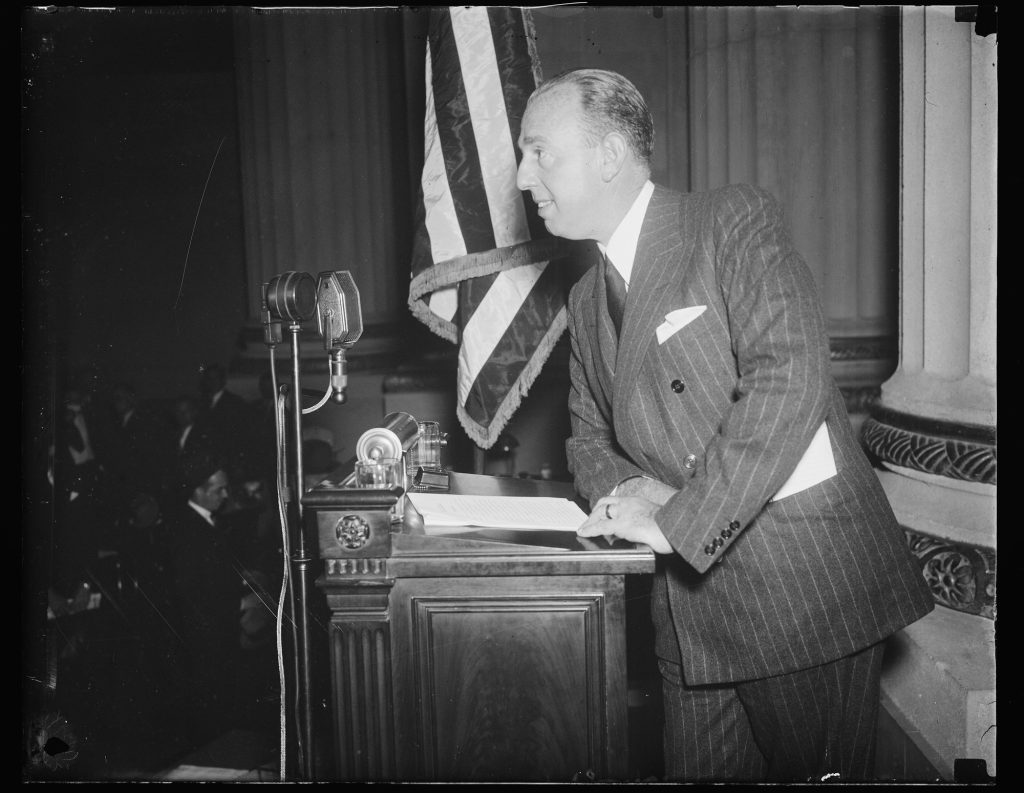
Down in Southern Ohio, where I grew up, the big station on the dial was WLW in Cincinnati. WLW, which broadcasts from Mason, Ohio (about 25 miles north of Cincinnati), was granted permission to broadcast at 50,000 watts by the federal government in 1928, and it started calling itself The Nation’s Station. In May of 1934 President Franklin Roosevelt ceremonially pushed a button which signaled WLW’s broadcast at an unbelievable 500,000 watts. WLW broadcast at 500,000 watts for the next five years from its 831-foot tower, a broadcasting power that has never been matched by a U.S. radio station. Complaints from competing broadcasters prompted the U.S. Senate to pass a resolution in 1938 recommending 50,000 watts as the maximum for radio broadcasts. Eventually, WLW was back at 50,000 watts.
Crosley, the radio company, even printed WLW directly on the dials of some of their radios. Residents near WLW’s transmitter in Mason claimed that a neon hotel sign never went dark and farmers reported being able to hear WLW through their barbed-wire fences.
You’ve no doubt heard the singing duo Rosemary and Betty Clooney. How about Andy Williams, Red Skelton and Fats Waller? WLW in Cincinnati helped along the careers of them all. Back in 1921, Powel Crosley Jr., a Cincinnati manufacturer, wanted a radio, but sets ran over a hundred dollars. So he made his own, right on a wooden breadboard. Crosley set up his amateur, 20-watt station right in the living room of his mansion. Crosley’s company started making inexpensive ($20) radio receivers, the Harko, and, little more than a year after making his first breadboard receiver, his company was the largest producer of radios and radio parts in the world. WLW became one of forty “clear channels,” frequencies assigned to only one station by the federal government, ensuring no other station would interfere.
Two little triangles on the dial
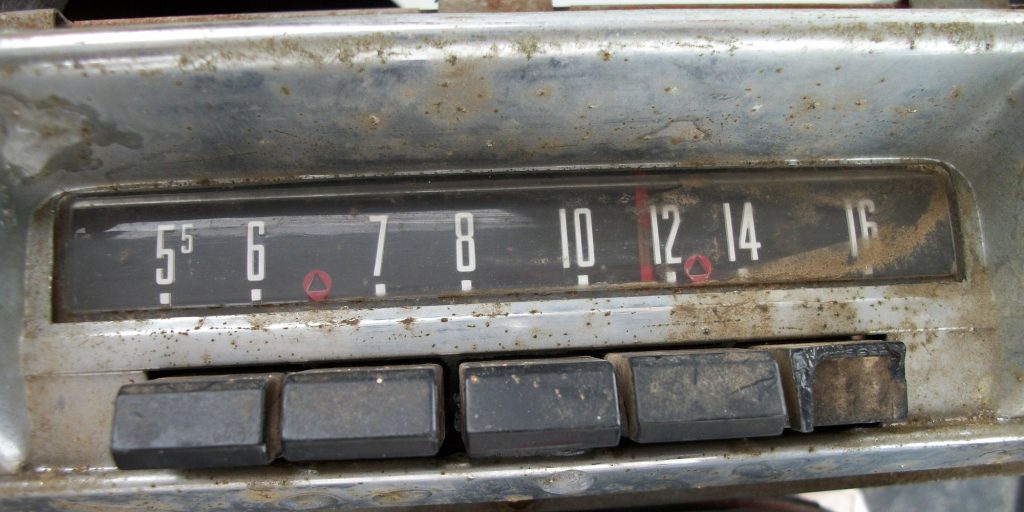
If you have a radio from the 1950s, there may be two small triangles on the dial, one at 640 and the other at 1240.
In 1951 President Truman set up a national emergency defense measure called CONELRAD (a Civil Defense system), which specified that in case of an air raid by Soviet bombers regular stations would go silent and designated stations would broadcast emergency instructions at 640 or 1240. After 1953 any radio sold had to have the CONELRAD frequencies marked on the dial, until missiles made CONELRAD a thing of the past and it was replaced by the Emergency Broadcast System in 1963.
It’s strange to think that you might be listening to your favorite late night song and start to worry about Soviet bombers.
The DJs were stars, too
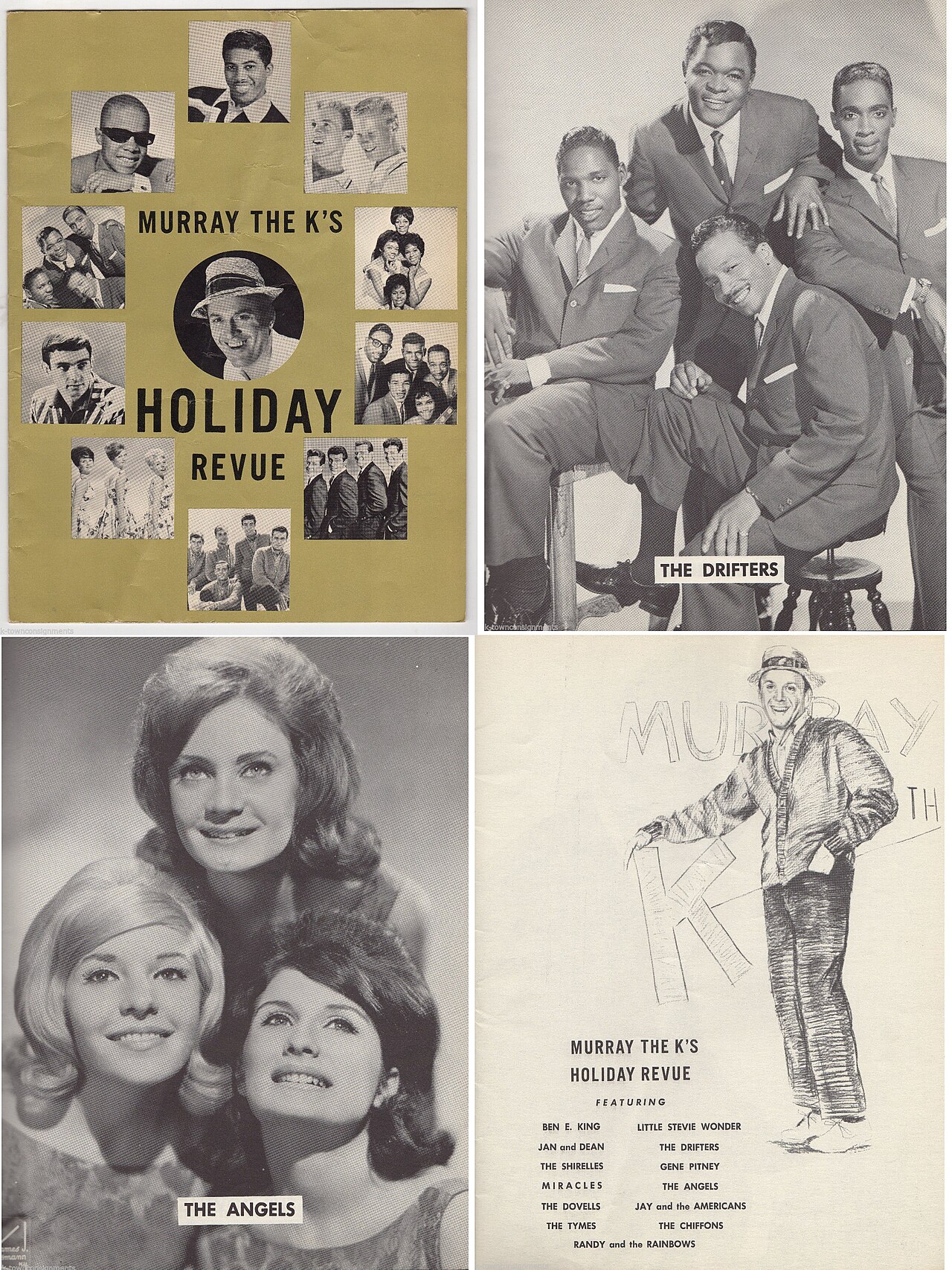
Wolfman Jack (originally Bob Smith) started howling away on XERF in 1963 spinning rock ‘n’ roll and rhythm and blues. In addition to the music, it was that distinctive radio voice that listeners loved. Not only did Wolfman howl, he promoted rhythm and blues record collections (difficult to find in most White-owned record stores) and even baby chicks by mail! After six months, Wolfman left XERF for another border station in Tijuana. In 1964 Murray the K, with his breathless patter on WINS in New York, started calling himself the fifth Beatle. Starting in 1961, Cousin Brucie was spinning hot new tunes on New York’s WABC.
You sent your song out into the darkness, hoping she’d get it. Whether she did or didn’t, whether she was listening or not, you felt a bond.
It worked like this. You called the station’s request line and asked the local disc jockey to play a certain song for a certain someone. He played it, and it wafted out over the airwaves. You lay in bed clutching your trusty transistor tightly beneath your pillow and listened for it to materialize through the static. Nothing compares to late-night radio dedications when it comes to learning about love and longing. It’s about as economical as romance gets.
February 9, 1964
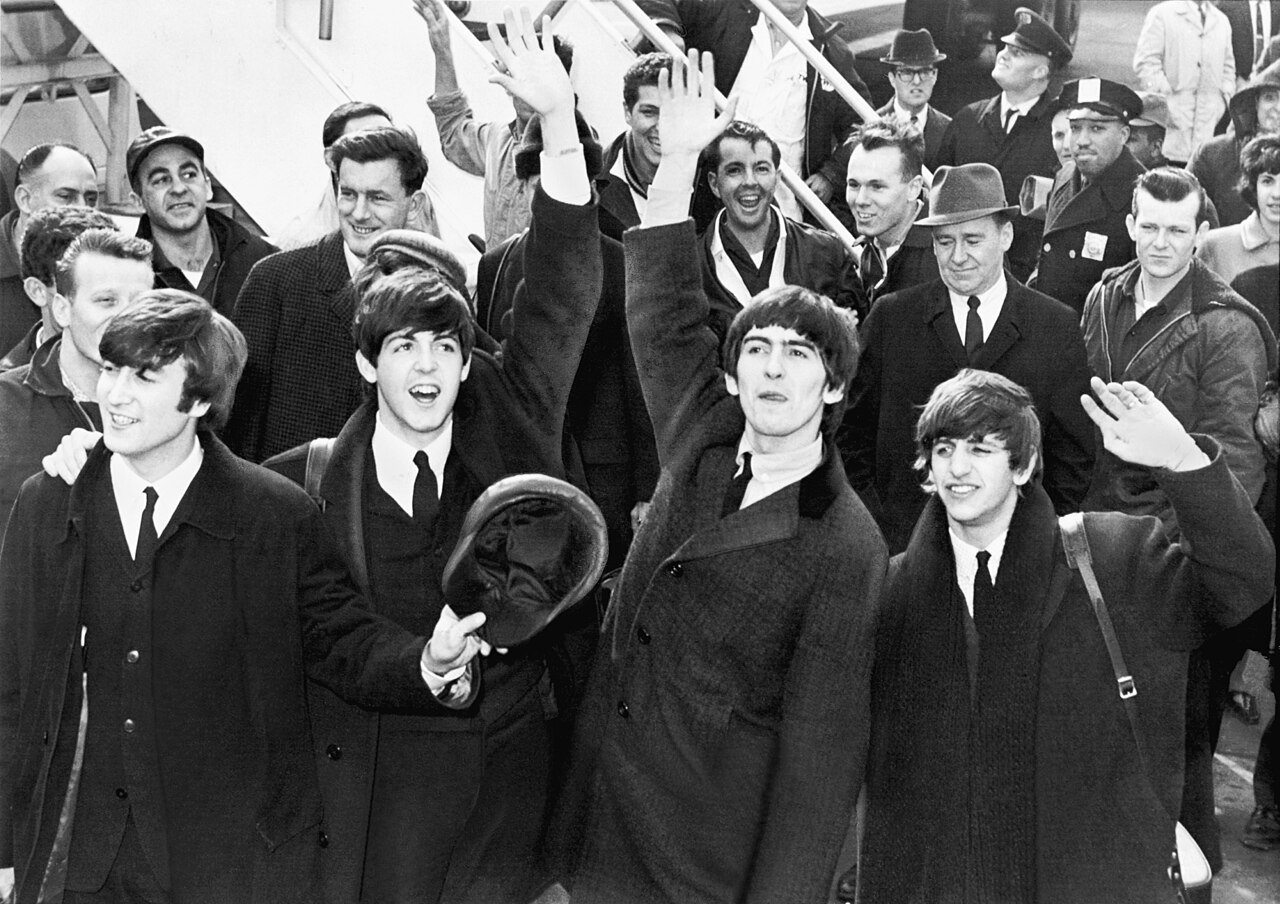
If you were a child in early 1964, you can’t help but remember. Their song, “I Want to Hold Your Hand” was on every radio station in America, played over and over, from morning to night. When the Beatles landed at New York’s newly-named John F. Kennedy International Airport on February 7, 1964, it was broadcast on the radio, complete with the sound of the screaming fans. Two nights later, an estimated 73 million people watched them on The Ed Sullivan Show on February 9, 1964. For many of us, it felt bigger than music.
They were on TV for one night, but the radio had them 24 hours a day, seven days a week. The radio was where most of us heard them, one 3-minute hit at a time.
Three minutes of magic: the mighty 45
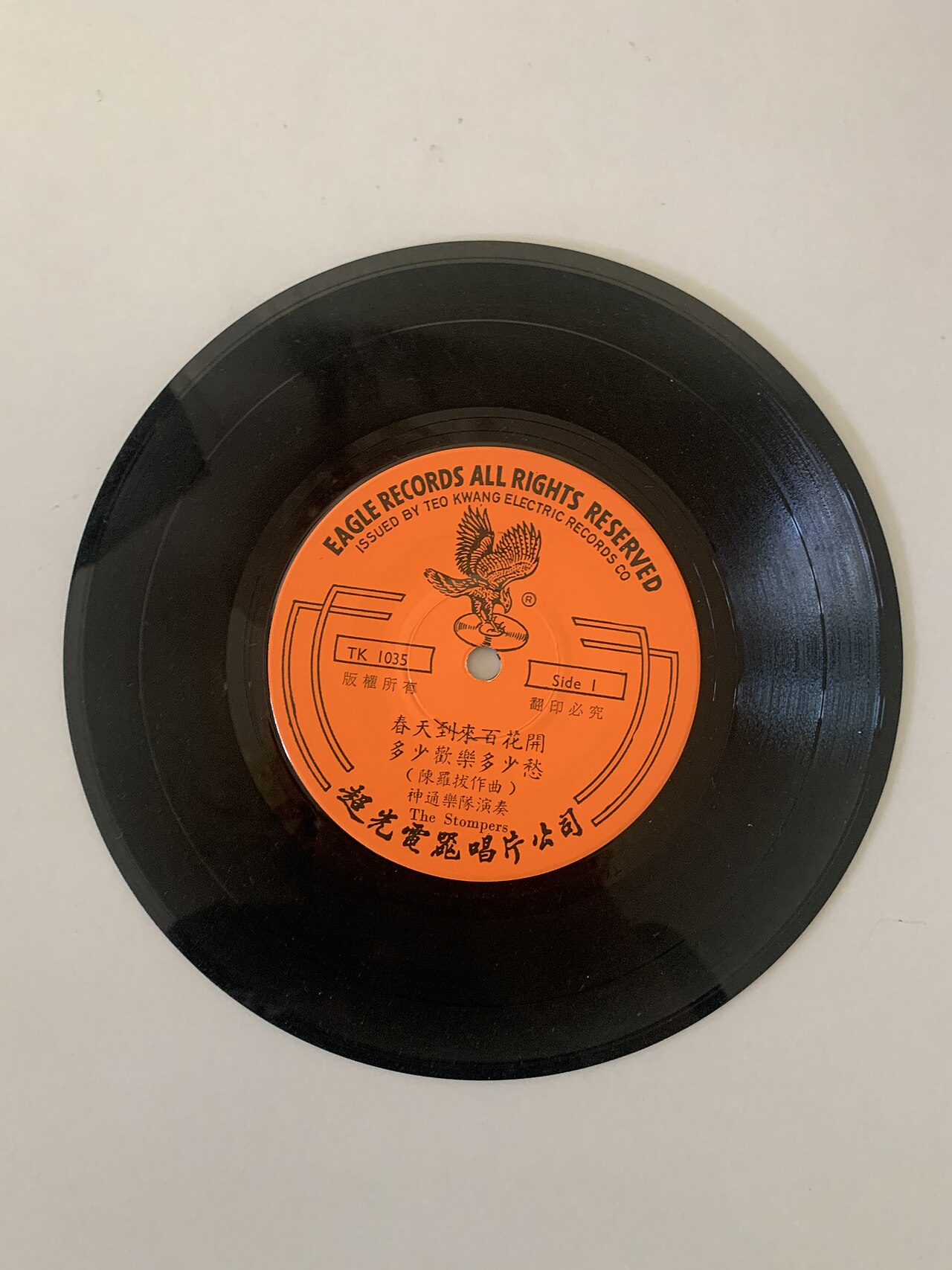
RCA Victor introduced its seven-inch 45 rpm records, which had a large hole in the middle (and required an adapter to play on some turntables), on March 31, 1949. From 1958 to 1968 the list price of a 45 was 98¢. You’d hear something on the radio, scrounge up 98¢, and buy that record at a local store. Then you’d play it over and over at home until it wore out. You’d load up the spindle with records for a personal concert. The mere hiss of the stylus entering the groove made the song seem larger than life.
By the numbers
- 4 — transistors in the Regency TR-1, the first transistor radio on the market — barely enough to work, and we loved them anyway
- 50,000 watts — the legal limit for the giant clear-channel AM stations we caught after dark
- 73 million — Americans watching the Beatles on Ed Sullivan, February 9, 1964
- 98¢ — a brand-new 45 at the record shop, give or take a dime
Ask anyone from that generation and they will still remember the first 45 they purchased with their own pocket money. Go ahead and ask, I’ll wait.
The batteries never lasted long enough, and the earphone always crackled. But music has never sounded as good since as it did coming out of that little plastic radio, after midnight, under the covers.
Your dedication line is open: What station did you fall asleep to, and which DJ owned your dial? And — be honest — what was the first 45 you bought with your own money? The comments are waiting.
A 1960s Webcor transistor radio. Photo: Joe Haupt — CC BY-SA 2.0, via Wikimedia Commons.

.jpg)


Leave a Reply