
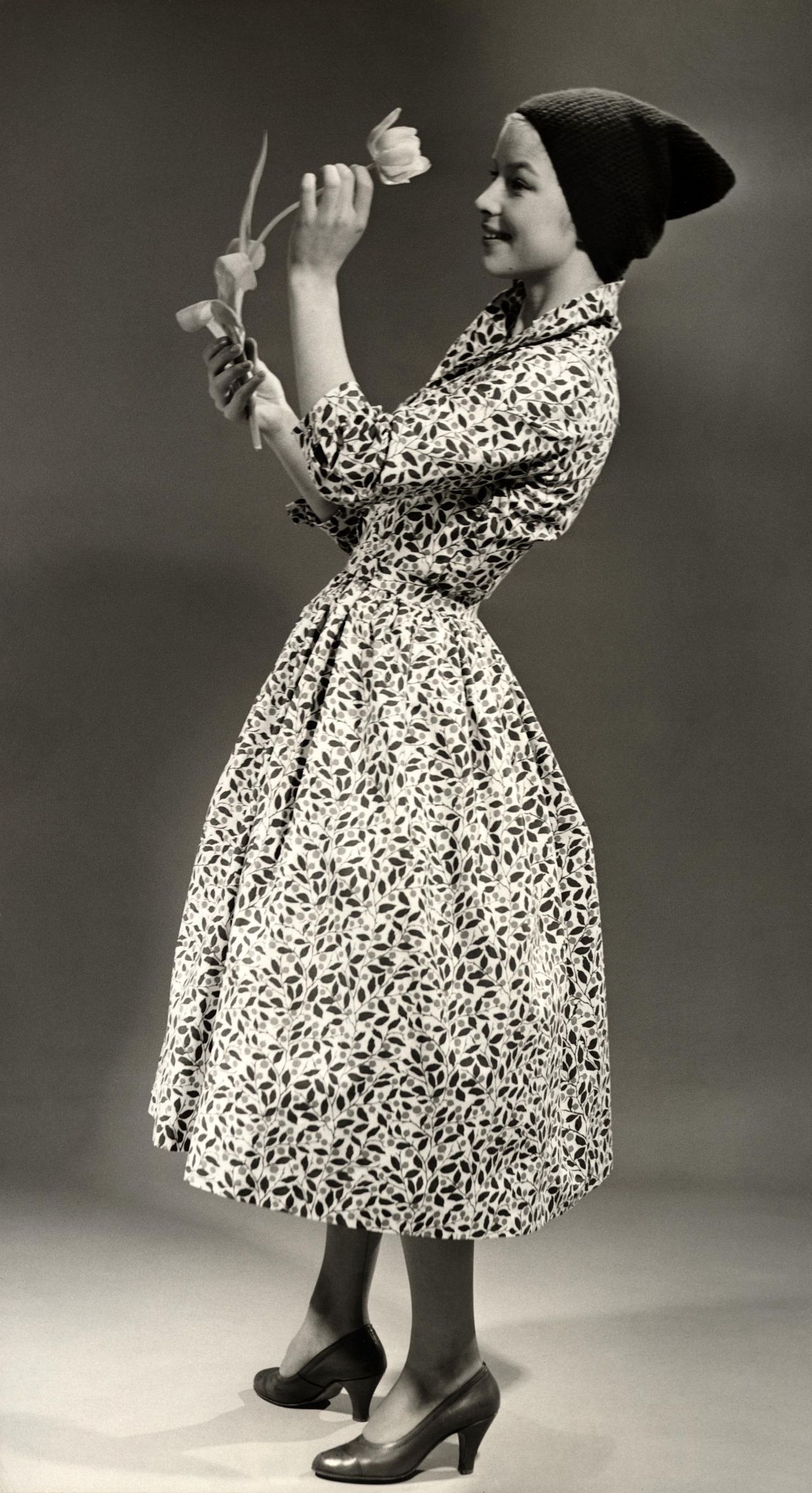
It seems to me that nowadays people are happy to get on an airplane dressed the same way that they would be dressed running errands, when people used to dress up just to fly. Dressing well is no longer something you do when you leave the house; it’s reserved for special occasions. Back when I was growing up it didn’t matter if you were going to town or getting ready for church on Sunday, you dressed up. Families who could barely scrape by managed to have nice clothes. When folks went to town they looked good, whether they could afford it or not, and they took pride in the way they looked. Times have certainly changed, and clothing is much more casual now than it was back in the day when you had to make an effort and be concerned with what you wore every time you walked out of your front door.
For the girls: felt, crinoline, and a chiffon scarf
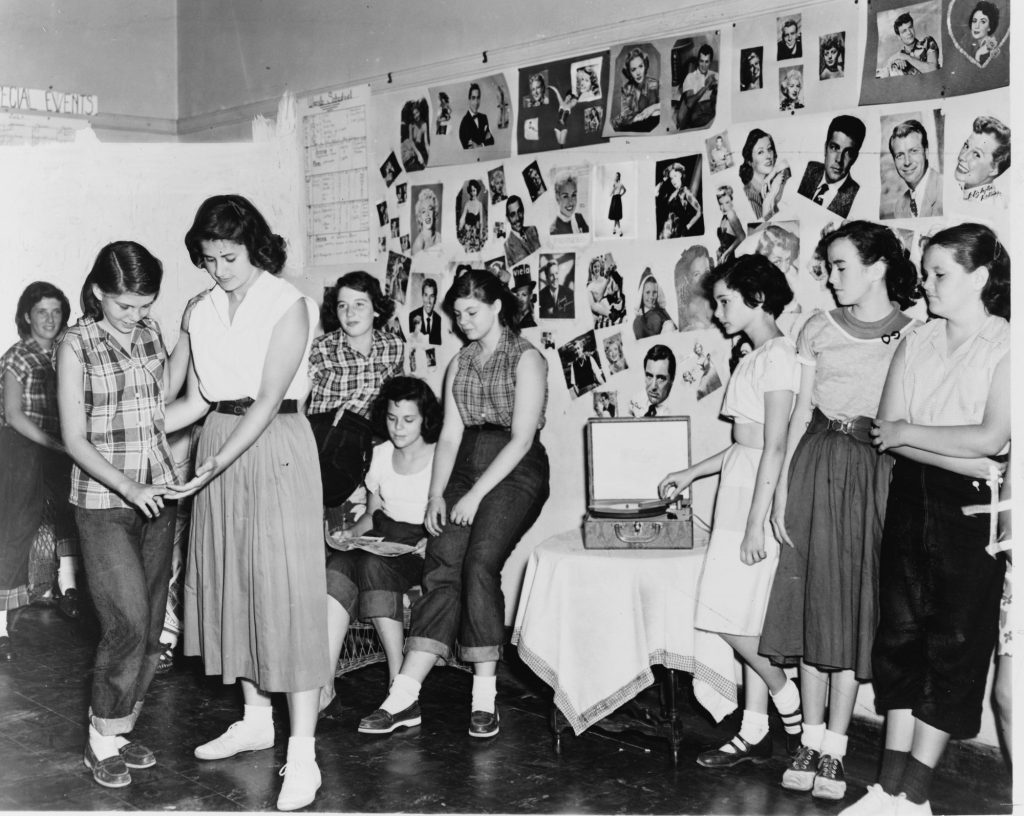
One of the great sights of the late 1950s was the poodle skirt, a huge circle of fabric that was the uniform (almost) of sock hops. The skirt would go over a crinoline petticoat starched to the point of standing up by itself. Coupled with a crisp blouse, a smartly buttoned cardigan and a dainty scarf of chiffon at the throat or looped around a ponytail, the overall effect was adorable. The look screamed attention to appearance and an eagerness to dress for the occasion. Any young lady was likely to have one of these skirts or pine away wishing she did.
- Bobby socks, folded exactly once — over saddle shoes kept white with weekly polish, or penny loafers with a shiny penny in each slot
- The circle pin on the Peter Pan collar, and a charm bracelet that jingled your whole biography
- His letterman jacket or his class ring — worn on a chain or wrapped with angora yarn to fit, the official announcement that you were going steady
- White gloves downtown — because a lady did not shop bare-handed, and neither did her mother
Did you know?
The poodle skirt was invented practically by accident. In 1947, a California singer named Juli Lynne Charlot needed a Christmas party skirt, couldn’t sew, and realized felt was the one fabric she could cut in a circle with no seams. She appliquéd some figures on it, wore it out, and orders started flying. The dog version came later — and conquered the world.
Stockings, garters and the first pantyhose
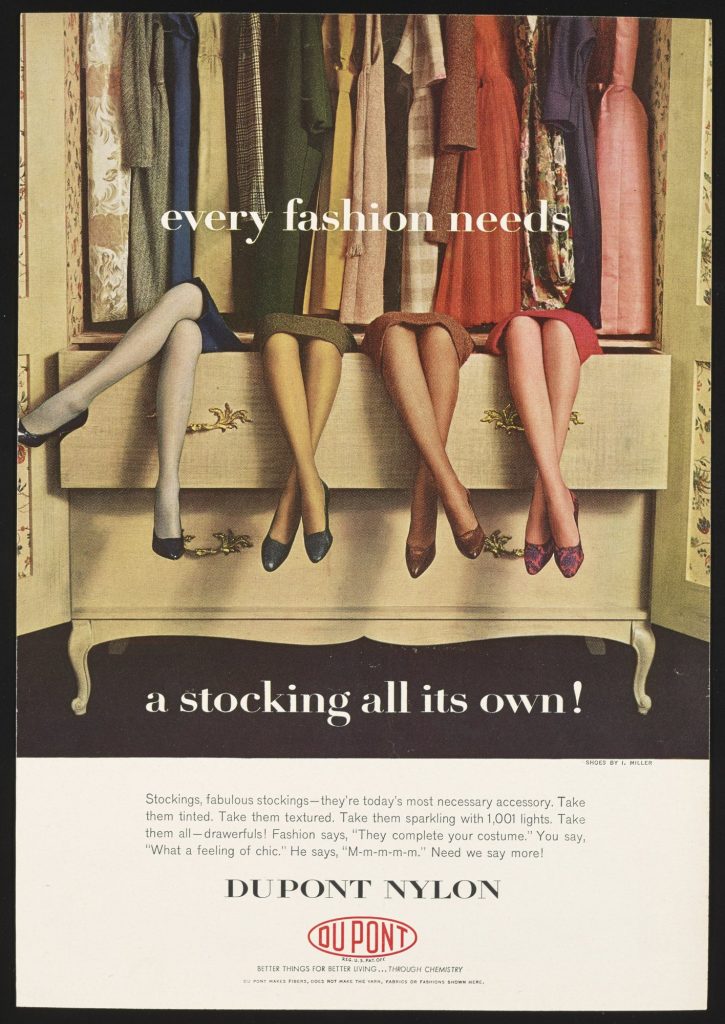
Under all that crinoline, women’s nylon stockings were always in danger of sagging sadly down their legs. Grown women solved this problem by securing them in place with either a garter belt or a girdle. But, of course, the rise of the miniskirt in the mid-1960s left women with no place to hide said garter belt. As you can probably guess, pantyhose sales increased tremendously as a result. But how did pantyhose come about? The idea for pantyhose started with Ethel, wife of Allen Gant Sr., head of Glen Raven Mills in North Carolina, who was pregnant and complaining about her stockings. He asked her: “How would it be if we made a pair of panties and fastened the stockings to it?” She stitched a few rough pairs by hand, and Mr. Gant’s company worked out how to make them. His company sold the style, dubbed “Panti-Legs”, in department stores in 1959.
For the fellas: denim, Brylcreem, and the perfect ducktail
The boys had a simpler uniform: blue jeans (cuffed just once at the bottom), a white T-shirt and if you were on the team, a letterman jacket. If your mom would allow it (and I doubt she did), a black leather jacket à la Marlon Brando was the ticket. If you were into Pat Boone you wore white bucks, otherwise, it was engineer boots.
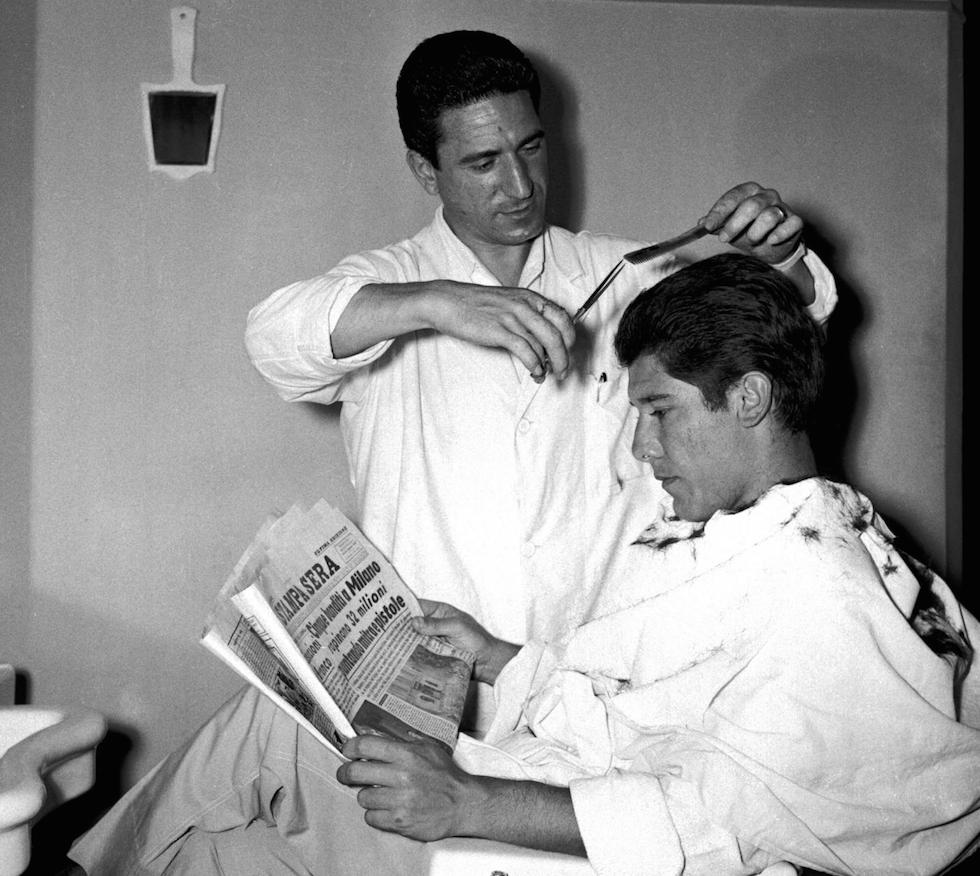
You paid meticulous attention to your hair. The comb went into your back pocket and the Brylcreem sat on the bathroom sink. Hair was architecture, and you took great pains to achieve a stylish do. Sure, the jingle said “a little dab’ll do ya,” but more than a little dab made it onto your head. About an hour later that comb came out of your back pocket and stray hairs received adjustments. Ducktails took more patience and creativity than most of your homework. There was always a neighborhood barber who helped you fit in and impress the girls, and it was worth the trip around the striped pole, especially since he had comics on the shelf and a gumball machine by the door. About fifty cents seemed a pittance for looking good.
When Levi’s started saying “jeans”
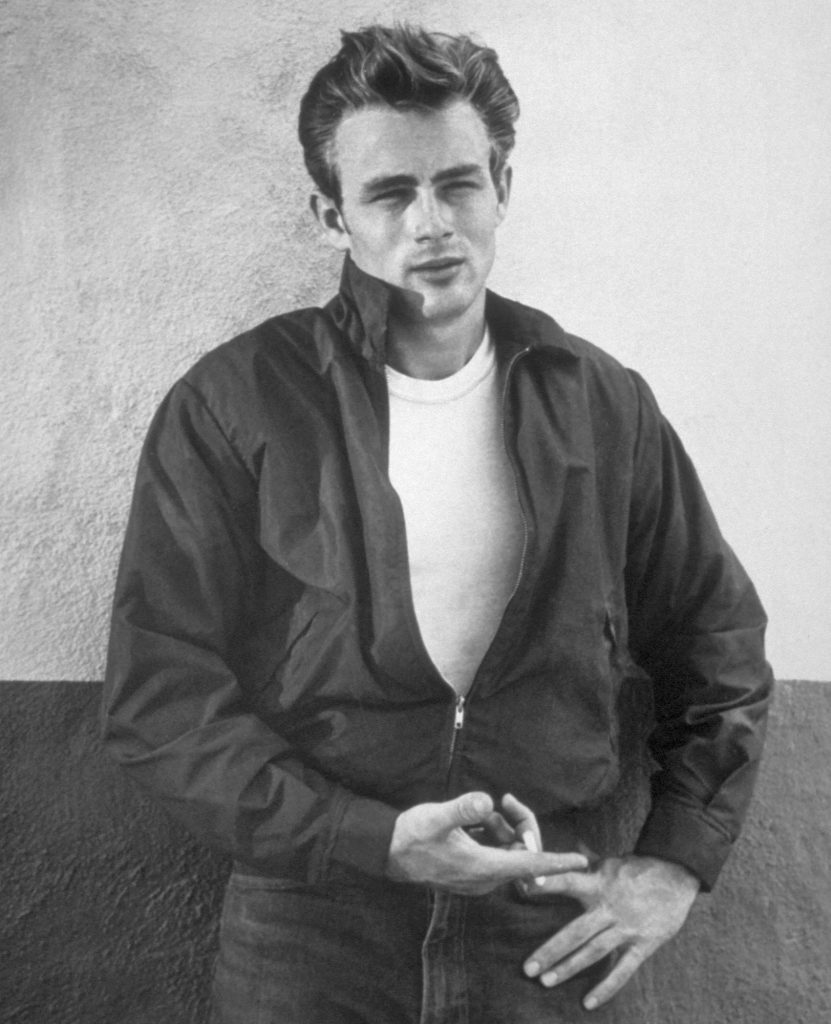
Another interesting tidbit was the apparel company Levi Strauss & Co. didn’t use the word jeans until 1960. Up to that point they called their denim pants waist overalls or overalls. It was teenagers in the 1950s who called them jeans. Levi’s finally jumped on board with the word jeans because that is what young people were calling them. So technically the boy who rolled his cuffs in 1955 was wearing a pair of overalls, as far as the company was concerned. But, Marlon Brando and James Dean made them exciting when they wore them in the movies.
Weejuns, white bucks and Hush Puppies
Remember the Weejun? The penny loafers so many kids wore with such pride? The shoe, a slip-on loafer, was originally introduced in 1936 by G.H. Bass. It was modeled after the moccasin worn by Norwegian farmers, and the name is a contraction of “Norwegian.” Students tucked coins into the diamond-shaped cutout in the top strap, which is how the penny loafer got its name. You had to be on your toes (pun intended) keeping them in tip-top shape. After all, saddle shoes required a good, thorough polishing to maintain their white color and loafers a shiny penny.
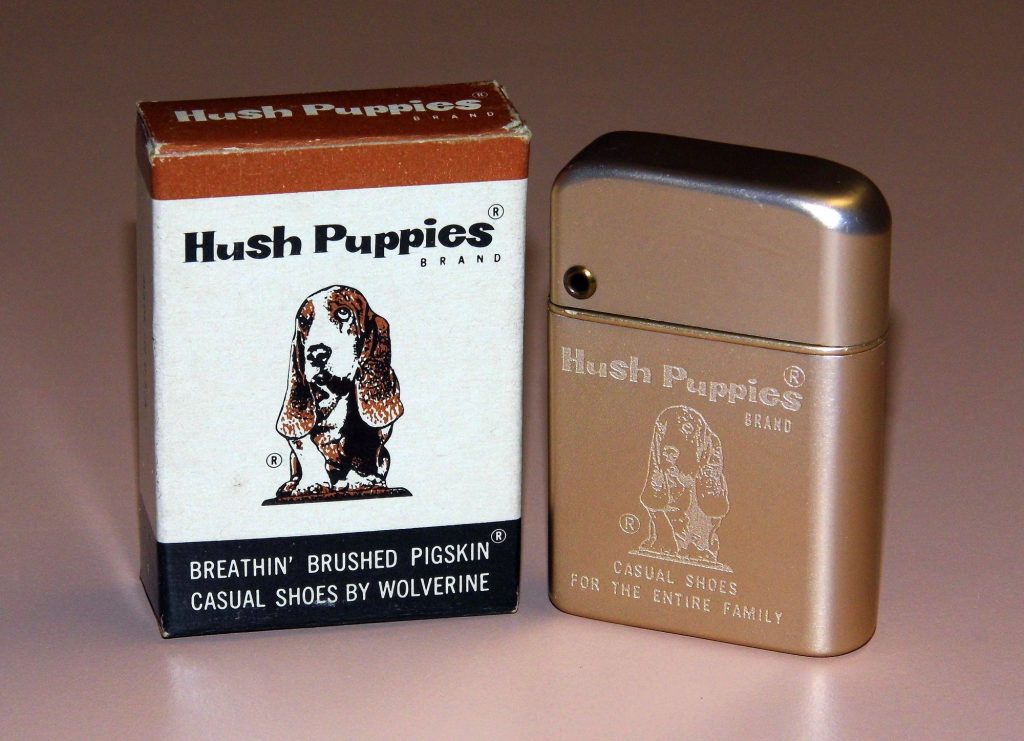
Remember Hush Puppies, introduced in 1958 by Wolverine, based in Rockford, Michigan? According to company lore, a Wolverine sales manager while traveling in the South heard about fried cornmeal balls that cooks toss to dogs to quiet them, which gave rise to the term hush puppies, and had an idea: Why not name a soft, comfortable, easy-to-slip-on casual shoe after them? And who better to be its logo than the adorable, long-eared basset hound? The manager reasoned that worn-out, aching feet are like barking dogs: Both needed hush puppies to make them happy.
Everyone wore a hat. Everyone.
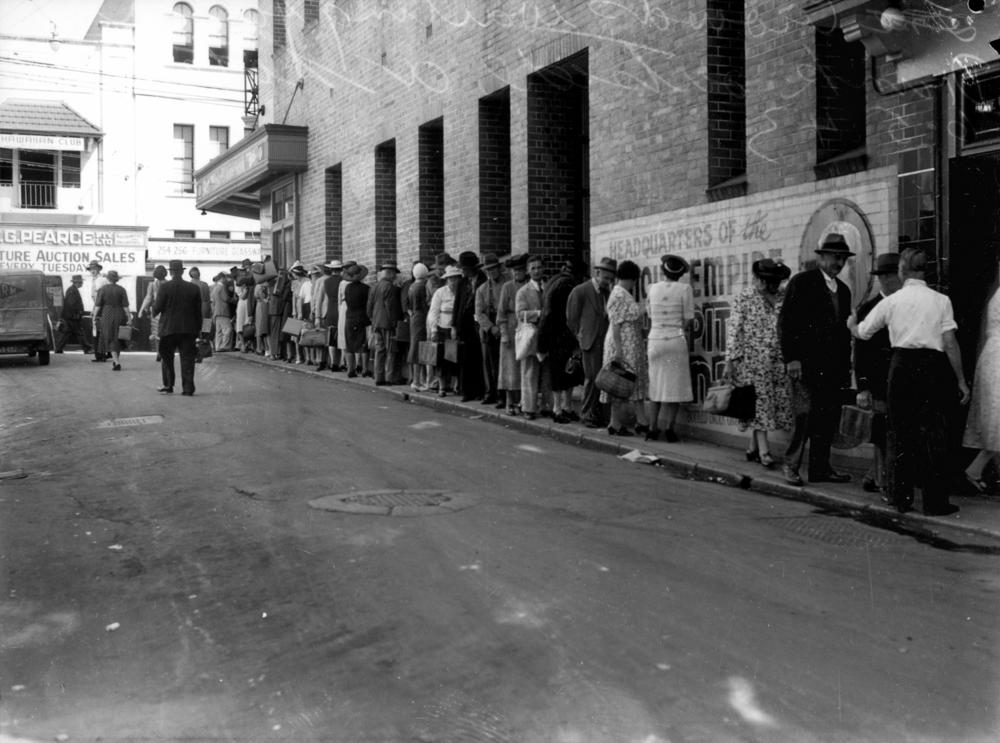
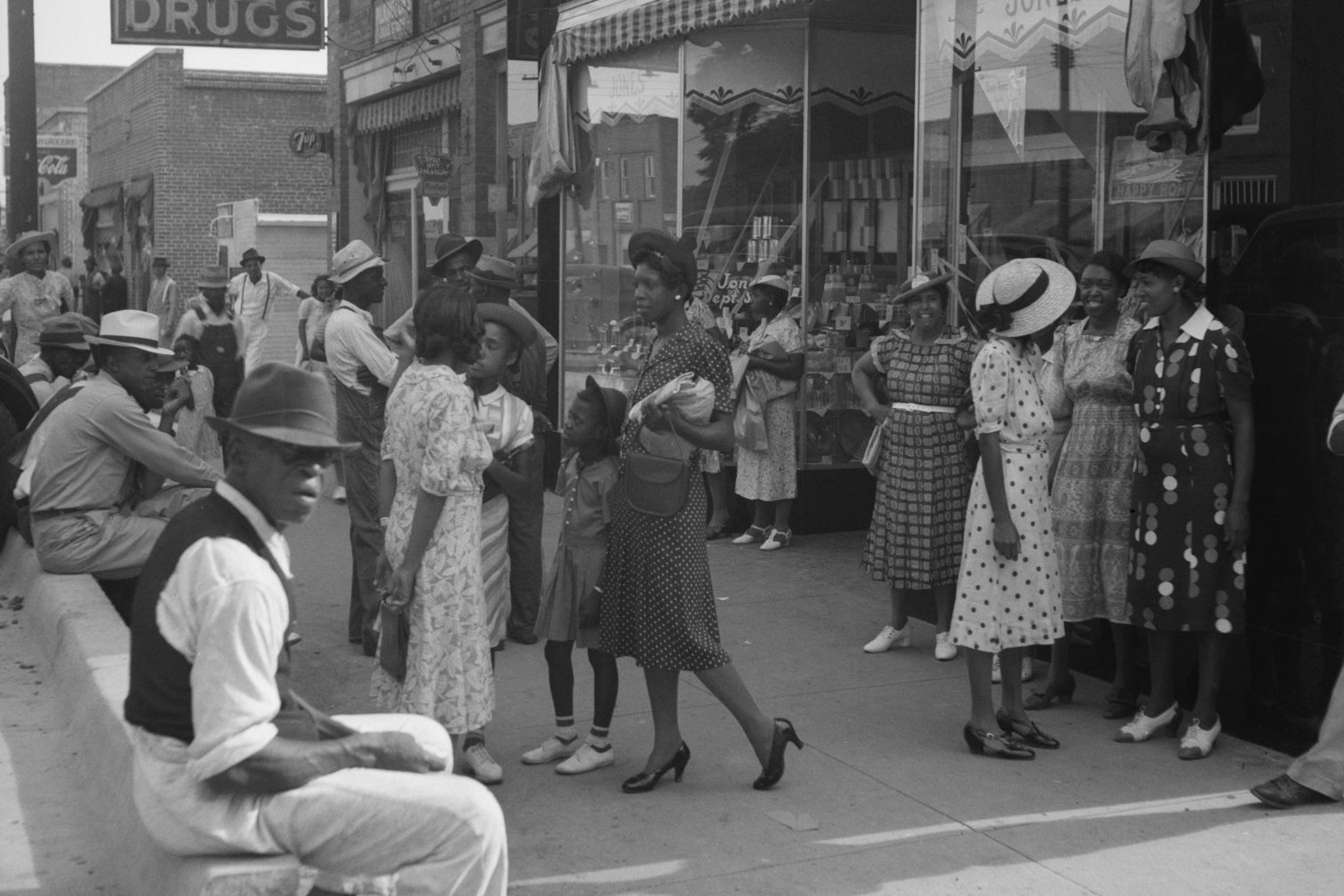
Today’s hat-less ways make it easy for us to forget how important headwear used to be. Scan the faces in any street photograph from the 1940s or ’50s, like the one above, and try to spot a single bare head. Men wore fedoras and trilbies every time they stepped outdoors (and took them right back off again the moment they came back in). A man could count on forgetting his hat about as often as he could on forgetting to put on pants. Hats showed a man’s politeness (men doffed theirs for women) and his pride in his appearance. Women, too, wore hats, especially for a trip to church. Some women’s hats were elaborate, requiring careful handling. The fancy ones had netting and silk flowers, and after church they went back into round hatboxes on the closet shelf to await their next outing. Even the kids wore caps when they went outside.
Jackie’s pillbox and the hat Kennedy didn’t skip
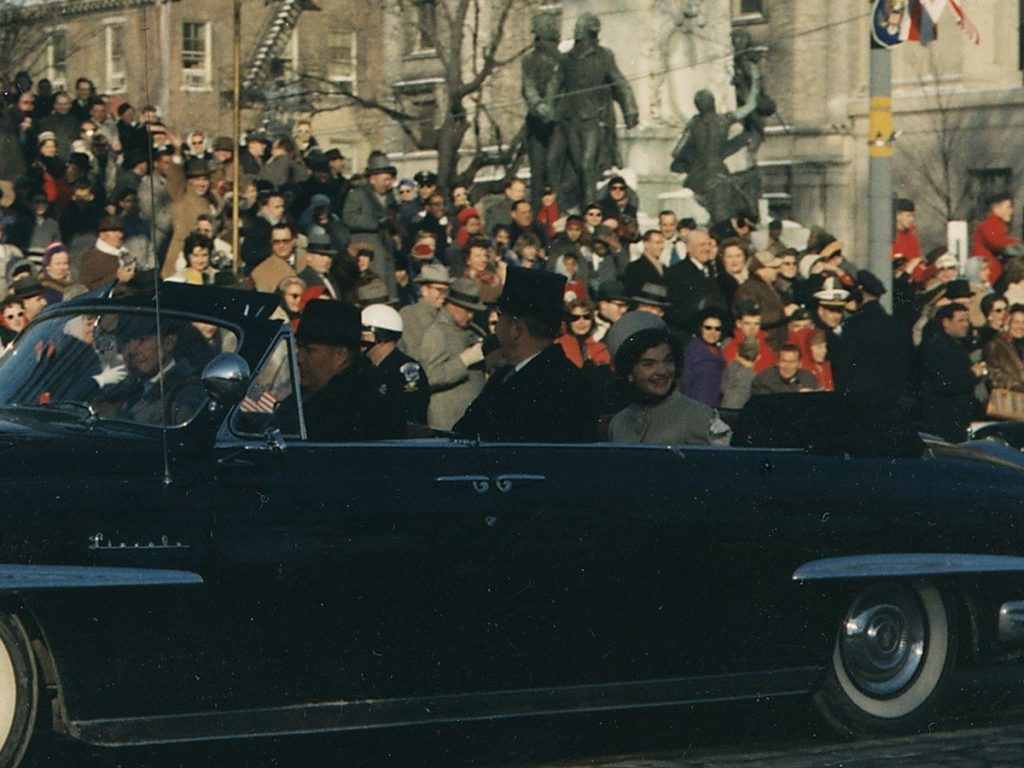
Have you heard the story that John F. Kennedy killed the men’s hat? On inauguration day, January 20, 1961, he took off his hat for his swearing-in and speech, but contrary to popular belief, JFK did not go hatless; he wore a silk top hat. But it’s true that JFK didn’t like being photographed in hats. He barely ever wore one during his presidency. His habit led many to blame JFK for the death of the men’s hat. Chicago Sun-Times columnist Neil Steinberg writes about this myth in his book Hatless Jack. But the truth is men’s hats were already a dying trend at the time JFK took office. Interestingly enough, that same day made a women’s hat famous. Jacqueline Kennedy’s pillbox hat designed by Halston (then the head milliner at Bergdorf Goodman) gave Halston his claim to fame.
Made at home, and made to last
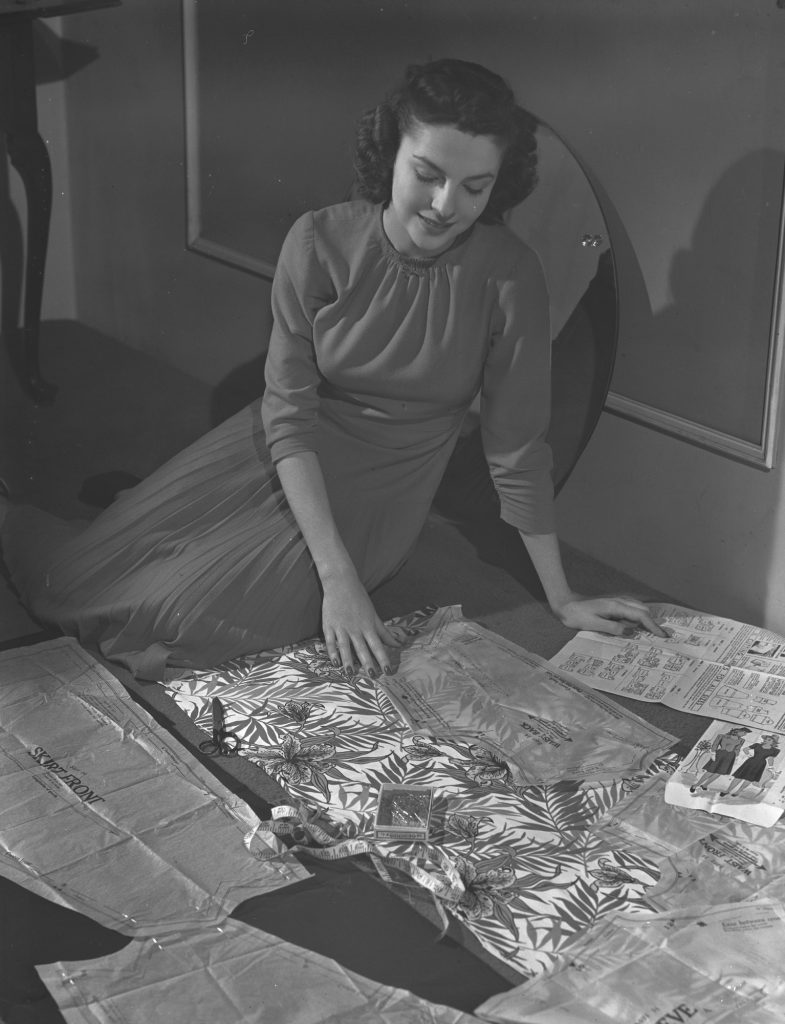
Women’s fashion magazines feature beautiful women in gorgeous clothes and accessories. What’s missing? How to make them. Patterns from Simplicity, Butterick and McCall’s used to run only about fifty cents apiece, so if your mama happened to have a flair for sewing, she could recreate any number of those fabulous outfits at a fraction of the cost. A lot of a family’s clothes were made at the kitchen table. Clothes were mended, let out, passed down and turned, and nothing went to waste.
From the 1920s until the 1950s, many flour and feed mills printed their cotton sacks with pretty prints hoping women would save the empty bags to make dresses and other items for their homes. It took five or more sacks to make a dress, and you had to make sure the next sacks you bought matched the print. Eventually mills switched to paper labels that soaked off, so the logo wouldn’t end up on somebody’s dress!
School clothes, play clothes and Sunday best were three separate wardrobes, and strict rules governed their use. Feed sack clothes went to school, and since everyone else’s little girl wore feed sack clothes too, there was no embarrassment about them. But no child would dare mix the wardrobes. It was unthinkable to climb over the neighbor’s fence in anything but play clothes, the consequences of disgraced Sunday Bests too dire to contemplate!
Price check: getting dressed, 1957
- $3.98 — a felt poodle skirt from the catalog
- $5.95 — a pair of saddle shoes
- 49¢ — a tube of Brylcreem
- 50¢ — a Simplicity dress pattern, and Mom’s skill did the rest
- 50¢ — a boy’s haircut, comics and gum-ball extra
Coonskin caps for the little ones
Starting with ABC’s December 15, 1954 telecast of Davy Crockett: Indian Fighter as part of its Disneyland television show created by Walt Disney, boys throughout the country wore Davy Crockett coonskin caps throughout the mid-1950s. When actor Fess Parker donned the coonskin cap as Davy on the series, boys wanted one just like his. At the height of the craze, children’s coonskin caps sold an average of 5,000 a day. These were usually faux fur with a raccoon tail affixed on the back to recreate Davy’s cap from the series. There was also a girls’ Polly Crockett all-white faux fur cap which looked cute (not nearly as manly as Davy’s cap). By the end of the decade, coonskin caps were tucked away in closets. Although the craze quietly faded, the genuine article worn by Fess Parker was donated to the Smithsonian in 2004. If you were a Davy Crockett fan, rest assured that Parker’s cap is safe and sound.
You had your school clothes, your play clothes, and your Sunday best — and woe to the child who wore one as the other.
Your fitting room is open: Did you have a poodle skirt or a letterman jacket? Did your mother sew from patterns — or feed sacks? And gentlemen: Brylcreem or Vitalis? Settle it in the comments.
Fashion photo, 1957. Photo: Erik Holmén, Nordiska museet — CC BY 4.0, via Wikimedia Commons.
.jpg)
Leave a Reply