
Walk down almost any block early on a 1970s morning, back when I was in my twenties, and you could hear the neighborhood wake up one house at a time. There was the alarm clock, audible through the wall, the clappy sound of the loose screen door slamming, the car that wouldn’t start the first time, only on the second, and the phone left to ring in somebody else’s house.
The machines all made sounds too, the dial-back of the telephone, the beep of the filmstrip projector in the classroom, the bell that rang when you ran over the hose at the gas station, and the people who dialed, threaded, rang up and listened knew what every one of those sounds meant. Most of these things still exist somewhere, but their sounds are for the most part gone from everyday life. The sounds of things were messages, and the machines did half the talking, in ways we knew well and took for granted.
1. The Rotary Dial Walking Back to Zero
Sound sample
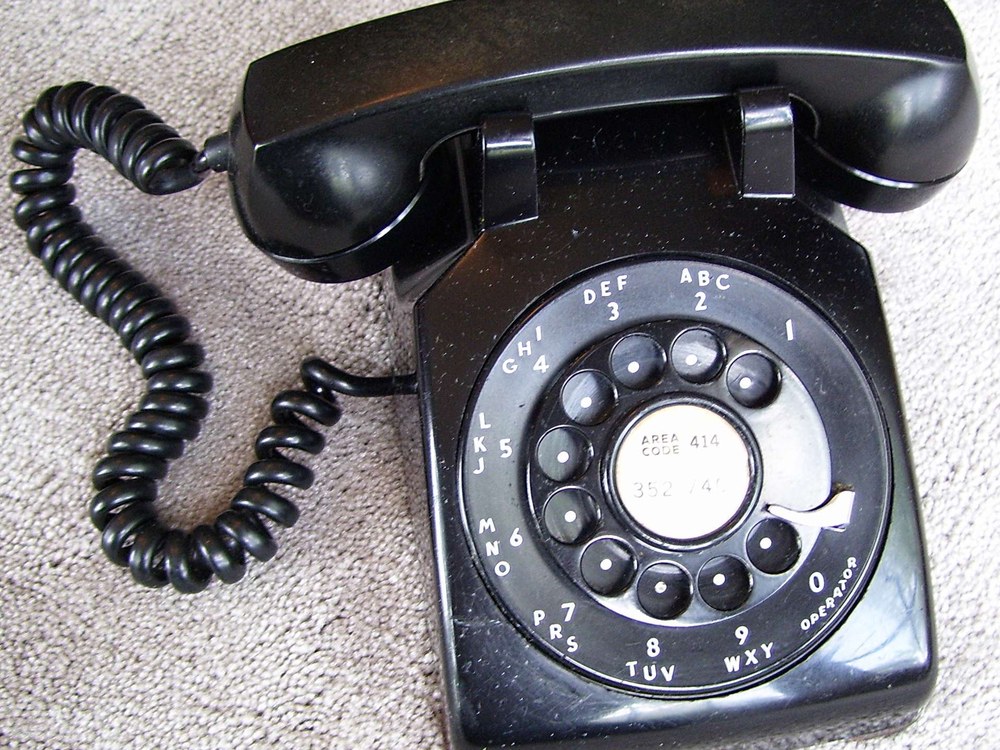
You’d dial a phone number by putting a finger in a hole in the wheel and bringing it around to a little metal stopper. Then you’d remove your finger and listen to the wheel make its way back with a series of little clicks. If the number was a 1, it would come around pretty quickly. If it was a zero, it would take quite a while. If you messed up on the sixth number, there was no backspace key. You hung up and started again. A 1969 Princess phone in the Smithsonian collection bears a reminder that it is Bell System property, not for sale. Some phone numbers were worse than others. If it had four slow digits in a row, you could easily resent your own family.
Bell introduced push-button service on November 18, 1963, calling it Touch-Tone service, at first available only to Bell customers in Carnegie and Greensburg, Pennsylvania. Customers paid an extra fee for the privilege of the 10-button device. It was faster, as you pushed a number, transmitted it, lifted your finger, moved on to the next one; you didn’t have to wait for the wheel to come around. We still talk about dialing a phone, of course, even though there’s nothing left to dial.
In one discussion about rotary phones, a commenter remembered having a home phone number that was terrible, with a lot of high numbers that made you wait for the wheel:
“The last four of our number when I was a kid was 0989. It took FOREVER to call it and let the rotor go all the way back around.” (via Reddit)
2. The Payphone Listening to Your Money
Sound sample
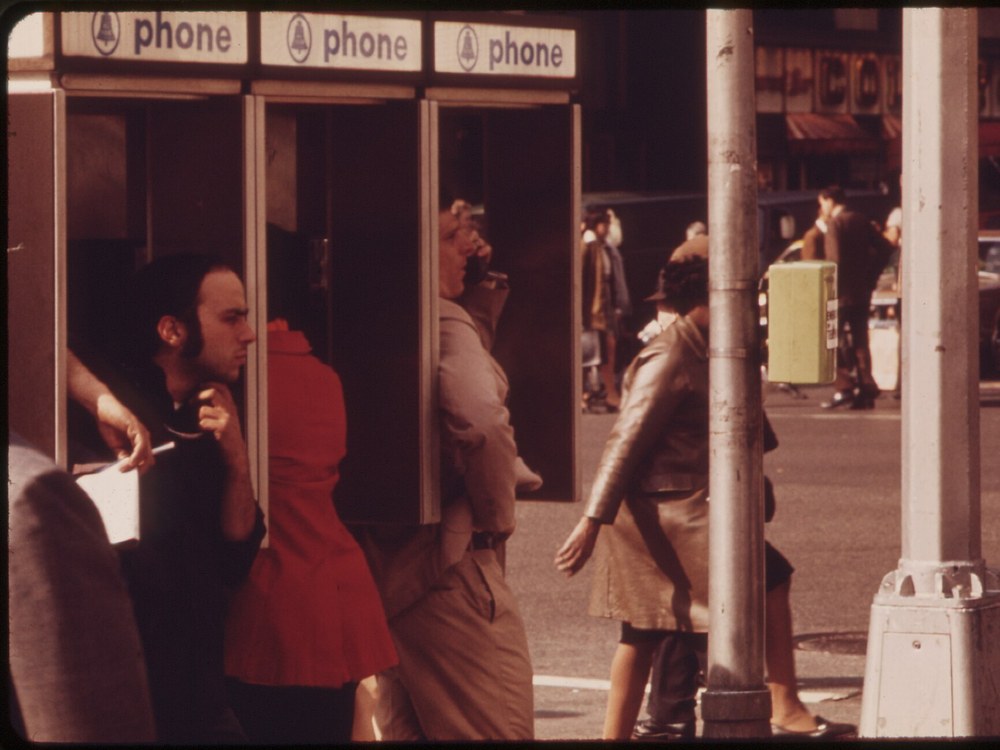
A 1972 Bell System coin-service manual included a section on listening to the gongs as coins dropped into payphones. A nickel would go gong. A dime would go gong-gong. A quarter would go bong, on one low note. If no one picked up, they’d all clatter out of the coin-return. But if someone did answer, they’d stay inside, accompanied by a hefty ploink that signaled to all that someone was on the line. The quarter and you both held your breath until that moment.
Callers were vigilant about the number of rings before connection to avoid having the call go to an answering machine, thus prompting coin collection, and would pound the coin-return lever when greeted by an unhelpful automated message. People who strolled up to payphones not to make calls would peer into the coin-return cups just to see if they might find someone’s forgotten quarter. It wasn’t much, but it was the smallest lottery in town and the jackpot was twenty-five cents.
3. The 8-Track Changing Programs Mid-Song
Sound sample
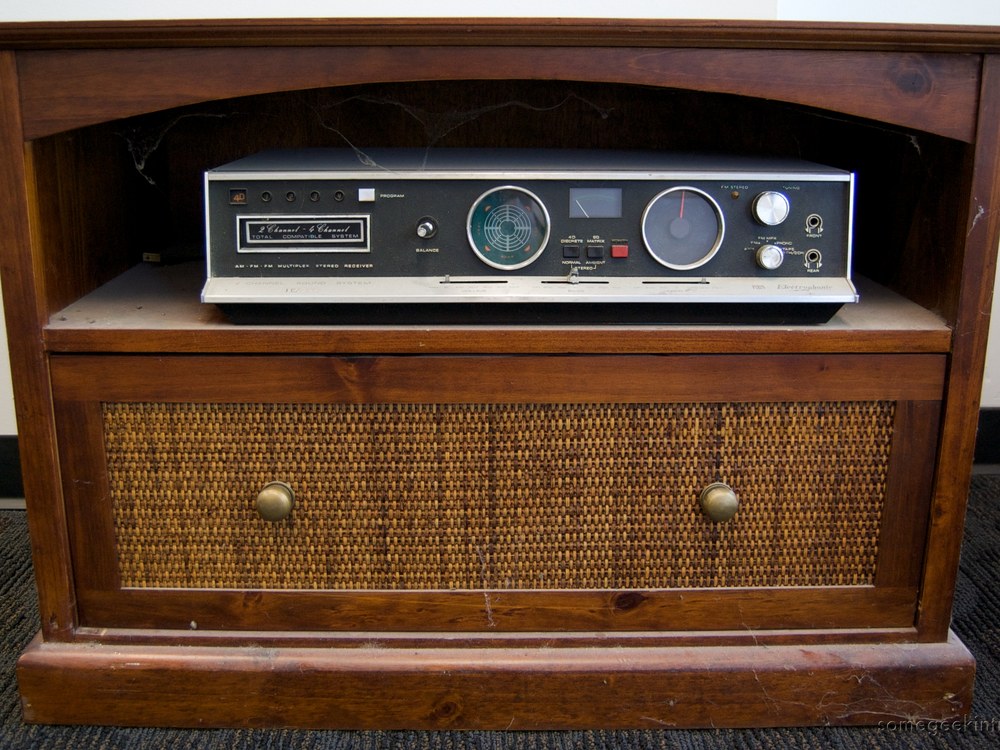
The 8-track tape went round and round and round, and you didn’t rewind it. When the song ended (or rather, in some cases when it didn’t end but stopped in the middle of a word and faded out only to resume a couple of seconds later) the tape would kluh-dunk into another set of tracks for the next program, which is described in a Library of Congress history of magnetic tape, which also notes that there were four programs per cartridge.
The 8-track format reached its heyday in 1978 as a billion-dollar industry. Ford offered it in its cars beginning with its 1966 model year, after striking a deal with RCA Victor to put its record catalogue on the newfangled cartridges. In that first year, 65,000 of the players were installed.
Upon subsequent plays, the pause became incorporated into your memory of the song, and one former listener still hears it when playing the album in other formats:
“I was listening to this song today, and remember listening to this album on repeat in December in my youth on 8-track in the car. I still anticipate the pauses in the songs where they had to switch tracks.” (via Reddit)
Nor was the clunk the only hitch. When a cartridge went bad, another song could creep in over the top of the one you selected as if the next group were rehearsing down the hall. Four programs had to share one album, and they didn’t know how to behave. The 8-track gave you music that never stopped, but not in any particular order.
By the Numbers
- 4 programs — the pairs of stereo tracks carried on one 8-track loop.
- $1 billion — the size of the 8-track business at its 1978 peak, according to the Library of Congress.
4. The Typewriter Bell, Then the Long Return
Sound sample
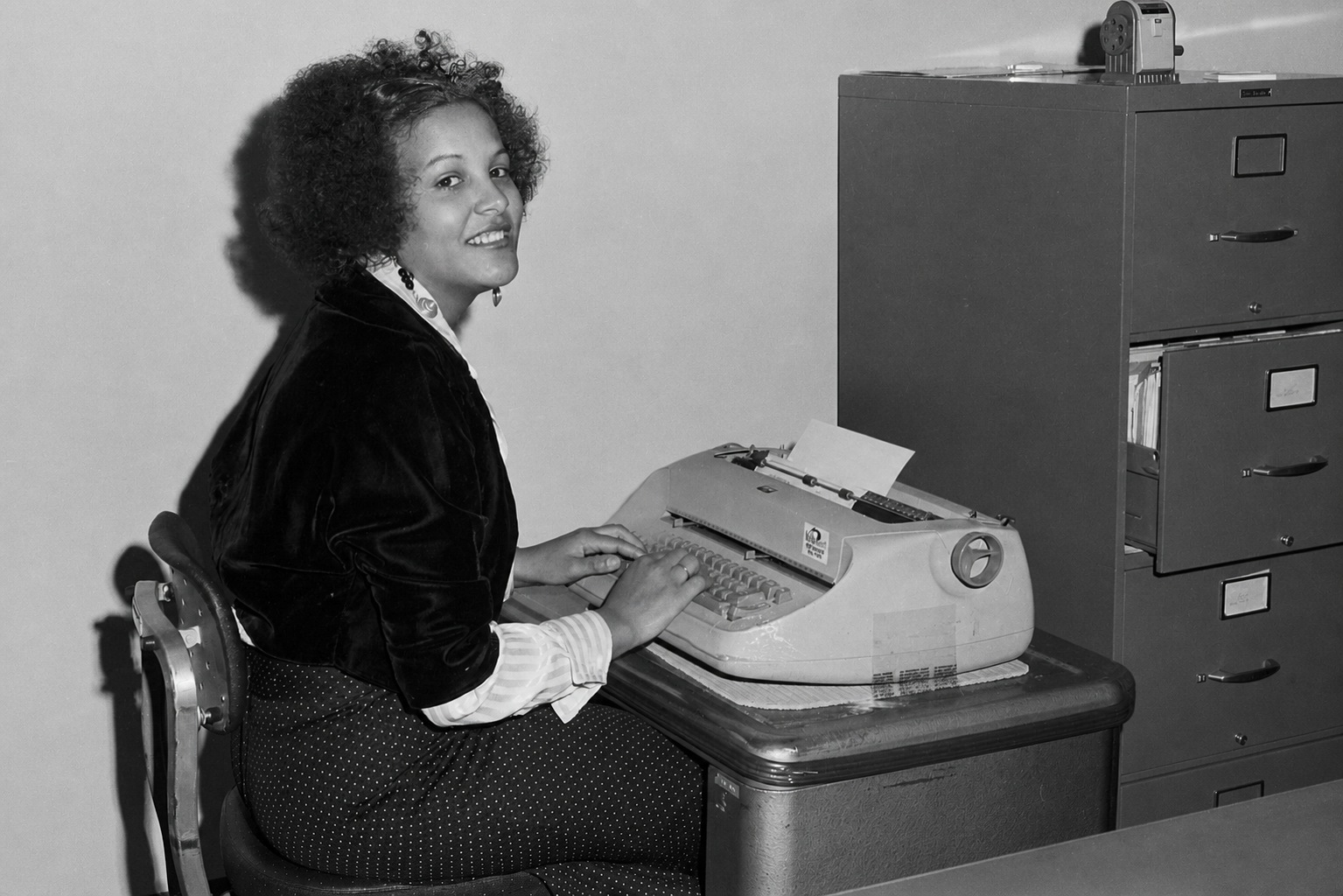
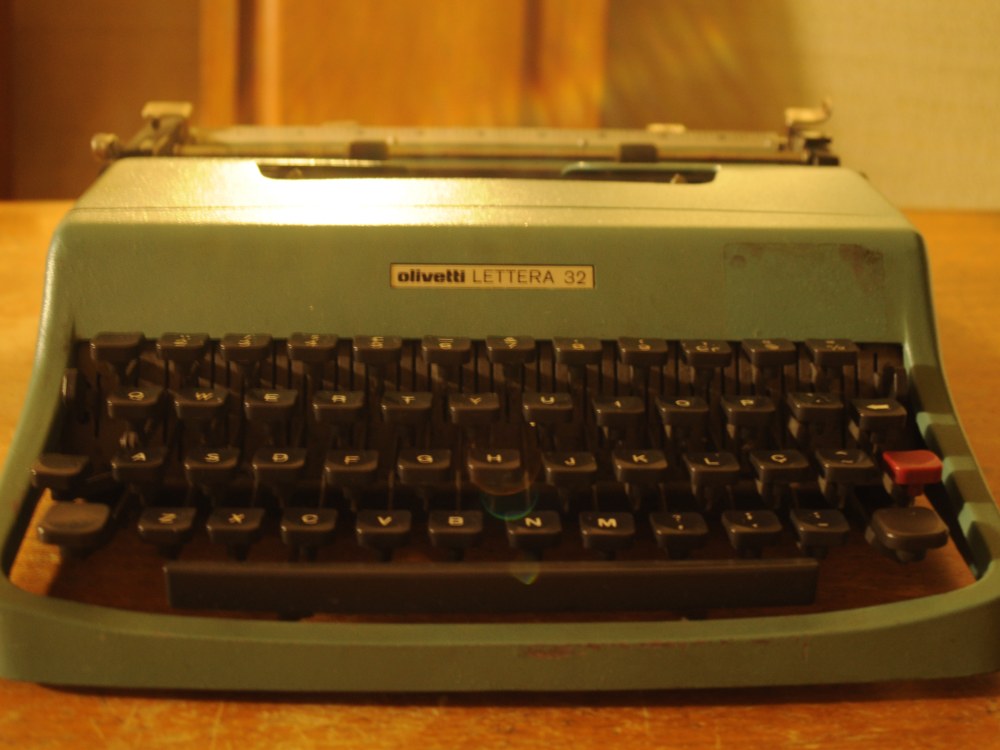
On manual typewriters, typists had to smack those keys. Every key was connected to a typebar that crashed into the ribbon and the paper. Typists developed a heavy-handed style of typing. As they approached the right margin, a bell rang. They finished the word, then yanked the return lever, producing a symphony of clanks, clangs and other irritating sounds. There was no volume control or quiet mode on a typewriter. In houses where more than one person resided, typists and non-typists learned to adjust their lifestyles accordingly. Typing could be a problem for a person trying to fall asleep in the next room.
The 1923 book The Story of the Typewriter called the machine’s sound a “step-by-step ‘pulse beat’” and its handle the “familiar hand carriage-return lever.” IBM introduced the Selectric typewriter on July 31, 1961. On this model, the carriage didn’t move; instead, a golf-ball-shaped type element traversed the width of the page.
Years later, one former typist was told by a younger coworker that the pounding on a computer keyboard was way too loud. Of course it was loud. That’s how typists were trained:
“I repeatedly got several offers from people to pay me to type up their papers. I do recall though a younger coworker saying I ‘typed too loud’ on a computer keyboard. This was clearly someone who had never heard a typewriter, especially of the manual variety.” (via Reddit)
5. The Filmstrip Beep That Put Somebody to Work
Sound sample
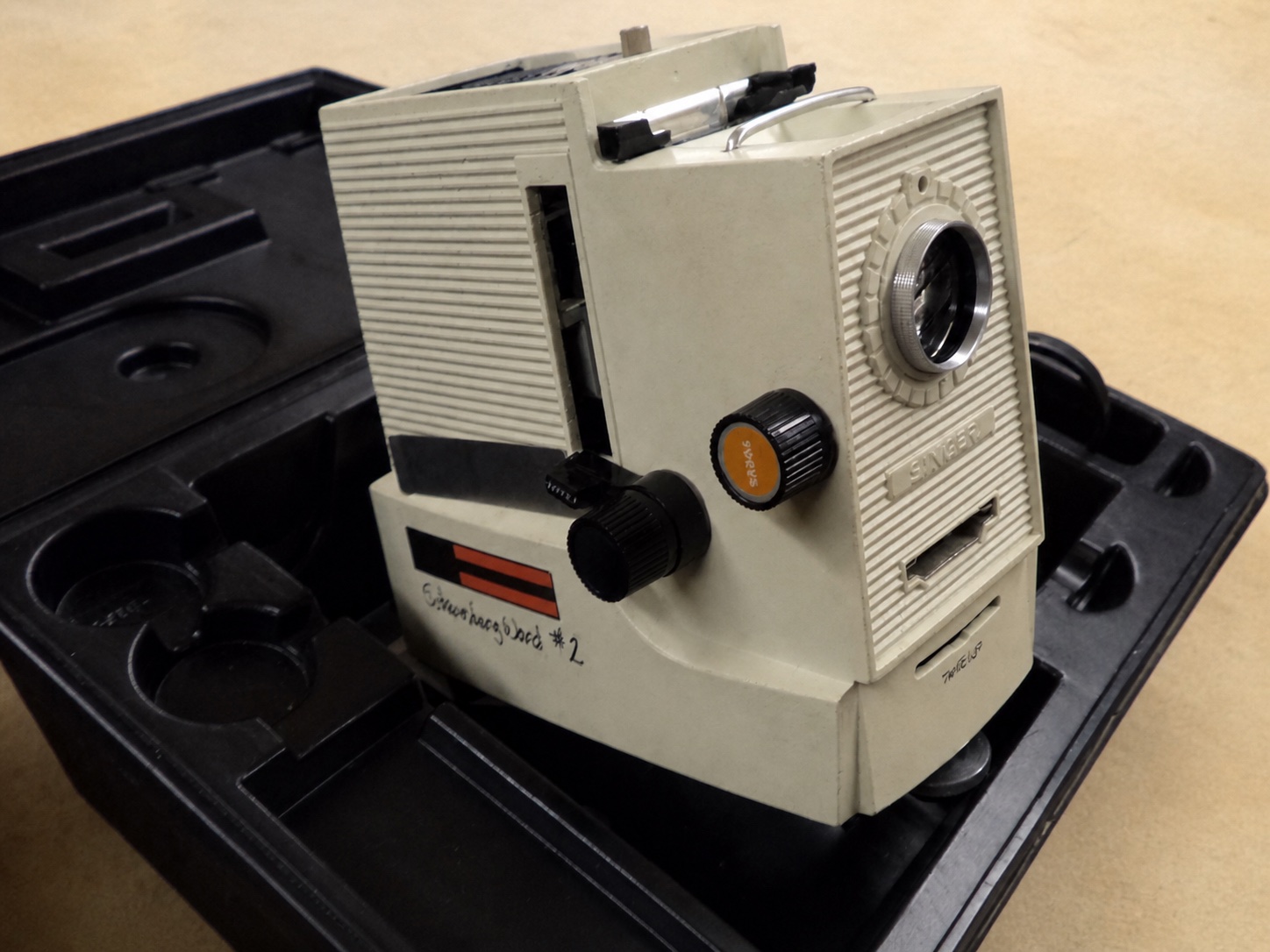
The blinds would go down for these. Someone’s voice, captured on a record or cassette, would explain everything, but the picture never changed unless someone heard a beep and turned a knob. Then the image would advance with a click. Some projectors were automatic: They listened for a cue you couldn’t hear and advanced accordingly, but apparently not all of them, and a 1975 guide to producing sound filmstrips still told someone to hear the beep and advance the filmstrip. The job felt like a promotion. Some people must have felt chosen for it. If you missed the beep, the narrator kept talking anyway while the whole class stared at the wrong wolf. It would have been embarrassing to fall behind. One former operator remembers that job, and, incredibly, what filmstrip it was:
“It was one of the highest honors you could achieve as a young elementary school student. I still remember being the operator for ‘Peter and the Wolf’ in music class.” (via Reddit)
Later machines would hear the beep and advance the film by themselves. No one made the student operator train a replacement.
Listen for the Signal
A 1975 education manual told the operator to advance the filmstrip at every audible beep on the soundtrack. Some later machines used a tone the audience could not hear to move the film automatically.
6. The 16mm Projector Finding Its Rhythm
Sound sample
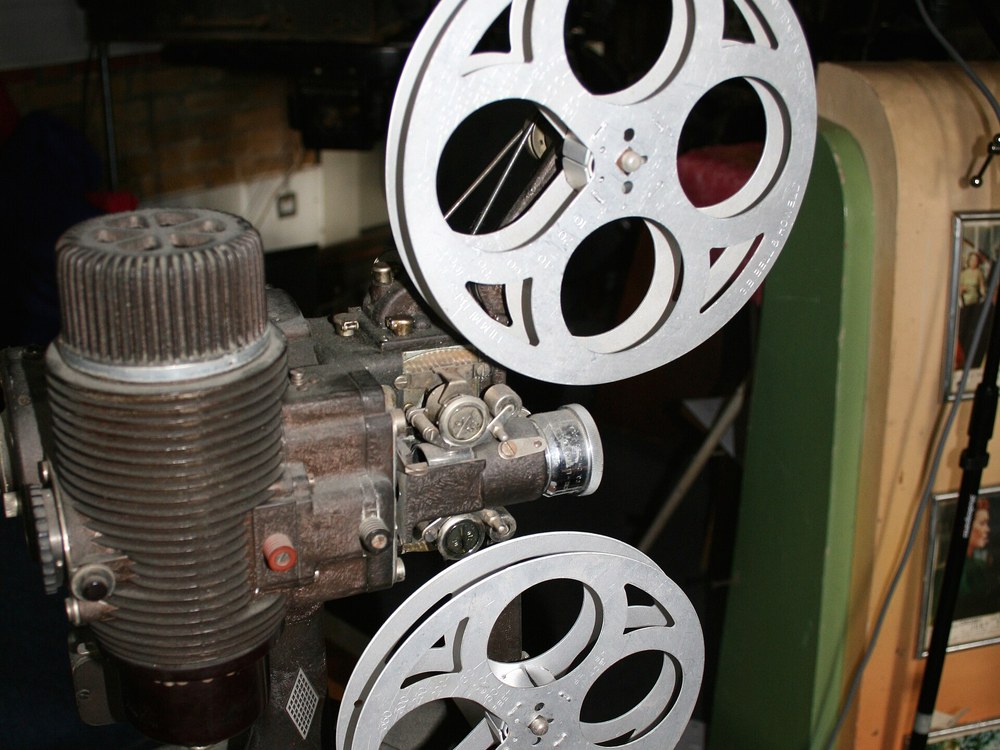
Film zipped through 16mm projectors quickly enough to give projectionists pause. It was speedy but not so fast as to tear from overtension. One of those projection manuals from the U.S. government detailed the projection process. The weight of the take-up reel itself controlled the slipping mechanism, it said, and, as long as the film cleared the sprockets, the gate, the sound head, movie day was a go. The reel, still loose, chattered until the projector found its rhythm. First came the rushing of the fan, then the reel began to turn, and it was movie day.
Somebody had to know how to load up the projector. Somebody had to be able to work a jammed projector free. Movie day meant either Abraham Lincoln in all of his historical splendor or just half of a forehead, depending upon the student at the controls and the projector’s idiosyncrasies. Not all projectors were alike, which made image centering a five-trial ordeal for greenhorns. One former student projectionist learned how by passing the weekly spelling pretest:
“If you aced the spelling pre test on Monday, you could go to the library, and learn how all of the AV equipment worked. So, I did that, and got to run the projector during films. I occasionally got called out of class to fix a jammed projector in another class, or a slide projector.” (via Reddit)
7. The Carousel Dropping Another Vacation Slide
Sound sample
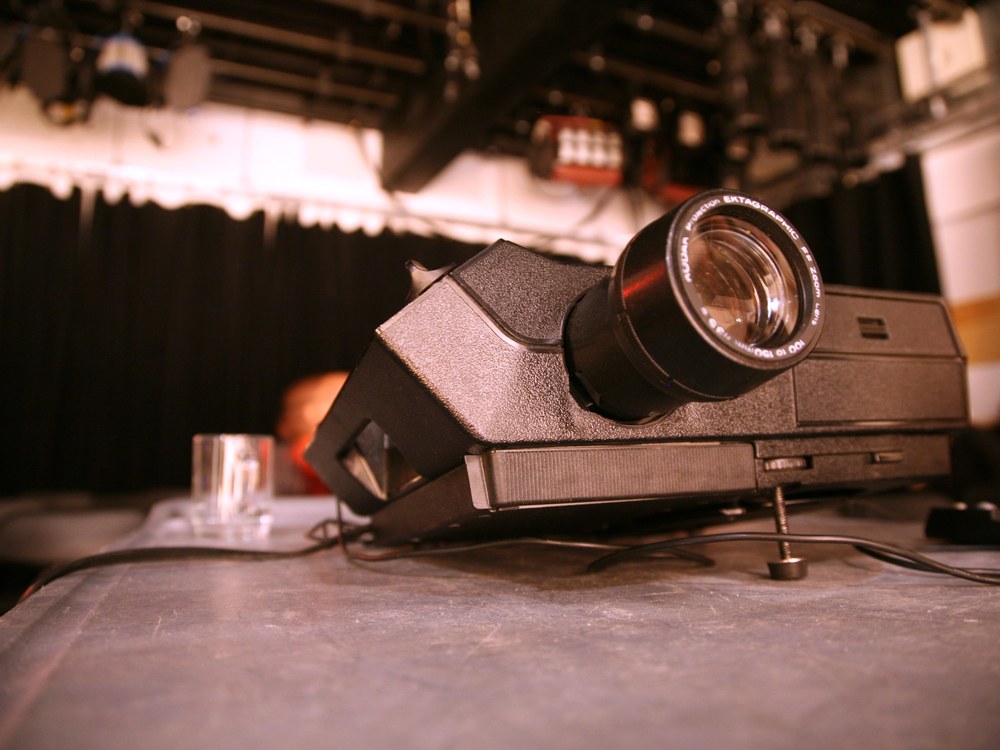
The tray held 80 slides, which is not necessarily the number you were supposed to use on one occasion, merely what would fit. According to Kodak’s list of company milestones, Kodak introduced the Carousel in 1961. In 2003, the company announced that in June of 2004 it would stop making slide projectors, the Carousel among them.
There was a sequence: the fan, the button, the grinding, the blast of white, the slide. Sometimes after a trip, sometimes when you had captive guests, someone would bring a projector into the living room. In addition to its photographic component, a slide show was a social event, an exercise in hospitality and an object lesson in how much of Yellowstone friends could bear before they stopped being friends. On your phone, you can thumb through photos in silence. But someone else isn’t necessarily going to look at them with you. Online, one Carousel owner who still has a working projector writes that the slides’ slow, inexorable rotation comes bundled with the projector’s hot blast of air. In addition to images of your family squinting into the sun, you get a soundtrack. As a guest, you have to sit there and let it bring you one slide at a time.
8. The Gas-Station Hose Bell
Sound sample
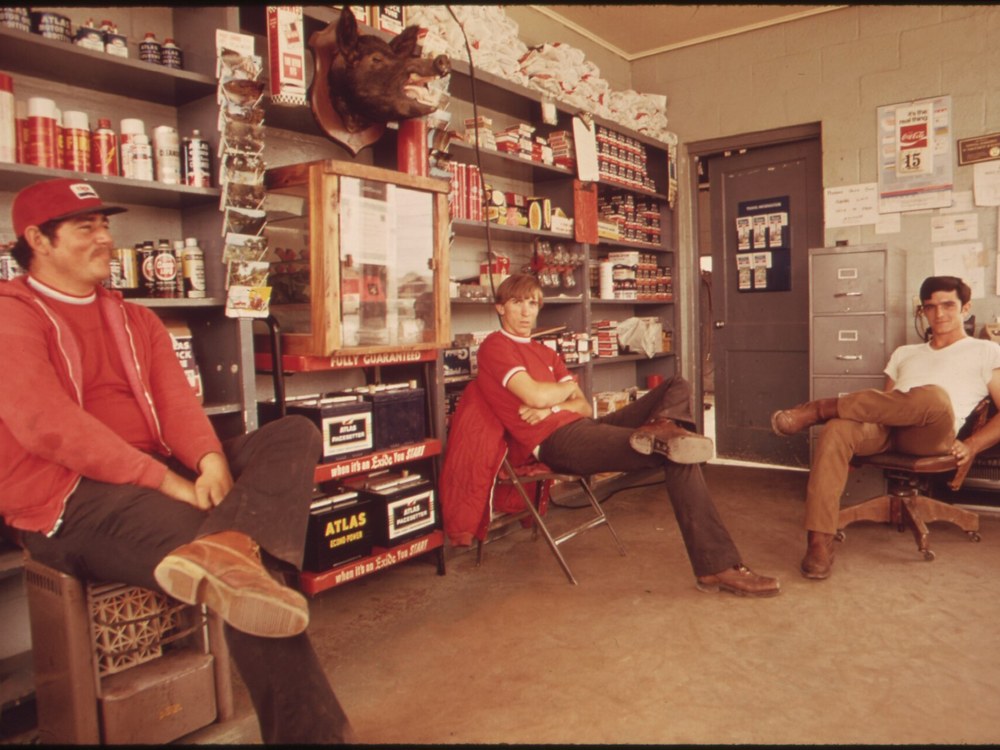
You’d drive in, ding-ding, and the attendant would show up. The service station had rigged a bell under your tire so that you could run over the rubber tubing and a puff of air rang the bell in the service bay. That sound meant someone was coming to help you out. A former gas-station attendant explained that the tubing was adjustable and that the ringing of the bell was considered a call for service:
“I worked in a full service gas station in the mid 70s, we had ours adjusted to where only a full size car would set it off. In fact, motorcycles and sometimes even small cars like VW Bugs would not! The owner of the station I worked at insisted that we acknowledge every ding-ding within 20 seconds. We were like Pavlov’s dogs.” (via Reddit)
For that attendant, the chime meant he had twenty seconds to respond. But for you, it was a cheery hello. And, hey, somebody else would pump the gas, check your motor oil, inspect your tires. That’s what made the whole arrangement so nice: somebody else was hustling around doing those tasks. Self-service spelled the end for that arrangement, as well as that cheery little chime. By 1983 drivers were pumping more than 70 percent of the gasoline sold in the U.S.
9. The Credit-Card Imprinter Going Out and Back
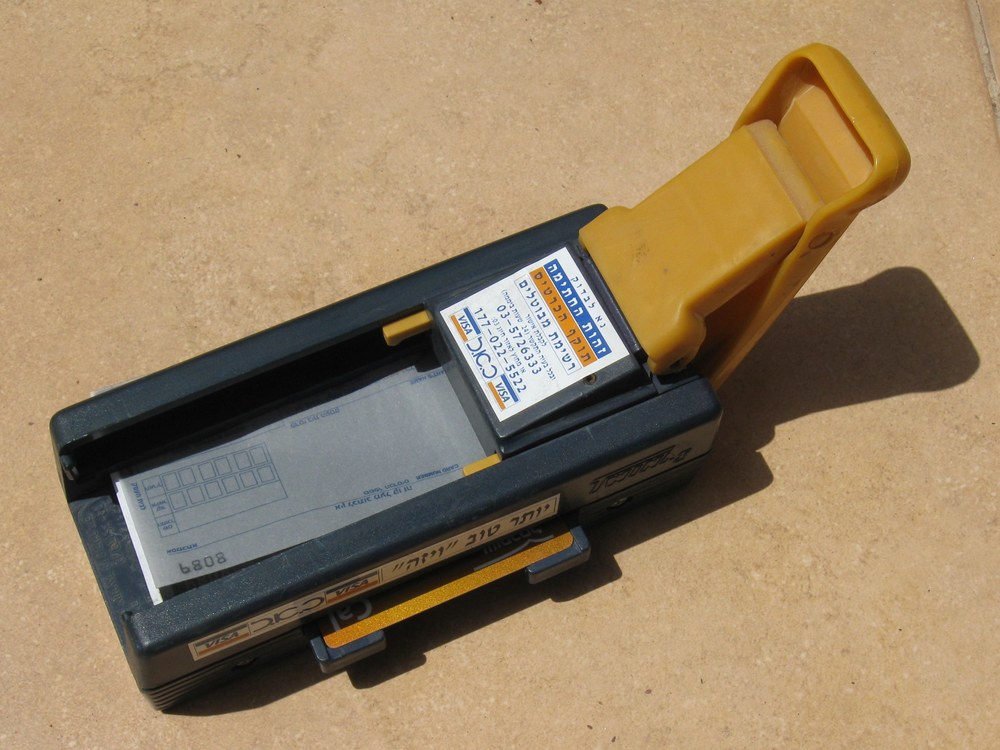
If you used credit cards in the past, you’ve seen these. Although technically known as a ‘manual imprinter’ (stores had their own names for it), if you’ve seen one, you’ll likely remember it by its distinctive chunk-ca-chunk sound. To use it, a clerk at a store would lay your credit card on a small metal bed underneath a multipart form, and then slide a roller back and forth. The raised numbers on your credit card would come through on the copies thanks to the carbon paper and pressure.
At times you’d be instructed to wait for authorization by phone, because the imprinter was entirely unwired and needed no electricity. You may have also been told to leave no carbon copies in the trash, as the numbers were still perfectly legible, so you took them with you. All security hinged on you knowing what happened when you made a purchase.
A manual imprinter, complete with metal bed and roller, resides in the Smithsonian collection.
10. The Cash Register Before the Universal Beep
Sound sample
According to the Smithsonian, the first barcode scanning in a supermarket took place on June 26, 1974. The item was a multipack of Wrigley’s Juicy Fruit chewing gum, and the store was a Marsh supermarket in Troy, Ohio (hi, that’s my home state).
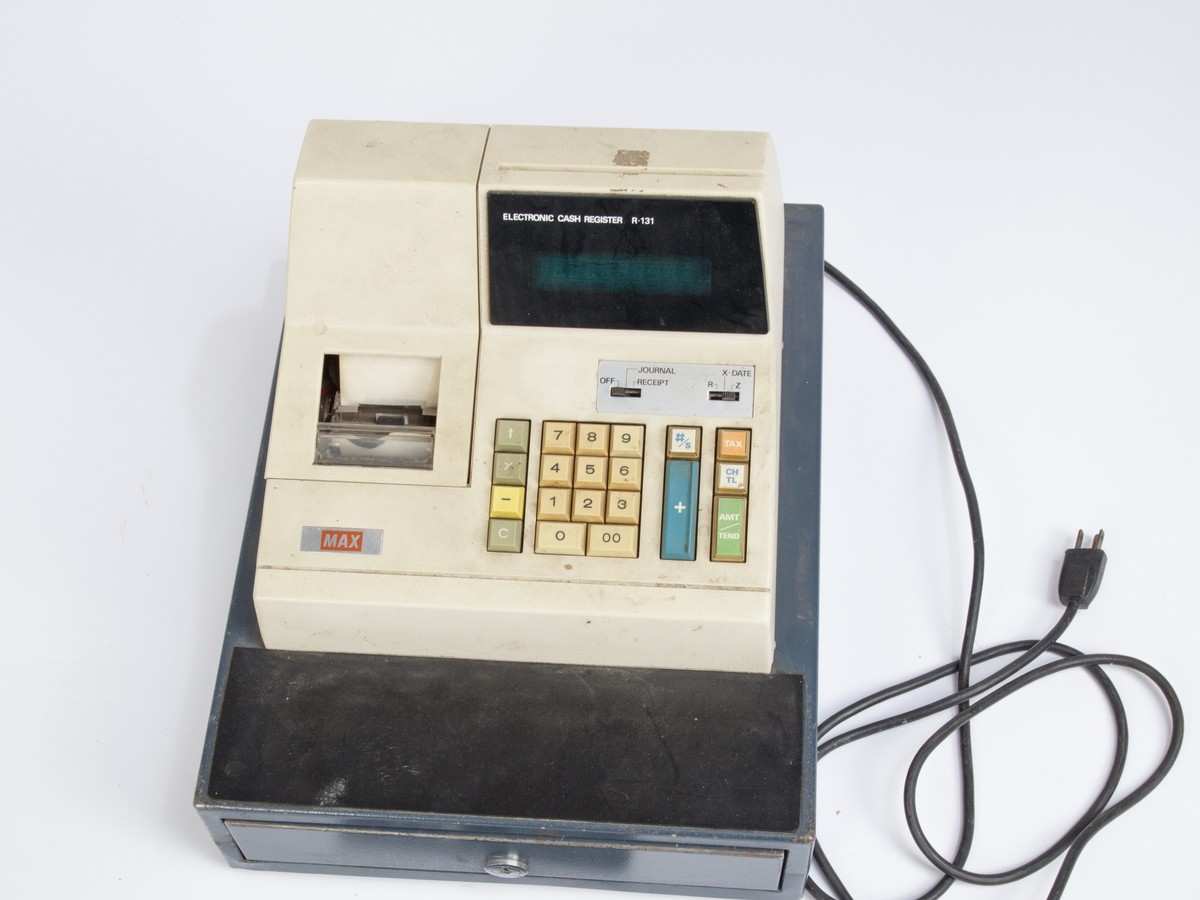
Before that, a cashier keying in the cost of items was its own sort of ballet. There was something mesmerizing about the clack of the buttons, the tumbling numbers, the advancing of the register paper, the cash drawer popping open. If the register was old enough to have a bell, it would provide a sort of victory trill at the end of the song and dance. Cashiers could power the beast through blackouts via a hand-crank. It didn’t do the math for how much money should come back, so cashiers had to be a lot better at figuring out how to take one number away from another in their heads. The register couldn’t fix a cashier’s boo-boos.
Three Dates That Changed the Soundscape
- April 27, 1973 — the U.S. ban on civilian supersonic flight over land took effect.
- June 26, 1974 — the first UPC supermarket scanner entered service in Troy, Ohio.
- June 12, 2009 — the full-power U.S. digital television transition was completed, taking analog broadcast snow with it for most viewers.
11. The Train’s Clickety-Clack Count
Sound sample
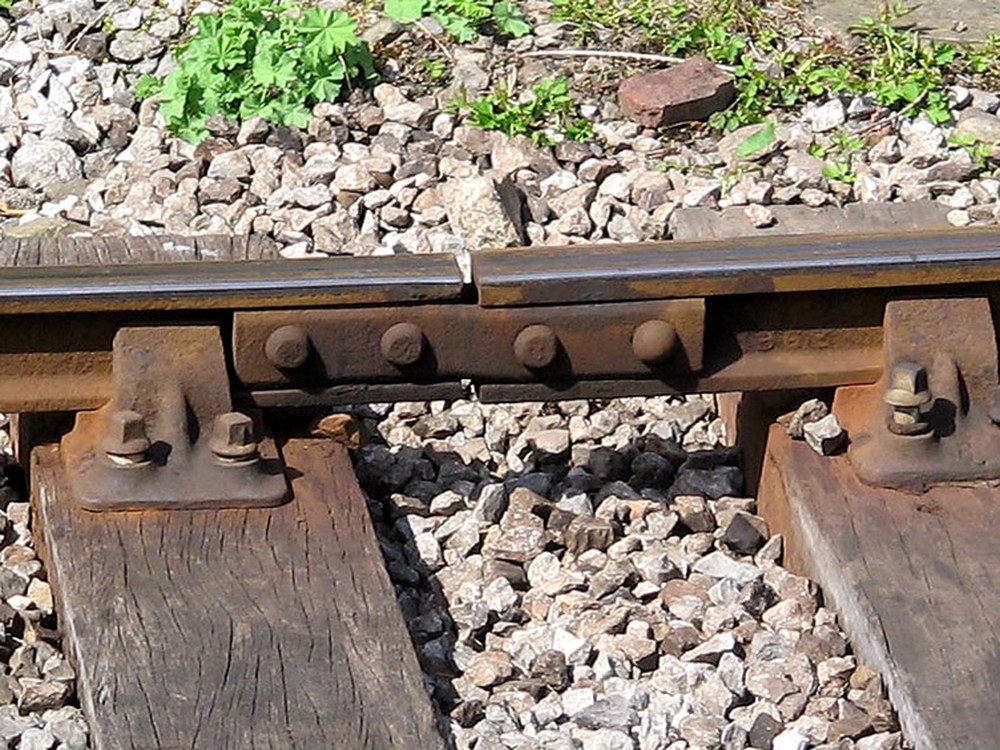
According to a 1977 report from the Department of Transportation, a standard rail was 39 feet long. Track has traditionally consisted of individual rail sections joined together by bars and bolts. The spaces in between them are what wheels roll over time after time to create the train’s steady cadence. Thanks to continuously welded rail, the joints have all but disappeared and with them, the clickety-clack count. Some older and slower-moving railroad routes are still serviced by tracks containing traditional rail joints. There’s still plenty of volume coming from a train, it’s just not rhythmic in the same way it used to be.
The train’s percussive soundtrack could be heard clearly enough to count, especially after dark, when sounds carry further. One person who lived a mile away from the tracks said they only heard trains at night:
“We used to live about a mile from RR tracks but at night, when all was quiet, I could hear the clickety-clack of the train and the occasional whistle, too. Never during the day when there were other noises but only late at night, when things were still.” (via Reddit)
12. The Sonic Boom the Government Chased Out of Town

Sound sample
Planes flying faster than the speed of sound cause sonic booms over large areas. You may remember these from your own lifetime, and hopefully they’re another sound that will stay in the past. In 1964 the government conducted a six-month sonic boom test over Oklahoma City, during which many of the city’s residents expressed their displeasure at the booms and the windows they shook. By 1969, the US Public Health Service declared sonic booms a community-noise disturbance interfering with rest and sleep, conversation, and ordinary concentration.
One commenter in an online discussion remembered hearing sonic booms as a child, not far from an Air Force base:
“I remember hearing them occasionally and how it would rattle the windows. There was an air force base not too far away so maybe it was from that. I was really young but I clearly remember asking my mom what they were and her explaining it to me.” (via Reddit)
The pilot got the thrill of moving so fast while someone in the town below wondered if she’d cracked a window from the disturbance. The public wanted it to stop; disagreements ensured the issue did not blow over. The uproar helped inspire the federal ban (effective April 27, 1973) against routine civilian supersonic flight over land (military flights and authorized research went on). That ban preceded Concorde’s passenger service into Washington’s Dulles airport, inaugurated May 24, 1976.
Every Noise Had a Job
The noises that machines made weren’t just for them to announce that they were working. The noises communicated exactly what we were supposed to do next: the bell of a typewriter to show how close you were to the end of the line, the beep of a filmstrip that it was time to turn the knob, the bell in the driveway that a car was waiting, the clang of a cash drawer that a transaction had been completed. The right person would get up and go, alerted from another room, without a screen. Older doesn’t necessarily mean better, but you could hear the work happening back then: the returning dial, the card imprinter going across and back, the projector finding its groove.
Granted, an 8-track could interrupt your favorite song just as you expected it to go on a little longer and worn-out magnetic tapes could allow the next song to bleed through, and a sonic boom could rattle the windows, but technology hasn’t always been silent, and that’s been kind of nice.
Which one can you still hear without pressing play? Put your best spelling in the comments: ka-chunk, ding, tick-tick-tick. Somebody else will recognize it.
Top photo: A typist at Seattle City Light, 1974. Photo: Seattle Municipal Archives via Wikimedia Commons (CC BY 2.0).



.jpg)


.jpg)


.jpg)
Leave a Reply