
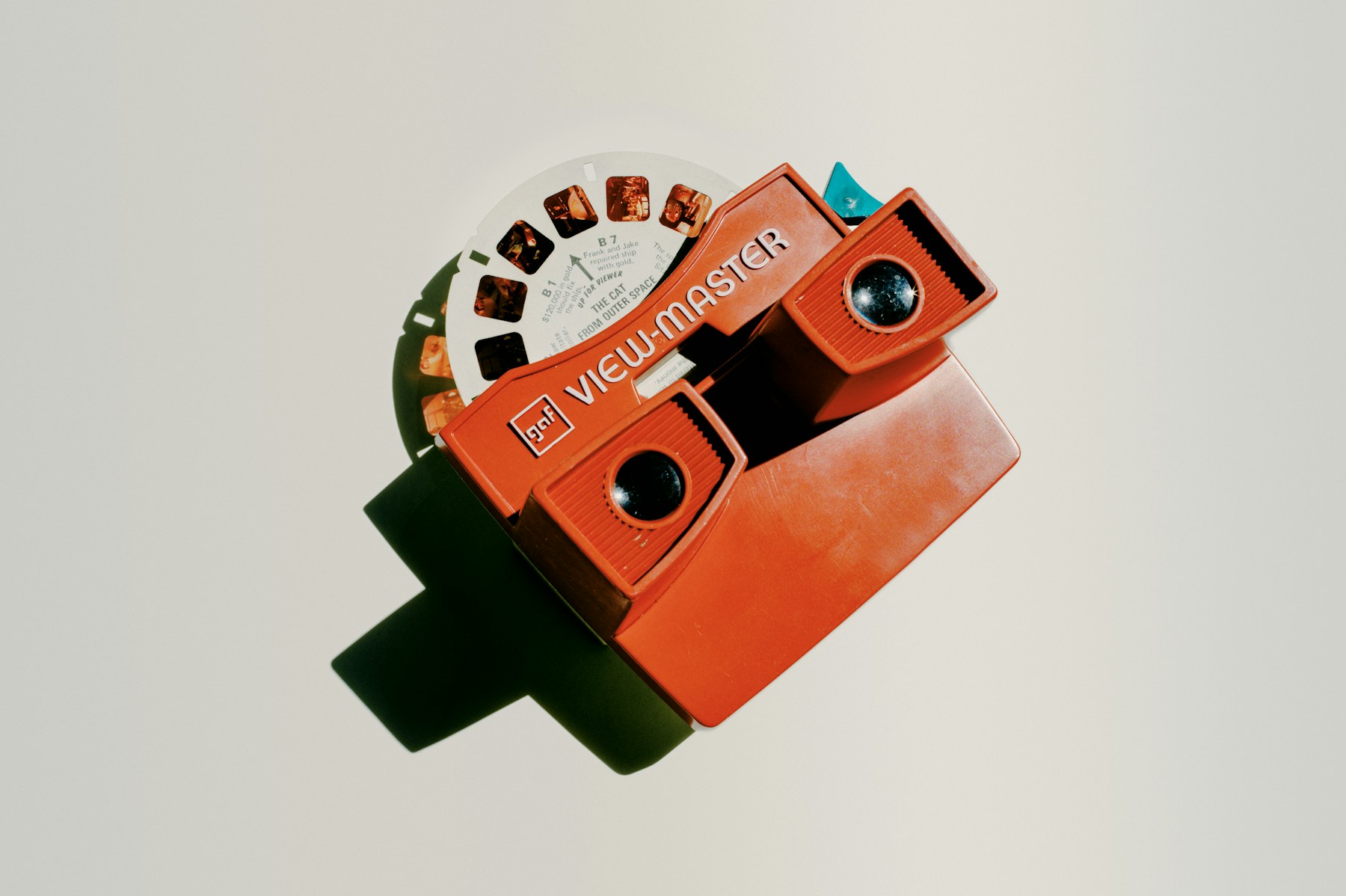
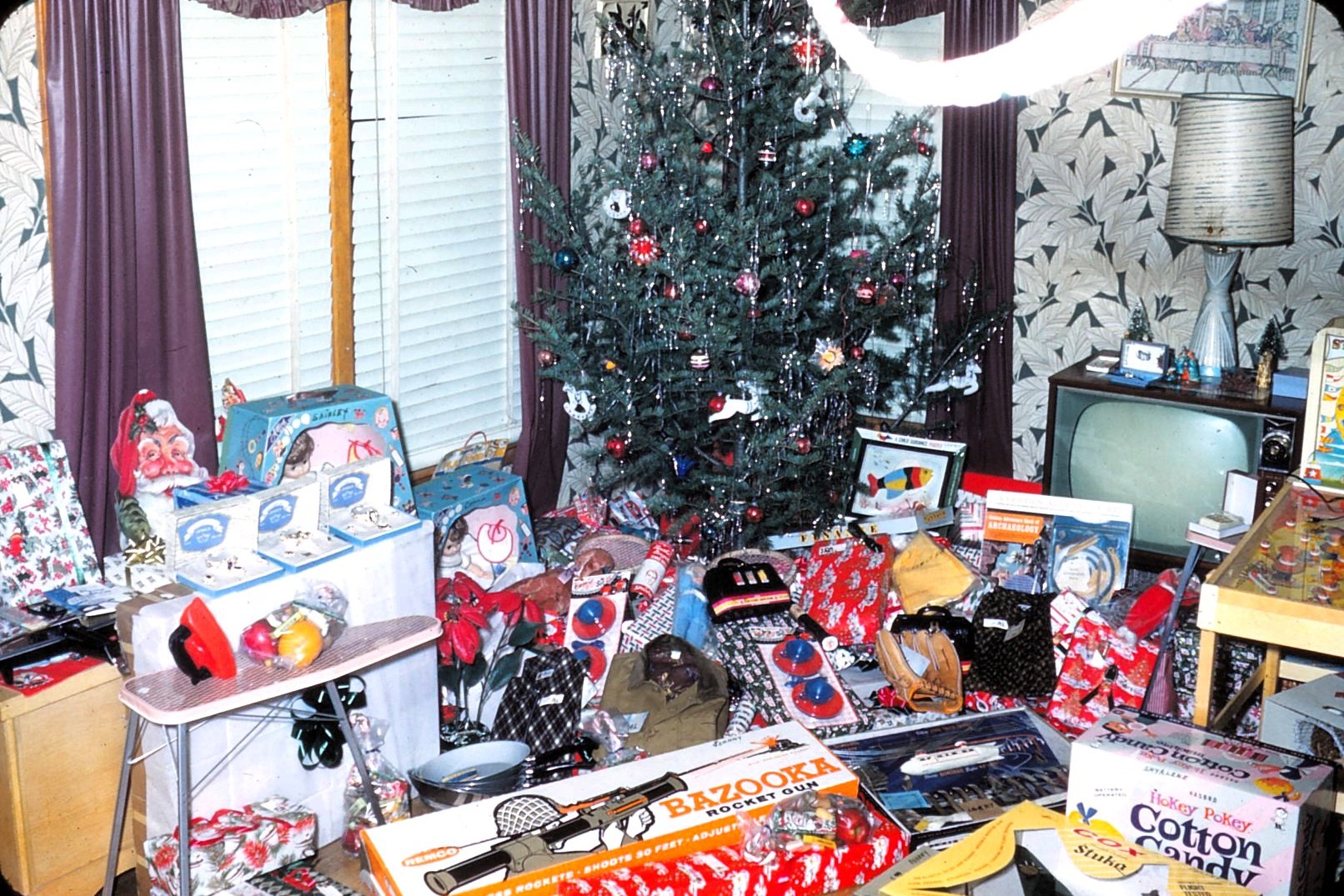
I turned 20 in 1970, so I wasn’t one of the little tykes making a list for Santa that decade, but my son was, and he ended up with several of the toys on this one. I’d venture to say a lot of other lists had one or more of them, too. If you were a kid in the ’70s, you probably still remember which kid on your street had the best toys, and which toy you circled in the Christmas catalog and asked for every single day until December.
These are 12 toys that kids wanted during the 1970s. You didn’t have to own them all, because, as always, playing with one at a cousin’s house counts. Two of them, the Rubik’s Cube (1980) and Cabbage Patch Kids (1983), showed up at the very end, so think of them as the toys that carried kids from the 1970s into the 1980s. And an unexpectedly large number came from my stomping grounds, Southern Ohio: Kenner, which made five of these toys, was based in Cincinnati.
1. Big Wheel
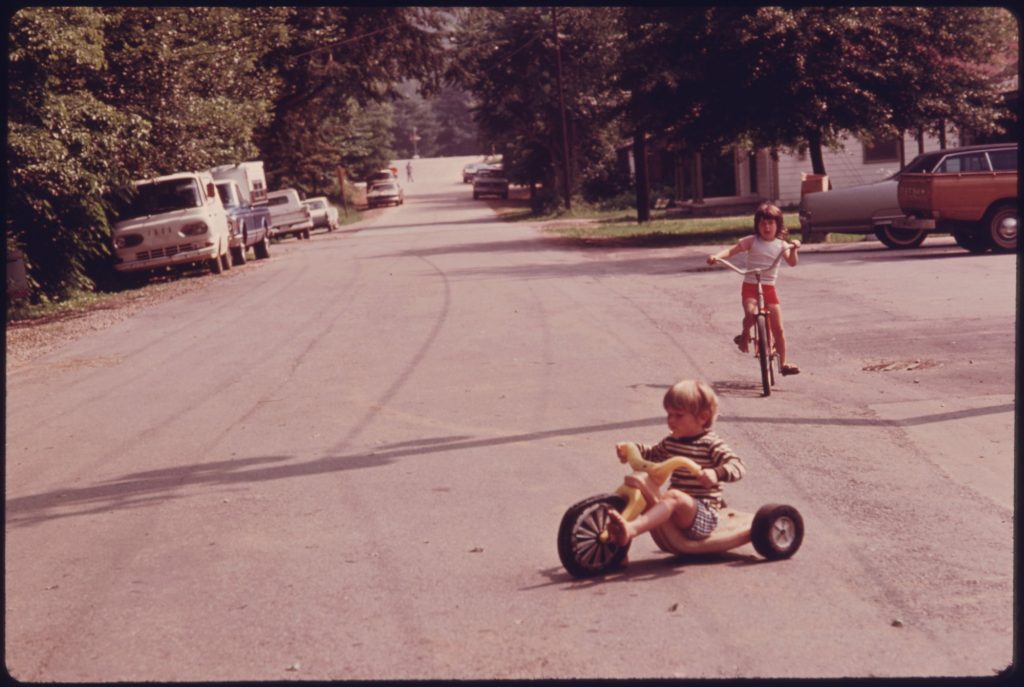
Louis Marx & Co. introduced the Big Wheel in 1969. According to the National Toy Hall of Fame, Marx designers took apart a tricycle and put the pieces back together upside-down to create a ride-on toy that featured one big wheel up front and a rider who sat mere inches above the pavement. It was a molded plastic chariot whose noisy plastic wheels could be heard all over the block. My son had a Big Wheel of his own.
At its plant in Glen Dale, West Virginia, Marx built them by the thousands, and the curator of the Marx Toy Museum says the plant could turn out 9,000 Big Wheels a day. By August 1974, according to a report in the Detroit Free Press, some stores were selling five Big Wheels for every traditional tricycle. The president of the Garton tricycle company told the paper that ordinary trikes were selling at half the rate of three years before.
Eventually, you reached an awkward phase in which you couldn’t admit to having outgrown it, but couldn’t ride it without your knees knocking into the handlebars.
2. Lite-Brite
If we’re going to remember Lite-Brite, let’s do it properly: spend a few days searching for the missing Lite-Brite pegs under the couch and negotiate a truce with your family regarding the lamp in the living room (Lite-Brite looks its best in a darkened room).
Hasbro put Lite-Brite in stores in 1967, and it was the creation of Chicago-based toy design company Marvin Glass and Associates. According to the National Toy Hall of Fame, the idea for Lite-Brite stemmed from a window display in New York City consisting of hundreds of colored lights. It was a plastic box with a 25-watt light bulb inside, and you made pictures by placing black paper over the pinholed plastic panel and then poking colored plastic pegs through it. Hasbro touted it as a ‘magic light box’ in its 1968 promotional materials.
3. Simon
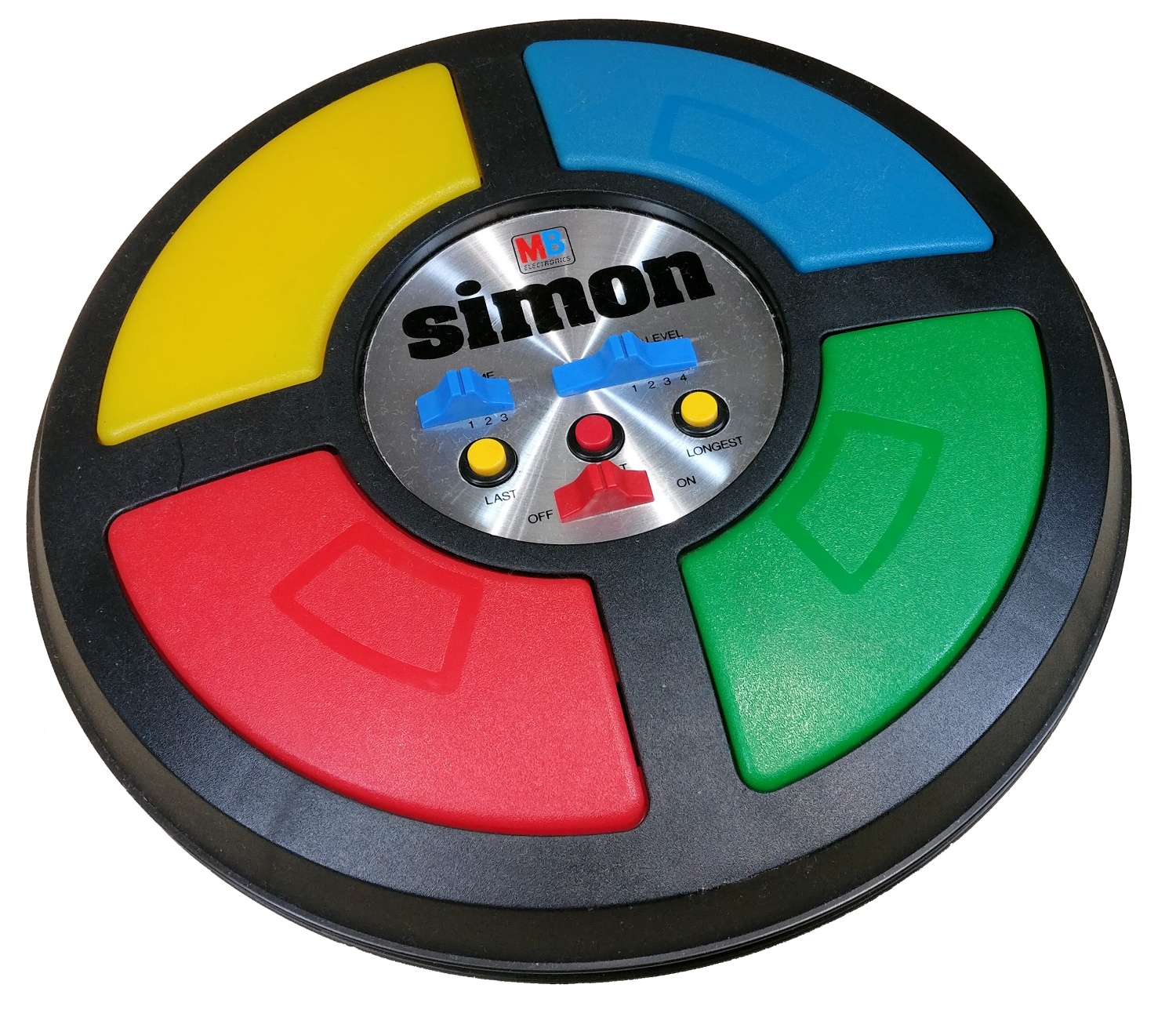
Milton Bradley introduced Simon in 1978. Its launch party was held at Studio 54, the disco in New York City, at midnight, which is a fancy start for a game that found its way onto lots of living room floors. It was the creation of Ralph Baer (best known as the man behind the first home video game system) and Howard Morrison of Marvin Glass and Associates, the same Chicago-based design firm responsible for another household staple, Lite-Brite. Morrison and Baer got the idea from a game they saw in 1976 at a trade show, an arcade game made by Atari called Touch Me, but Baer thought the original’s sound effects were unpleasant.
Baer happened to read in his kids’ Compton’s Encyclopedia that a bugle can play just four notes, so Simon used those four bugle notes. Those notes, and four colored buttons that light up in a pattern you have to repeat, and repeat again, with the sequence getting longer each time, are part of what made Simon so addictive. It’s the game that looks easy until it’s your turn to play and everyone watching is yelling the colors at you to help.
Price Check
- $11 to $18 for a Big Wheel at Hudson’s in Detroit in 1974, when a plain tricycle cost $13.
- $15.95 for an Easy-Bake Oven in 1964.
- About $10 for Kenner’s Star Wars Early Bird Certificate Package at Christmas 1977, with no figures inside.
- About $25 for Simon in 1978.
4. Speak & Spell
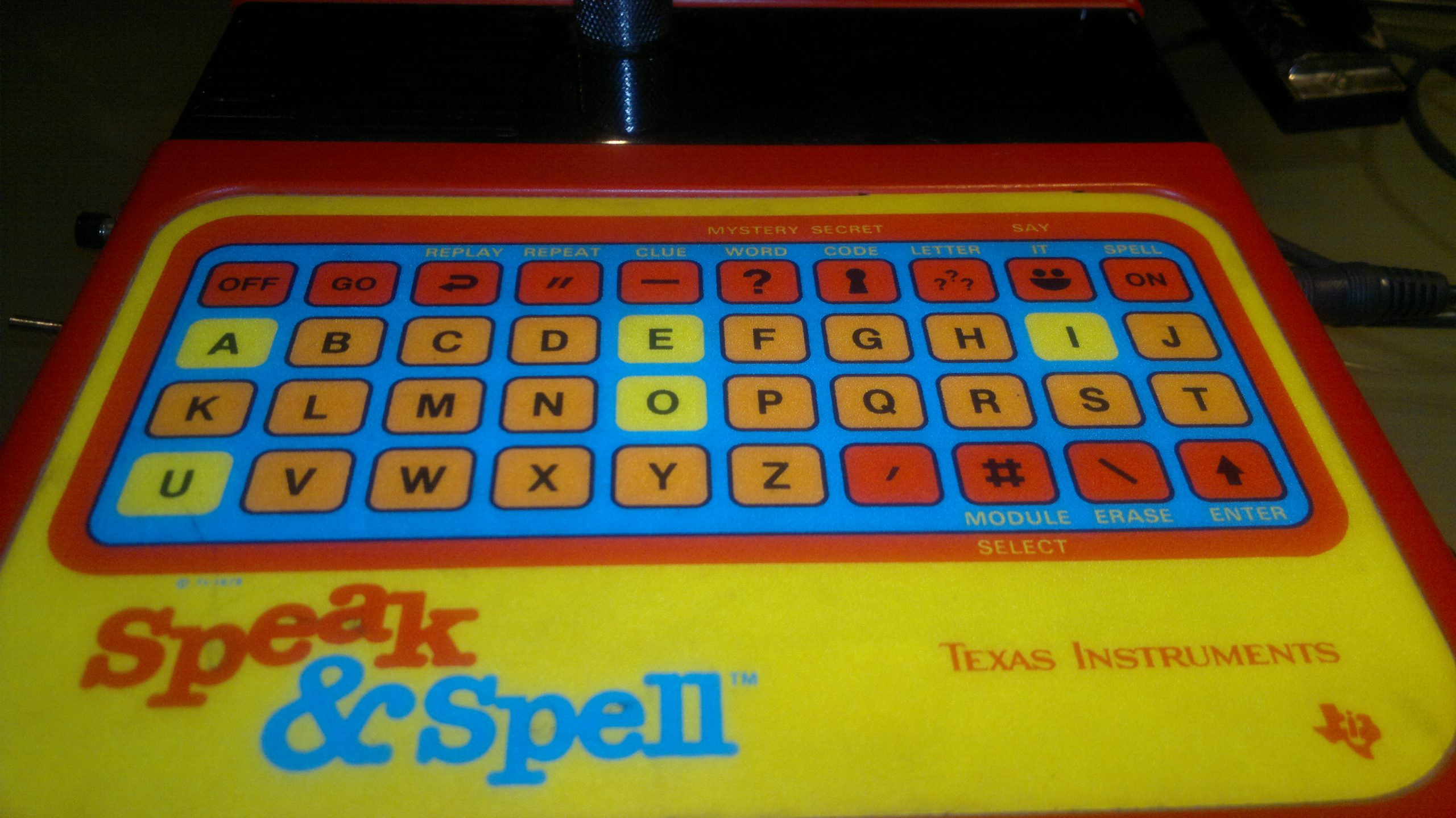
Remember that time E.T. rigged up a Speak & Spell so he could ‘phone home’? According to the Computer History Museum, this learning aid (for kids aged seven and up), which Texas Instruments released in June of 1978, marked the first time the human voice was electronically reproduced on a single chip.
A four-person team of Texas Instruments employees created the toy, powered by four C batteries, on a budget of just $25,000. You would hear a word from it, spell it on its teeny tiny keyboard and receive positive (or not) affirmation from its buzzing, electronic brain. Somehow, it got kids to practice their spelling, something no parent with a spelling book ever managed, and its cameo in the smash-hit 1982 movie breathed new life into its name.
5. Stretch Armstrong
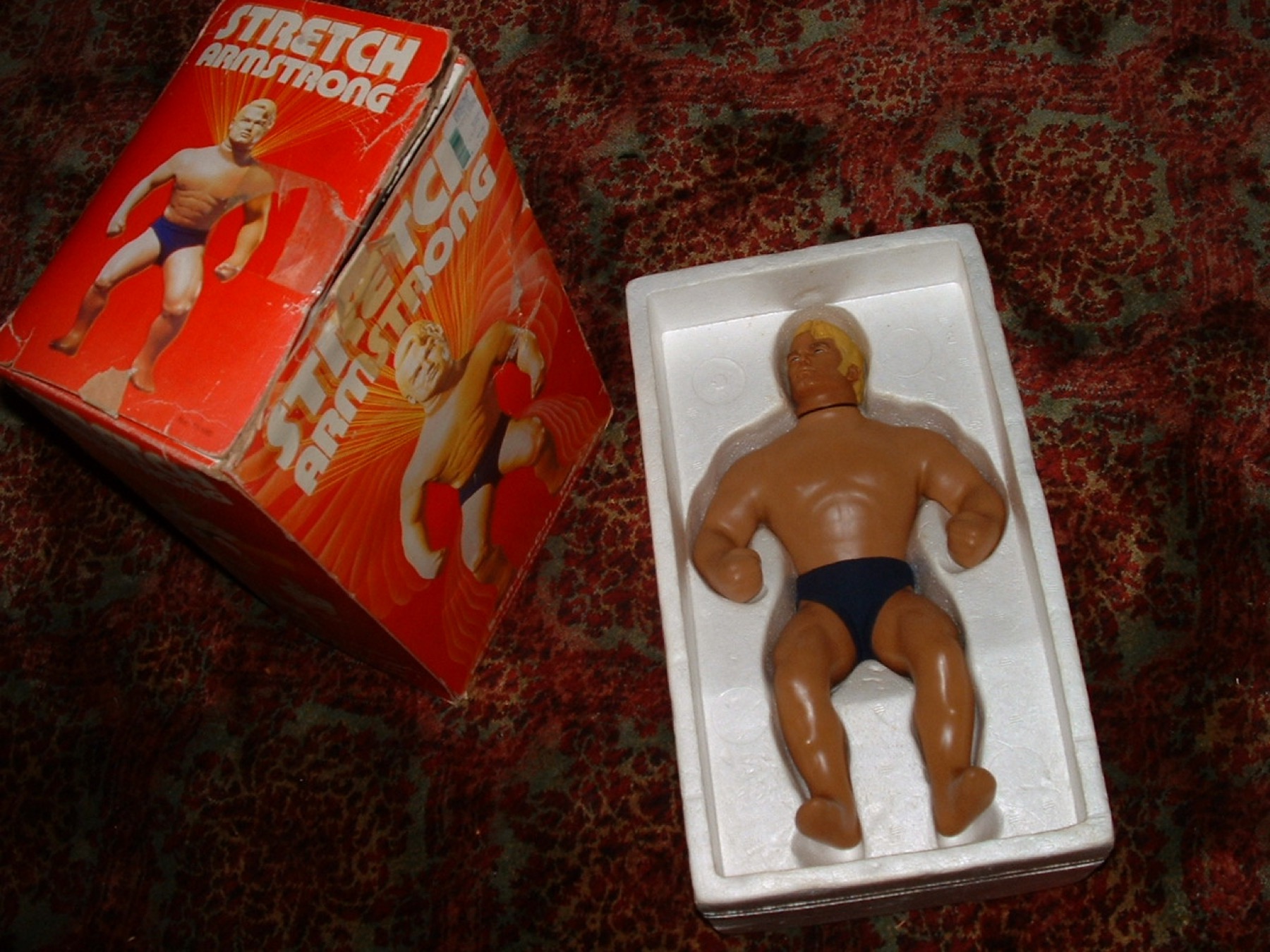
Kenner brought out Stretch Armstrong in 1976. He came with blond hair, black trunks and a rippling physique, and he could be pulled into various poses until he was about four feet long (according to Parade) before relaxing back into his original shape.
Pulling worked better with two kids, one pulling an arm while the other yanked a foot. If your determination to see how far Stretch would go resulted in a rip, you got to learn the secret of Stretch’s mysterious innards, which consisted of corn syrup (according to The Strong National Museum of Play).
6. Kenner’s Star Wars Action Figures
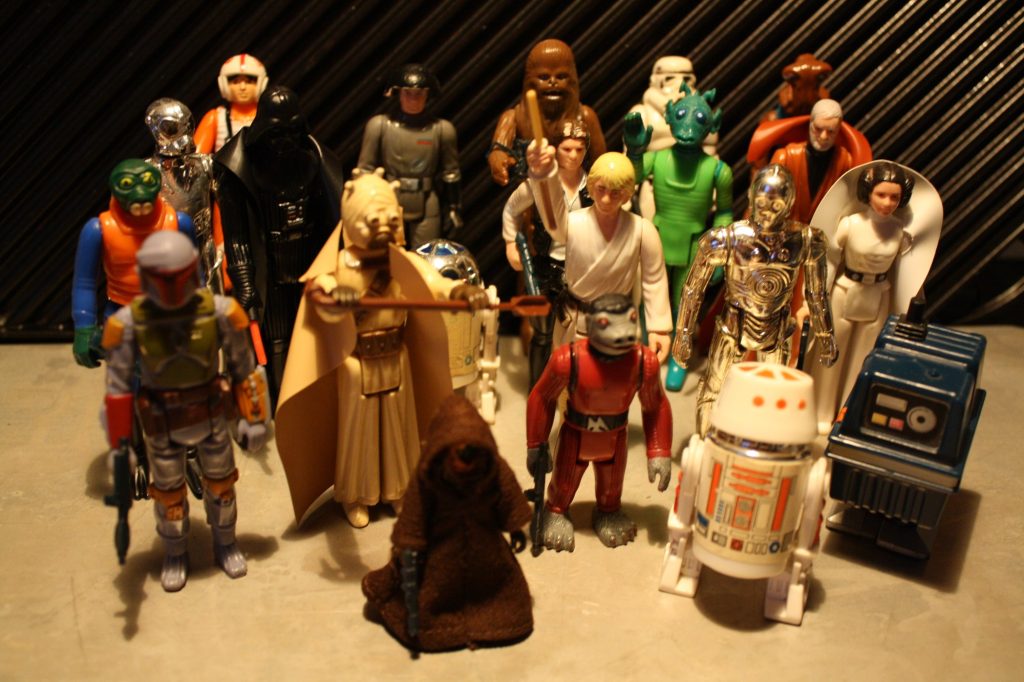
Star Wars hit theaters on May 25, 1977. The company that held the toy license for the movie was Cincinnati-based Kenner. ‘We didn’t see the trailer until February ’77 so that didn’t give us much time to actually put plastic product on the shelves,’ one Kenner designer remembers.
There was no way to get the 3¾-inch action figures into stores by Christmas 1977, so kids were going to have to make do with Kenner’s Early Bird Certificate Package, a little box with a cardboard display stand, some stickers, a Space Club card, and a certificate to mail in. For about $10, you’d get a promise of Luke, Leia, R2-D2 and Chewbacca, once Kenner finally manufactured and shipped them. Waiting times reportedly went as long as six months, so on Christmas morning 1977 a lot of kids pulled out a certificate promising those heroes.
By Kenner’s 1980 catalog, The Empire Strikes Back characters had joined the ranks. Those little Kenner blasters had a mysterious and almost instantaneous tendency to disappear somewhere between opening the package and starting to play. My son had a set of these figures, too.
7. Fashion Plates
In 1978 Tomy made a toy called Fashion Plates which provided a clever way to produce a fashion sketch even if you had no artistic ability at all. You would choose from among a group of plastic plates with bumps in the shape of various hairdos, tops, pants, and skirts. These would click into the tray. Next, you’d put a sheet of paper on top of them and rub them with a black crayon to make an outline of the outfit. If the paper slipped while you were rubbing, though, your model wound up with a funny extra chin.
You could use colored pencils to add in color. The plates also had textures such as checks, plaids and polka dots. It captured the style of the time with bell-bottoms, peasant blouses, and maxi-skirts. Later, Tomy expanded the set with More Fashion Plates.
8. Spirograph
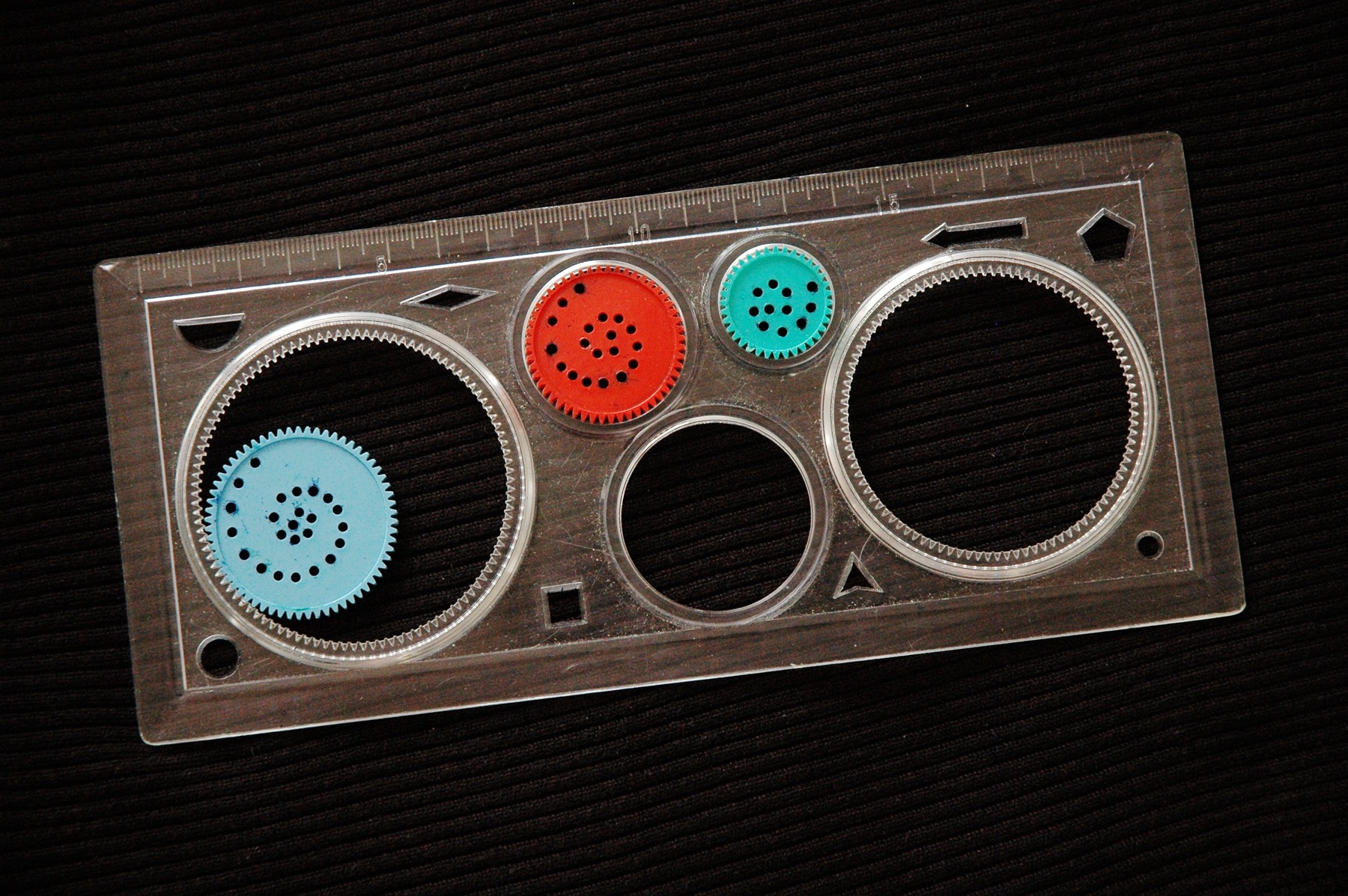
British engineer Denys Fisher invented Spirograph, which was introduced at the Nuremberg International Toy Fair in 1965. Kenner had the U.S. rights to Spirograph and promoted it with the tagline ‘a million marvelous patterns’ when it hit stores in the mid-1960s.
You’d pin the larger ring down and insert the point of the pen in the hole of the smaller gear and rotate it over and over within the larger one until a pattern emerged. The tricky part was keeping the gears from slipping while applying enough pressure to leave a mark. If the gears slipped you’d get a pesky line through your pattern and would probably flip the page over and start again.
9. Easy-Bake Oven
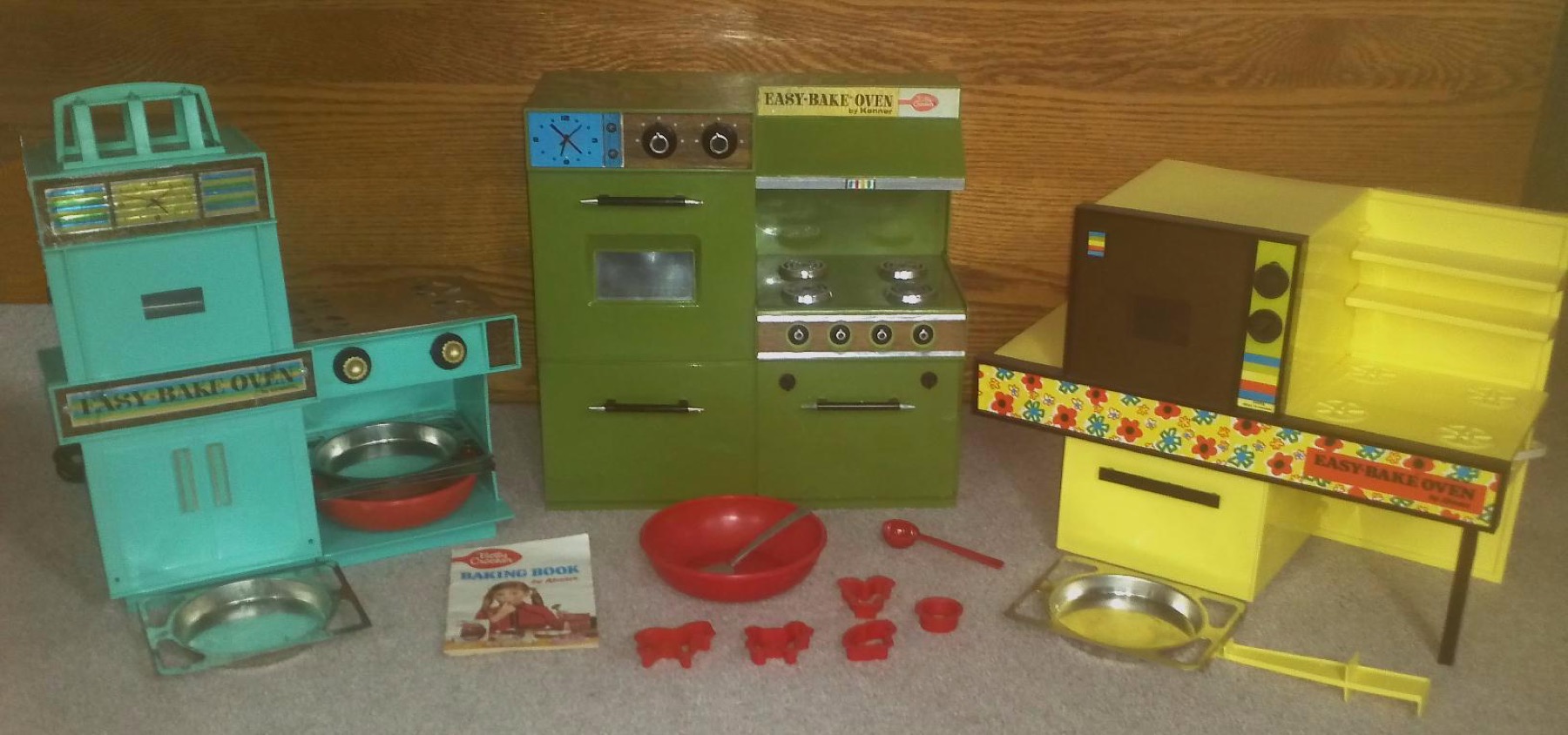
Kenner introduced the Easy-Bake Oven in 1963. It was created by Kenner’s director of research (and University of Cincinnati alum) Ronald Howes along with Kenner co-founder Joseph Steiner, and according to the National Toy Hall of Fame it was inspired by pretzel vendors on the streets of New York City. By the end of 1964, Kenner had sold more than half a million Easy-Bake Ovens. Originally they were available in pale yellow and turquoise. They were heated by two 100-watt light bulbs and took about 15 minutes to “bake” a cake.
For a kid, it was exciting to have the opportunity to make something, however tiny and imperfect. Waiting nervously to see if it worked, then bringing your creation to a grown-up who ate it like it was the best cake in town, felt very satisfying.
Did You Know?
Five toys on this list came out of one Ohio company. Kenner was started in Cincinnati in 1947 by three brothers, Albert, Philip and Joseph Steiner, and took its name from Kenner Street, where its first offices were. General Mills bought it in 1967, and Kenner went on to make the Easy-Bake Oven, Spirograph, Sit ’n Spin, Stretch Armstrong and the original Star Wars action figures.
10. Sit ’n Spin
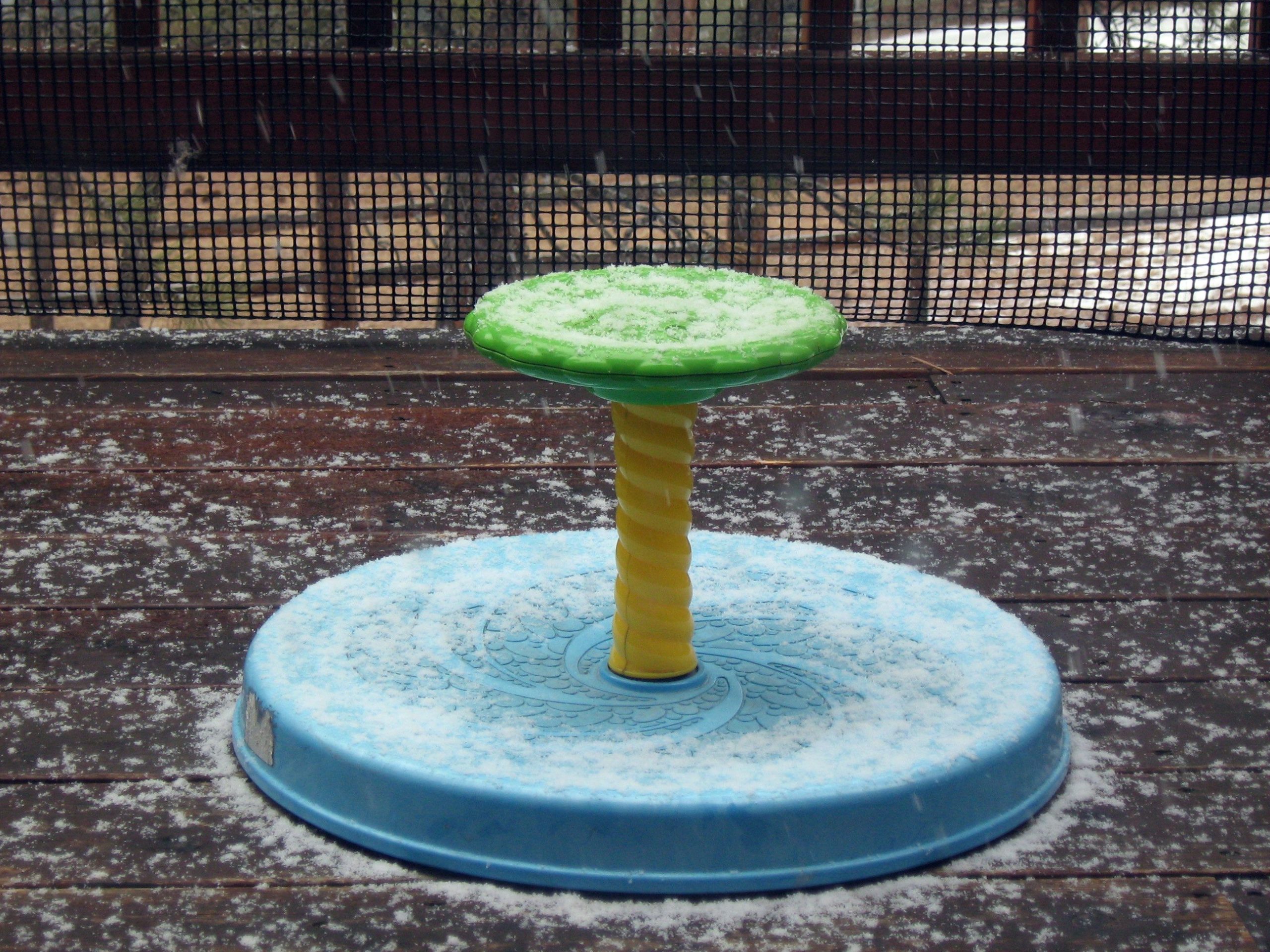
The fun of the Sit ’n Spin toy from Kenner was that you decided how fast you spun around. You sat on the round base and twisted the wheel, and the faster you twisted it, the faster you went around, and then you tried walking in a straight line afterward.
The toy was the brainchild of Jacob Burkart of Cincinnati and John Mayer of Fort Thomas, Kentucky. On April 30, 1973, the pair filed the patent for what the paperwork called an ‘occupant propelled rotary amusement device.’ Hasbro still sells the toy today under its Playskool name.
11. Rubik’s Cube
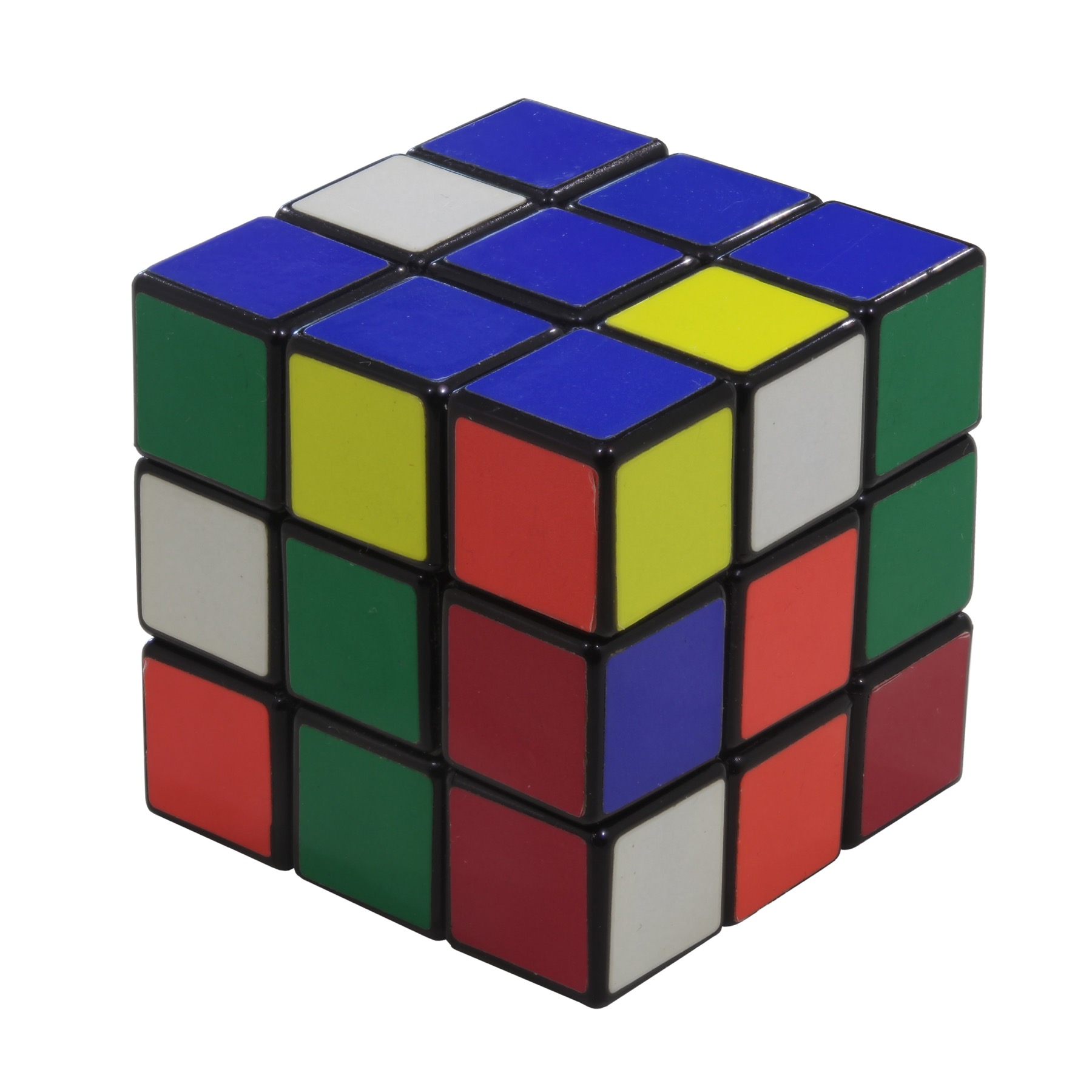
The Rubik’s Cube was one of the decade’s last-minute arrivals. It was invented in 1974 by Ernő Rubik, a professor of architecture in Budapest, Hungary, who made his first cube out of wood and used it to explain three-dimensional design to his students. First sold in Hungary as the Magic Cube, the puzzle was renamed Rubik’s Cube when the Ideal Toy Company launched it around the world in 1980. If you were a ’70s kid, it landed right in your school years.
According to the Smithsonian, about 100 million Rubik’s Cubes were sold by 1982. Getting one side to match was monumental until you tried the other five and realized that would ruin the one you’d already completed. I’d still count one finished side as progress, even though someone was always bound to suggest you cheat by peeling off the stickers and moving them.
12. Cabbage Patch Kids
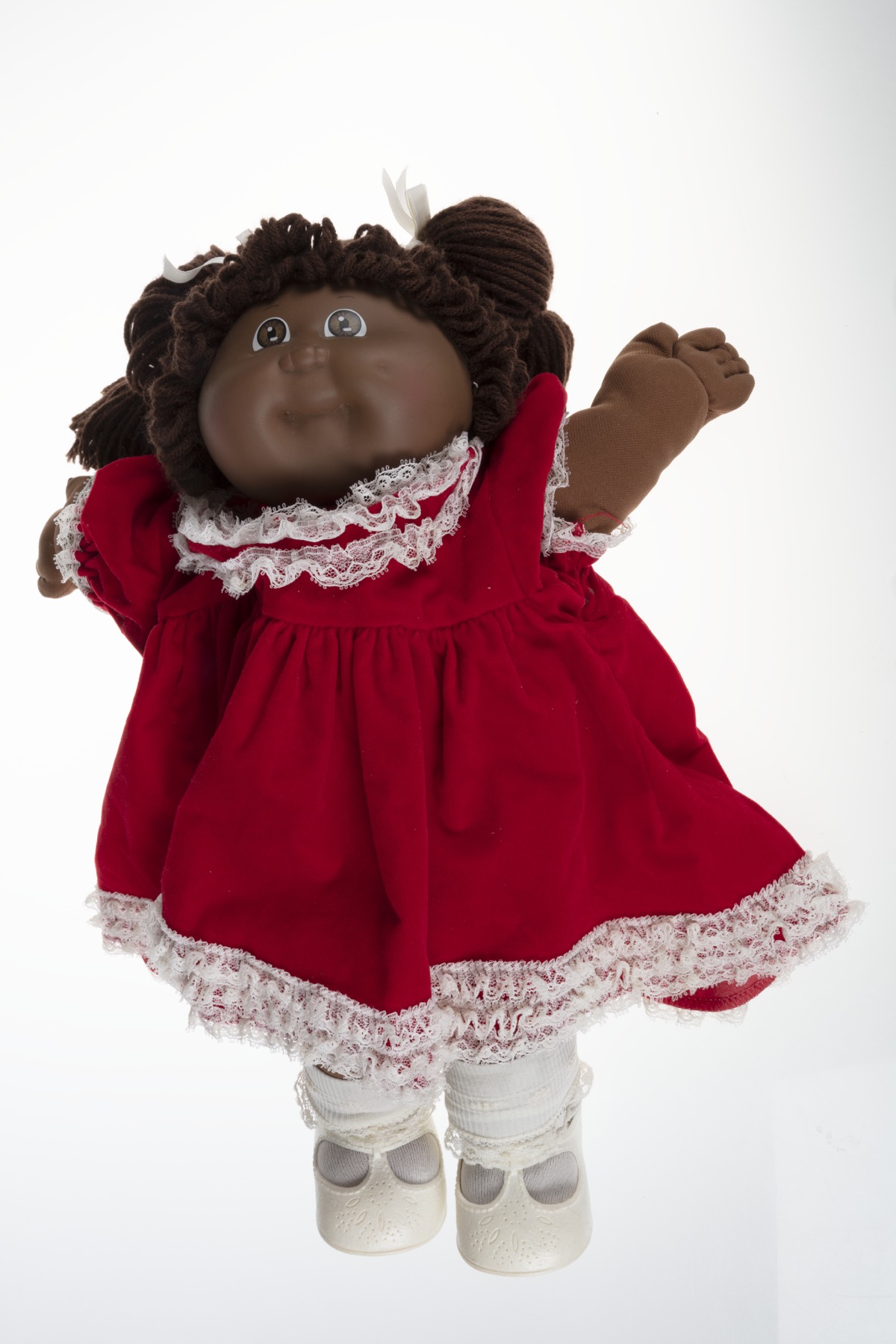
Cabbage Patch Kids arrived in 1983, chaperoning lots of ’70s kids into the ’80s. Starting in 1976, young artist Xavier Roberts based in Cleveland, Georgia, created soft dolls, and later he made them available for adoption at Babyland General Hospital (an old medical clinic). Roberts had previously purchased handmade ‘Doll Babies’ from Kentucky-based artist Martha Nelson, and his own dolls were similar, so Nelson filed suit against Roberts, and the case was settled out of court, according to History.com. Coleco acquired rights to make and sell Roberts’ dolls, which it renamed Cabbage Patch Kids, and made 2.5 million of them at its factory in Hong Kong. Every doll came complete with a birth certificate, adoption papers and a name.
By Christmas 1983 the dolls were nearly impossible to find. Around 1,000 shoppers descended on a Zayre store in Wilkes-Barre, Pennsylvania, where an assistant manager ended up atop a counter wielding a baseball bat and five people ended up in the hospital. The store’s supply of 240 dolls lasted a mere 30 minutes. Once a doll made it home, though, the mayhem hardly mattered, and plenty of owners remember the name on its adoption papers to this day.
You probably have a clearer memory of one of the toys on this list than the others, right down to the box it came in or the part that went missing. I want to know about that one.
Which of these did you play with, and what toy belongs on the list that we’ve left out? Tell us in the comments. Borrowed toys and well-loved hand-me-downs absolutely count.
Top photo: A Big Wheel claims the middle of a Chicago alley in February 1973. Photo: Paul Sequeira / EPA / U.S. National Archives (public domain).

.jpg)

,_Nokia_Loop_Workshop.jpg)


.jpg)

.jpg)


Leave a Reply