
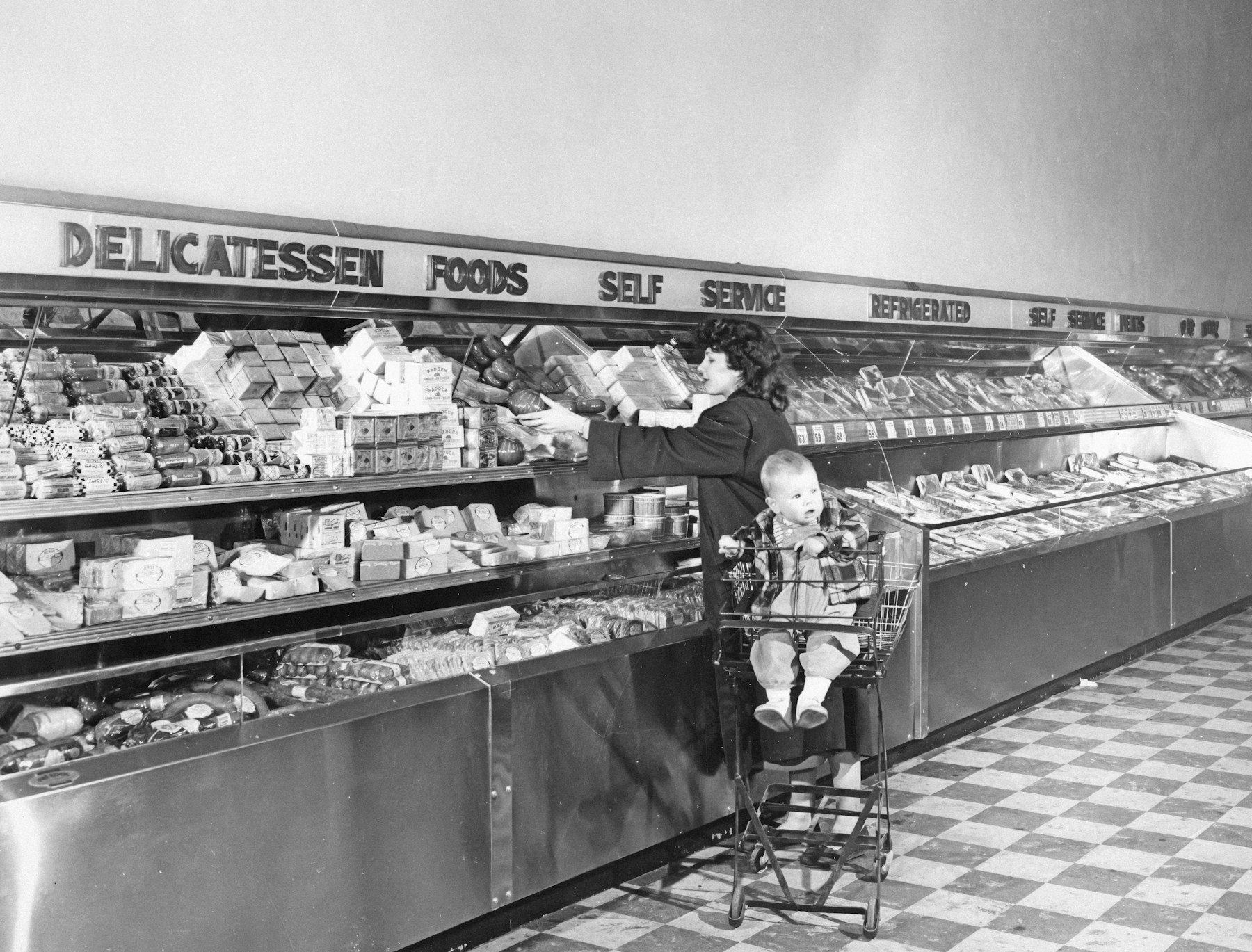
Remember when you were so little that you’d ride in the grocery cart? The boxes that called out for you from the snack aisle reached your chin, their colors brighter than anything you’ve experienced since. Every few weeks there was a new item to behold from the display, one that you surely had to point at and pull on your mother’s sleeve to plead for. She would say ‘put it back,’ and sometimes she’d finally relent with a sigh. That sigh was the sweetest sound in America.
But so often, our favorites disappeared from the snack aisle for unknown reasons. Soon enough the empty spaces where our favorite spring treats sat were filled with something else. Sit down for a cup of coffee with me; I’m going to tell you why they disappeared. Let’s reminisce over nine discontinued snacks.
1. Corn Flakes & Strawberries
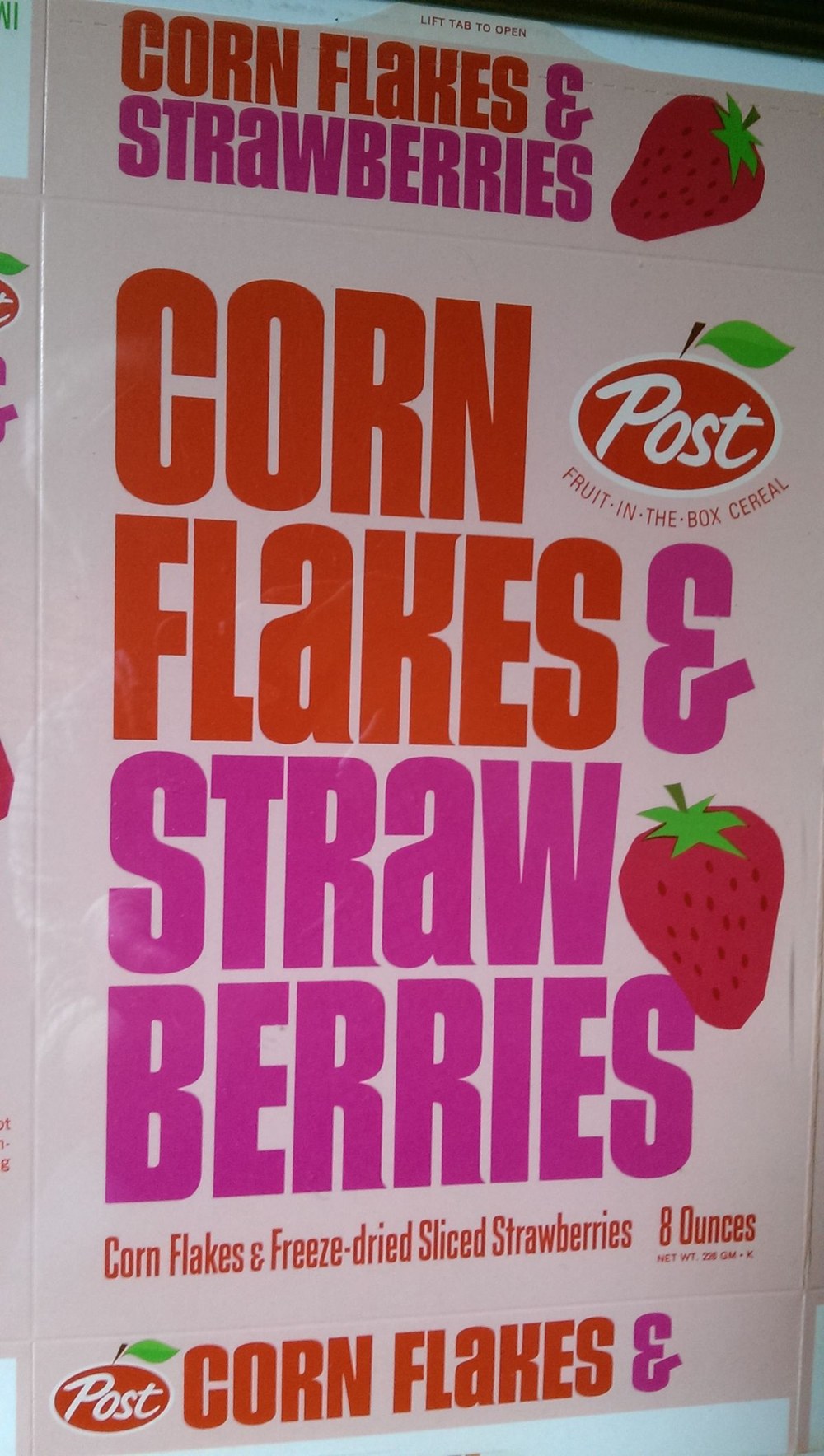
In 1963 Post released Corn Flakes & Strawberries, the first cereal to include freeze-dried fruit in the box. Finally, strawberries in the dead of winter! Except the berries themselves were the problem. Dry, they were like teeny-tiny corks. Wet, they were a soggy pulp that would stick to the roof of your mouth until dislodged by your tongue. Post released peach (1963) and blueberry (1965) varieties, and they discontinued the strawberry version around 1965. By 1967 Fortune magazine estimated that Post had lost as much as $12 million on the whole freeze-dried fruit affair. That’s a lot of corks.
2. Corn Flakes with Instant Bananas
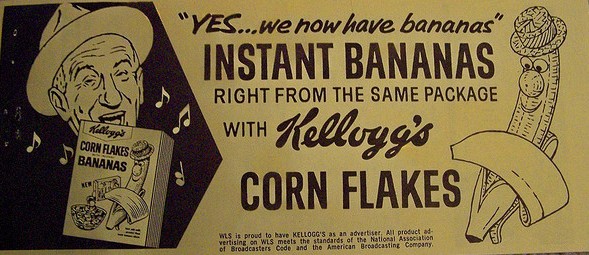
In 1964 Kellogg’s introduced a cereal called Corn Flakes with Instant Bananas, and it was a horrible flop. It contained little discs of dried banana. Grocers who stocked it reported that it tasted like cardboard discs in a box. The banana chips looked like communion wafers and turned brown in the milk. Sales were promising at first but tailed off rapidly after a few months and one of the company’s executives finally admitted that they had tested the market carefully, tried, failed, and were getting out. The cereal was withdrawn in 1966. Its advertising campaign featured Jimmy Durante singing a version of his perennially performed ‘Yes! We Have No Bananas,’ a song which he reworked specially for the commercials. When asked to film commercials for just plain Corn Flakes, Jimmy Durante refused. His words were reported as follows: ‘No bananas, no Durante.’
3. Kream Krunch
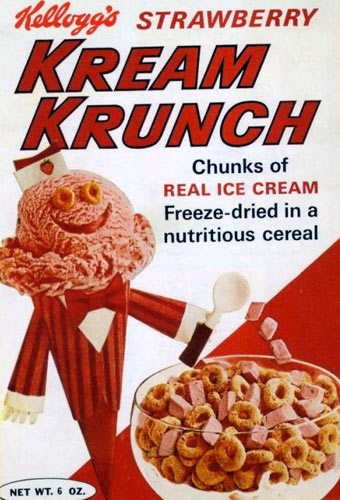
Kream Krunch is one I’d bet money you begged for. Introduced by Kellogg’s in 1965, the idea of freeze-dried ice cream (much like that consumed by astronauts) combined with oat rings was too sweet for kids to refuse. Unfortunately, although Kream Krunch (which came in vanilla, orange and strawberry) was intended to retain its crunchy consistency when combined with milk, within approximately one minute it dissolved into an almost gluey substance. All of a sudden, kids countrywide were refusing to finish their bowlfuls and parents were requesting refunds. Within about a year Kream Krunch was gone, never to be attempted by any breakfast food company again.
Price Check
- Ten Hershey bars for 35 cents — Williams Bros supermarket, December 1965.
- Potato chips, 65 cents a pound — Peoples Market, June 1960.
- Funny Face drink mix, 10 cents a packet — printed right on the counter display.
4. Bugles, Whistles, Daisys, Buttons and Bows
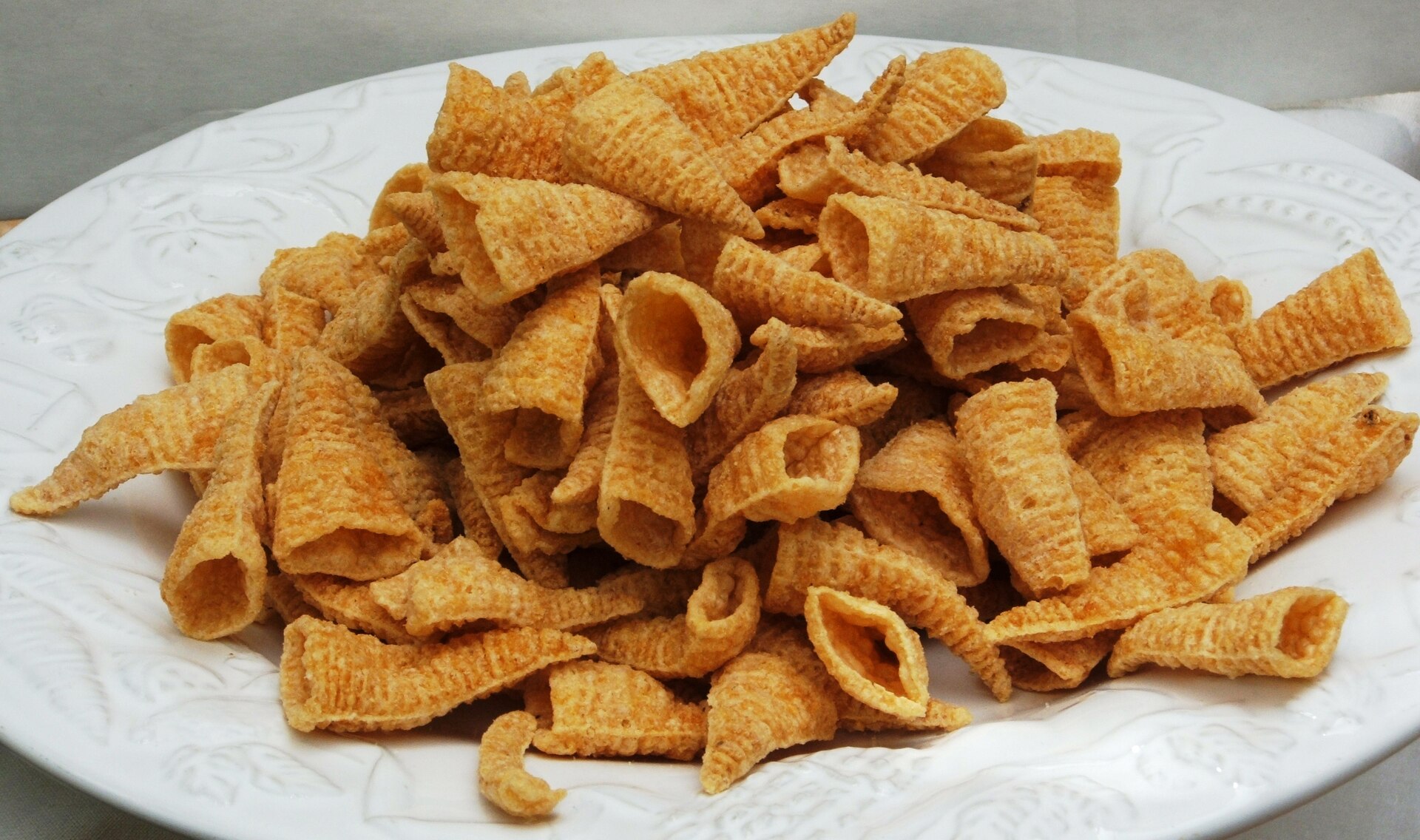
General Mills test-marketed Bugles in 1965 before releasing them nationwide in the early part of 1966. Bugles wouldn’t be the only novelty-shaped snacks released that year. There were Whistles (little tubes), flower-shaped Daisys, cheddar-flavored Buttons, and Bows that were flavored with popcorn. Kids loved sticking a Bugle on the end of each finger so that their hands looked like a witch’s, and you did too, don’t pretend. Today, Bugles reigns on, but sadly stands alone. Its play-mates have fallen victim to the vicissitudes of time and are long-gone from snack-food shelves.
5. Nabisco Flings
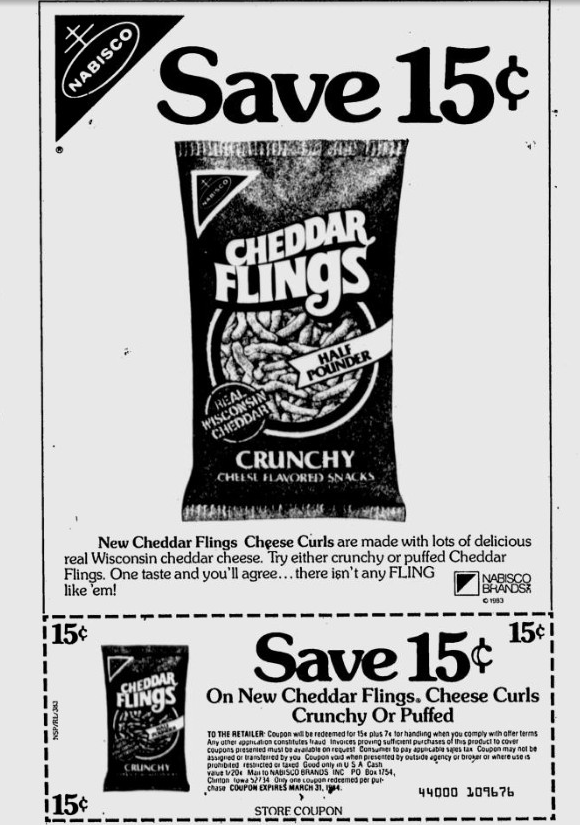
If fancy company was coming over in 1966, Nabisco had Flings. These were more like cheese puffs than chips, but that’s not even the weird part. Instead of being packaged in a bag, they came in a box that could be stood up and set on a table, which my mother thought was very sophisticated. The flavors were Cheese, Chicken, and Ham and Swiss. These boxes sat on coffee tables across America, and eventually disappeared. Nabisco gave them another try in 1984 in bag form, but they didn’t make it either.
6. Shake-A Pudd’n
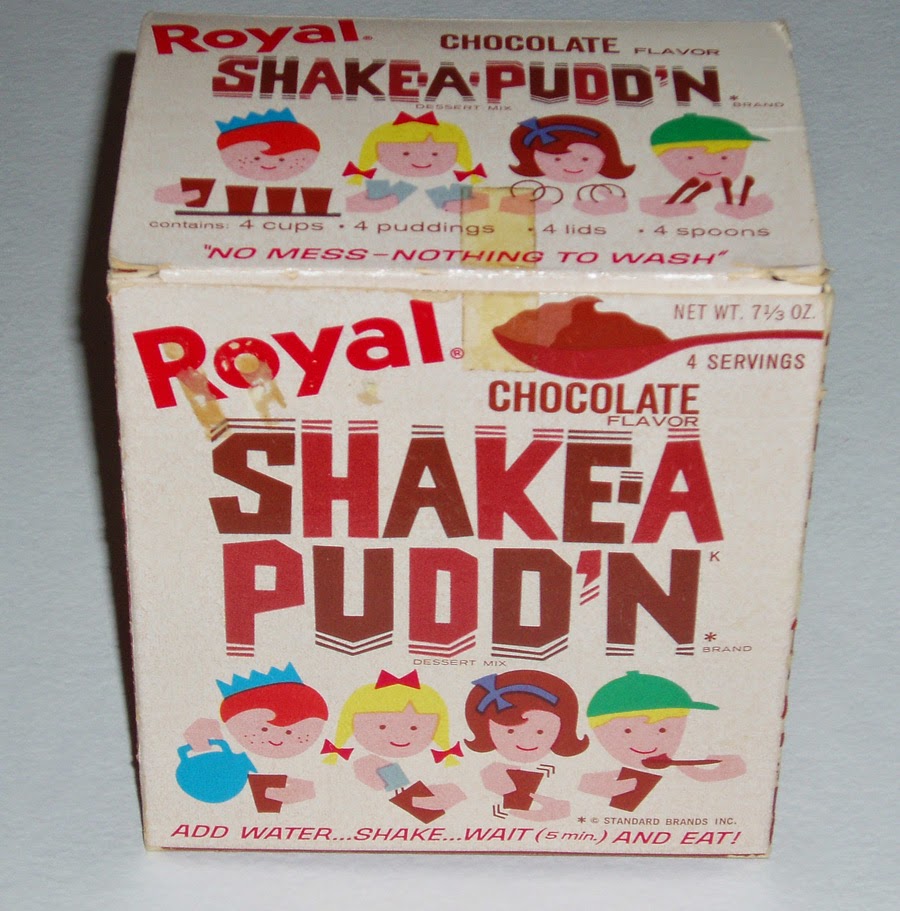
Royal’s Shake-A Pudd’n was introduced during the 1960s and discontinued in 1971 (Jell-O later offered a similar item, Shake-A-Pudding). Kind of like an edible science project, Shake-A Pudd’n included four cups, spoons, lids, and pudding mix (chocolate, vanilla, banana, or butterscotch) in a carton. After adding water, you’d top the cups and shake like crazy for about thirty seconds (the commercial’s surf-y jingle chanted the word ‘shake,’ over and over). Five minutes later, when it firmed up, you’d dig in with the included spoon. One kid in the commercial summed up your feelings as you emptied the container: ‘What a crazy way to make dessert.’
By the Numbers
- Up to $12 million — what Post had lost on freeze-dried fruit by 1967, by Fortune’s estimate.
- Millions — Pillsbury’s losses when cyclamate was banned.
- 5 shapes, 1 survivor — the Bugles family General Mills launched in 1966.
- 14 sticks to a box — Space Food Sticks, on grocery shelves from 1969.
7. Funny Face
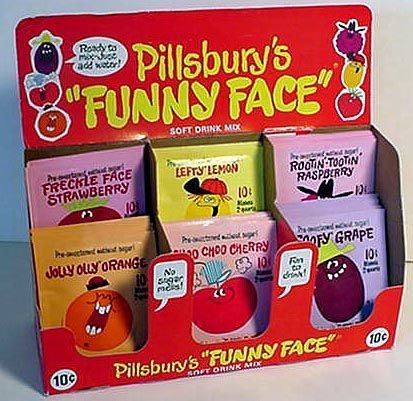
Have you ever seen Funny Face? It’s a drink mix. It was created by Pillsbury back in 1964 as a competitor to Kool-Aid. Each packet featured one of the characters (originally there were six). Two of those characters were ethnic caricatures, one of a Native American, the other of a Chinese man. Within a few years Pillsbury changed these characters (they became Jolly Olly Orange and Choo Choo Cherry). Each character had a name, some examples being Goofy Grape, Loud Mouth Lime, Freckle Face Strawberry and Rootin’ Tootin’ Raspberry. Funny Face was sweetened with cyclamate. In October of 1969 the Secretary of Health, Education and Welfare announced that cyclamate posed a cancer risk, and on February 1, 1970 its use in consumer items was banned. Pillsbury lost millions of dollars. It wasn’t just drink mixes, either; diet soft drinks accounted for 15 percent of soft drink sales in 1969. Funny Face has since made its way back into the market using an alternate sweetener.
Well, turns out that the FDA’s own Cancer Assessment Committee concluded cyclamate was not a carcinogen. In 1985 the National Academy of Sciences did as well. And more than 50 countries now allow cyclamate. But the US never allowed it again. Poor Goofy Grape, all these years in the penalty box for a crime he didn’t commit.
8. Fizzies
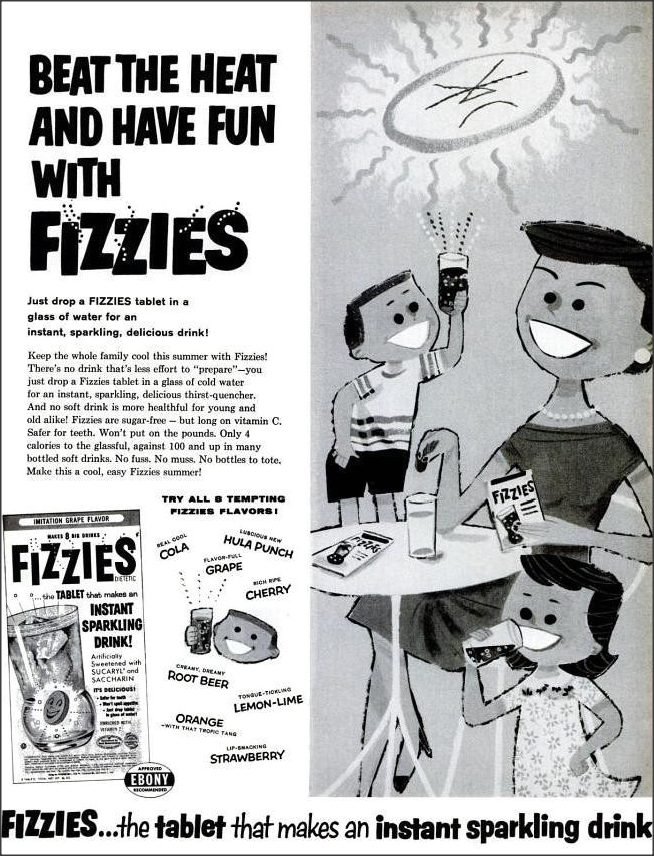
Fizzies are the oldest one on this list. Emerson Drug Company of Baltimore introduced Fizzies in July of 1957 on a regional basis. After Emerson Drug was purchased by Warner-Lambert in 1962, Fizzies were available for purchase all over the country that same year.
It was an effervescent tablet you dropped into a glass of water and watched as it became a beverage, complete with foam! They were available in seven different flavors during the 1950s and 1960s, which were grape, orange, cherry, lemon-lime, strawberry, root beer and cola. It was a drink and magic trick all rolled into one!
After the ruling against cyclamate (same as Funny Face), Warner-Lambert quickly removed Fizzies from the marketplace. During the early 1970s Warner-Lambert worked on formulating a version of Fizzies that met current guidelines, but discontinued production when they were unable to come up with a legal version they were happy with the taste of. I appreciate companies that would rather do away with a product than release a version that isn’t up to their standards!
Did You Know?
The man who invented Fizzies was a vice president at the Emerson Drug Company in Baltimore named Lem Billings — and he was John F. Kennedy’s prep school roommate, an usher at his wedding, and a man with his own room in the White House. He added fruit flavoring to cover the taste of sodium citrate, and a fad was born.
9. Space Food Sticks
I’ve saved the best story for last.
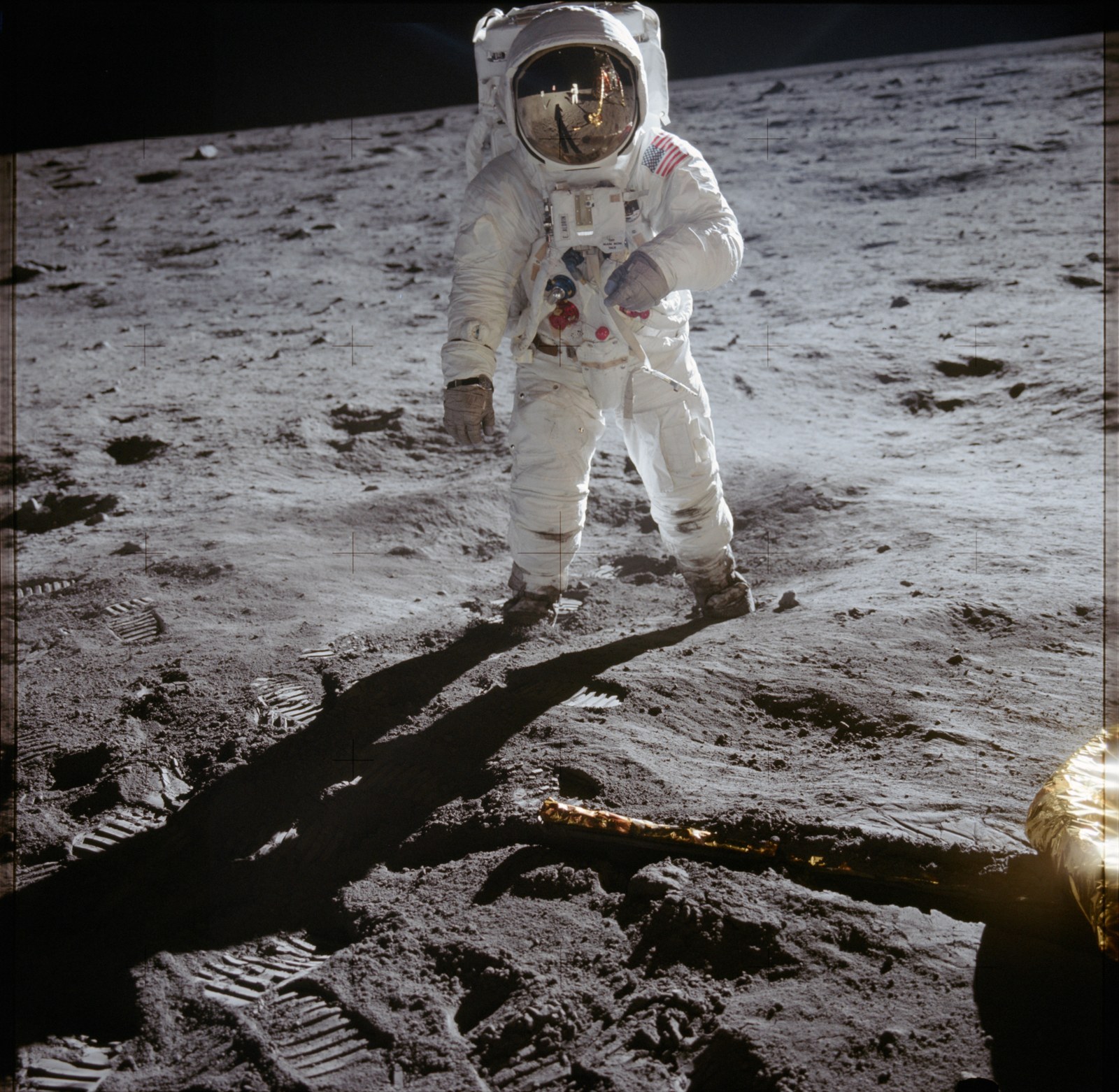
NASA needed a food astronauts could eat while wearing a helmet. Pillsbury’s solution was the Space Food Stick, a soft, chewy rod, thin enough to fit through the hole in the astronaut’s helmet. Howard Bauman was Pillsbury’s chief food technologist and led the development team. Space Food Sticks made it onto Apollo 11 as contingency food, only to be eaten in an emergency. On July 20, 1969, Armstrong and Aldrin made it safely to the moon. When the moon landing had to be cancelled during Apollo 13 and three astronauts were left to nurse their damaged ship back to earth, Space Food Sticks made it into the daily diet.
Before the sticks, Pillsbury made tiny, compressed cubes of food that astronaut Scott Carpenter consumed aboard Aurora 7 in 1962. Pillsbury scientist Howard Bauman also played a pivotal role in the adoption of food-safety regulations called Hazard Analysis and Critical Control Points (HACCP), work that started with keeping astronauts’ food safe. Later, a modified version of the sticks went along on NASA’s third Skylab mission in 1973. With Pillsbury’s sticks on the crew’s menu every third day, NASA was able to extend Skylab’s planned 60-day mission to 85 days. The sticks contributed a mere 59 pounds to the load.
Down here on Earth, Pillsbury’s Space Food Sticks debuted in grocery stores in 1969: fourteen individually wrapped sticks to a box at about 44 calories apiece, in flavors including chocolate, caramel, and peanut butter, and the box said to send them ‘to school. Or work. Or play.’ For a kid eating one at recess, it was almost as though she was halfway to the moon herself. Two years after the moon landing, Pillsbury dropped the word ‘Space’ from the name. Pillsbury’s product manager at the time admitted that food from space is ‘not necessarily very tasty.’ Space Food Sticks continued to be available into the 1980s and were resurrected in 2006 by a small business. Space Food Sticks got to space before you ever got out of state.
Why They All Came at Once
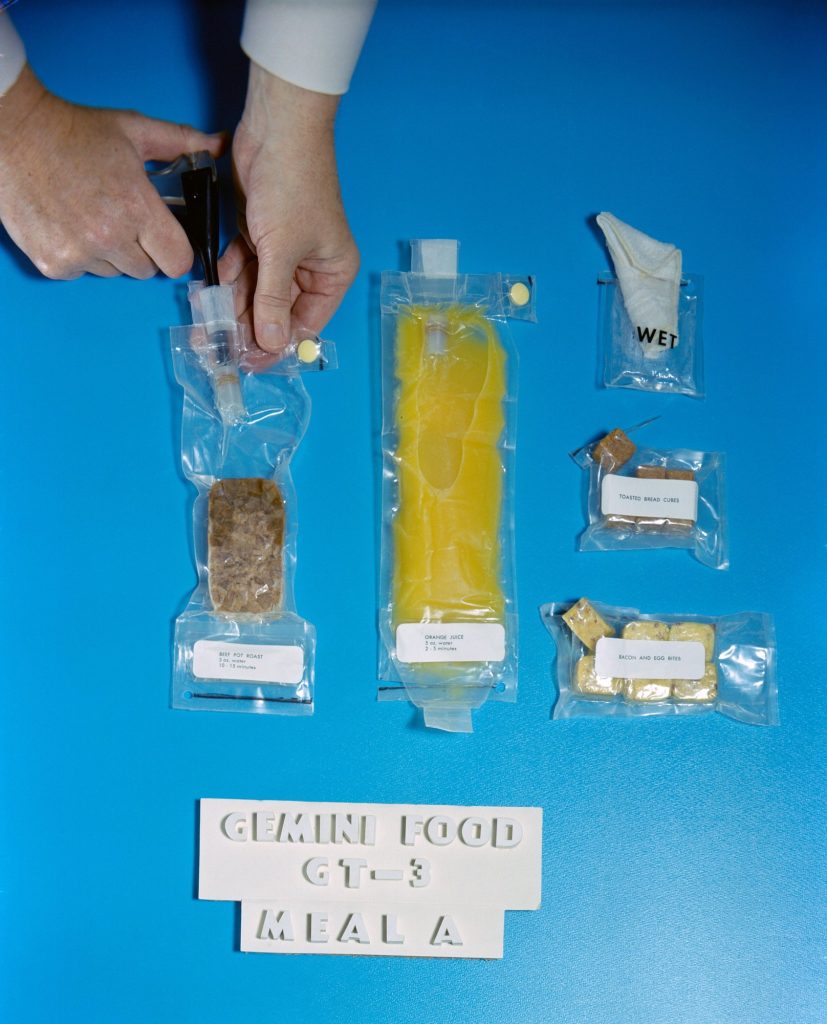
What can be said about all those crazy foods? Why did they exist? The short answer is that food companies were looking to sell anything and everything to small children sitting cross-legged in living rooms in their pajamas staring intently at their Saturday morning television programs. Freeze-dried food, a product of space and wartime research, had been applied to breakfast, and companies were looking for other applications. Lab-created food sounded futuristic thanks to the space race, not horrifying. Anything new and shiny was welcome. Then stricter ingredient regulations arrived in the 1970s and the party quietly ended, but for just one decade the grocery’s snack aisle was one of its most interesting sections.
Now it’s your turn. Which one of these did you beg for? Did your mother ever say yes to the Kream Krunch, or did you shake a Pudd’n cup until your arm ached? Tell me all about it in the comments below, because I read every single one, and I’ll bet your memory is even better than mine.
Image credits: Bugles photo by Geoff via Wikimedia Commons (CC BY-SA 3.0). Fizzies tablets via 1950sUnlimited on Wikimedia Commons (CC BY 2.0). Fizzies store display courtesy of The Library of Virginia (no known restrictions). Apollo 11 lunar surface photograph courtesy of NASA.


Leave a Reply